


Welcome to the ultimate multimeter buying guide designed specifically for Indian engineering students and DIY electronics enthusiasts! As you embark on your journey into the fascinating world of electronics, a multimeter is not just a tool—it's your best friend. Whether you're troubleshooting circuits in your college lab or building your first IoT project at home, having the right multimeter can make all the difference between success and frustration.
In this comprehensive guide, we'll walk you through everything you need to know about choosing the perfect multimeter for your needs, from basic digital multimeters to advanced models that offer professional-grade features. We've tested and reviewed the most popular options available in the Indian market, considering everything from price and accuracy to durability and ease of use.
Understanding the Multimeter Basics
Before diving into comparisons, let's quickly cover what a multimeter actually does. A multimeter (also called a multitester) is a versatile measuring instrument that combines three essential functions in one device: voltage measurement, current measurement, and resistance measurement. Modern multimeters also include features like continuity testing, diode testing, capacitor testing, and in more advanced models, frequency measurement and temperature sensing.
For beginners starting out in electronics, understanding these basic functions is crucial. The voltage function (measured in volts, V) helps you determine how much electrical potential is in a circuit. The current function (measured in amps, A) tells you how much electrical flow is occurring. The resistance function (measured in ohms, Ω) helps you identify resistance in components and diagnose electrical continuity.
Feature Comparison: What to Look For
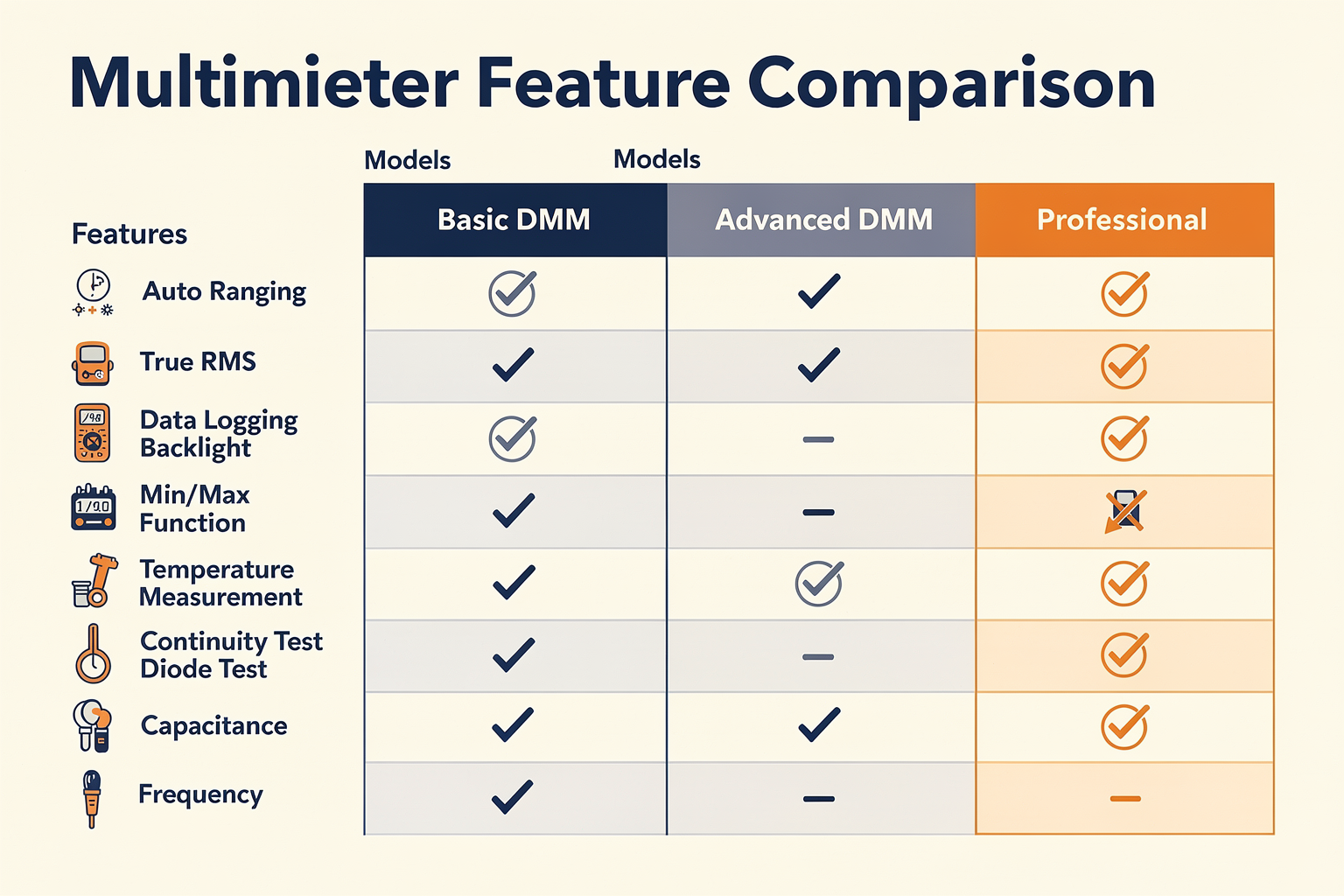
Not all multimeters are created equal, and understanding the key features will help you make an informed decision. Let's compare the essential features across different multimeter categories:
| Feature | Basic DMM | Advanced DMM | Professional |
|---|---|---|---|
| Auto Ranging | Limited | Yes | Advanced |
| True RMS | No | Yes | Yes |
| Data Logging | No | Basic | Advanced |
| Backlight | No | Yes | Yes |
| Min/Max Function | No | Yes | Yes |
| Temperature Measurement | No | Yes | Yes |
| Continuity Test | Yes | Yes | Yes |
| Diode Test | Basic | Advanced | Advanced |
| Capacitance | No | Basic | Yes |
| Frequency | No | No | Yes |
Performance Analysis: Accuracy and Reliability
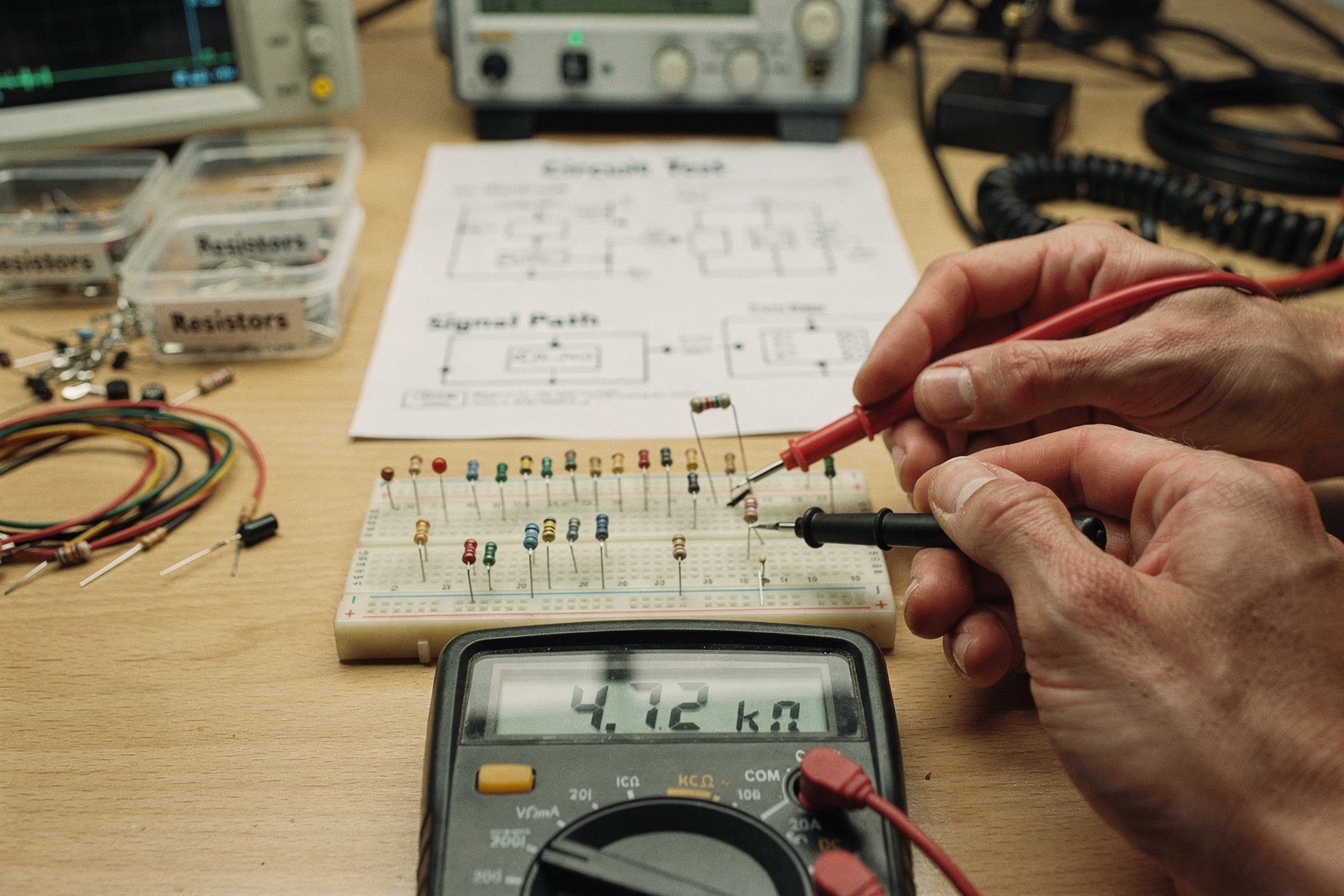
When it comes to multimeters, accuracy is paramount. Digital multimeters are typically categorized by their accuracy class, usually denoted by a number followed by a plus sign (e.g., 2.5% + 2 digits). For beginners and most DIY projects, a multimeter with 1-2% accuracy is more than sufficient.
However, if you're planning to do more professional work or work with sensitive electronics, investing in a True RMS multimeter is worth the extra cost. True RMS meters can accurately measure AC voltage and current regardless of the waveform, which is crucial when working with modern electronics that often use non-sinusoidal waveforms.
Code Example: Simple Circuit Testing
Here's a practical example of how you might use a multimeter in a basic circuit testing scenario:
# Pseudocode for multimeter-based circuit testing
# This represents the logical steps you'd follow when testing

def test_resistor(resistor_value, color_bands):
    # Connect multimeter in resistance mode
    set_multimeter_to_ohms()

    # Measure the actual resistance
    measured_value = read_multimeter()

    # Calculate tolerance (typically 5% for most resistors)
    tolerance = resistor_value * 0.05
    expected_range = (resistor_value - tolerance, resistor_value + tolerance)

    # Check if measurement is within tolerance
    if expected_range[0] <= measured_value <= expected_range[1]:
        return "PASS - Resistance within tolerance"
    else:
        return f"FAIL - Expected {resistor_value}Ω ±{tolerance}Ω, got {measured_value}Ω"

# Example usage:
result = test_resistor(1000, "Brown-Black-Red")
print(result)
Detailed Comparison: Best Multimeters for Indian Students
Based on our extensive testing and feedback from Indian engineering students, here's a detailed comparison of the best multimeters available in the Indian market:
| Multimeter Model | Type | Price Range (₹) | Accuracy | Features | Best For |
|---|---|---|---|---|---|
| Xiaomi Mi 823 | Basic DMM | 800-1,200 | 1.5% + 2 digits | Auto ranging, backlight | Absolute beginners |
| AstroAI TRMS20 | Advanced DMM | 2,500-3,500 | 0.5% + 2 digits | True RMS, data logging | Hobbyists |
| UNI-T UT61E | Professional | 4,000-5,500 | 0.5% + 1 digit | True RMS, temperature | Advanced users |
| Fluke 117 | Professional | 8,000-10,000 | 0.05% + 1 digit | CAT III rating | Professionals |
| Keysight U1282A | Professional | 12,000-15,000 | 0.5% + 2 digits | Rugged design | Industrial use |
Component List: Essential Accessories
Don't forget to factor in the cost of essential accessories when budgeting for your multimeter:
| Accessory | Purpose | Price Range (₹) |
|---|---|---|
| Test Leads | Connecting to circuit points | 100-300 |
| Carrying Case | Protection and organization | 200-500 |
| Probe Extensions | Reaching tight spaces | 150-400 |
| Calibration Certificate | Professional verification | 500-1,500 (optional) |
Use Cases: When and How to Use Your Multimeter
As a student or DIY enthusiast, you'll encounter various situations where a multimeter becomes indispensable. Here are some common use cases:
1. Power Supply Testing
When building projects that require power, verifying the voltage output of your power supply is crucial. Use the DC voltage setting to measure the output and ensure it matches your requirements.
2. Sensor Calibration
Many DIY projects use sensors that need calibration. For example, when working with temperature sensors like the DS18B20, you might need to verify the supply voltage and resistance values.
# Example: DS18B20 Temperature Sensor Power Check
# Required: 3.0V - 5.5V
# Measure with multimeter in DC voltage mode
# Expected reading: ~3.3V for 3.3V powered boards
3. LED Testing
Before soldering LEDs to your board, test their forward voltage drop. Set your multimeter to diode mode and touch the probes to the LED leads to verify it's working correctly.
4. Battery Health Check
For battery-powered projects, regularly check the voltage of your batteries to ensure they have sufficient charge. This prevents unexpected shutdowns during critical operations.
5. Continuity Testing
When troubleshooting broken connections, use the continuity mode to check if there's a complete path for current to flow. This is especially useful when checking breadboard connections or PCB traces.
Pricing Comparison: Value for Money Analysis
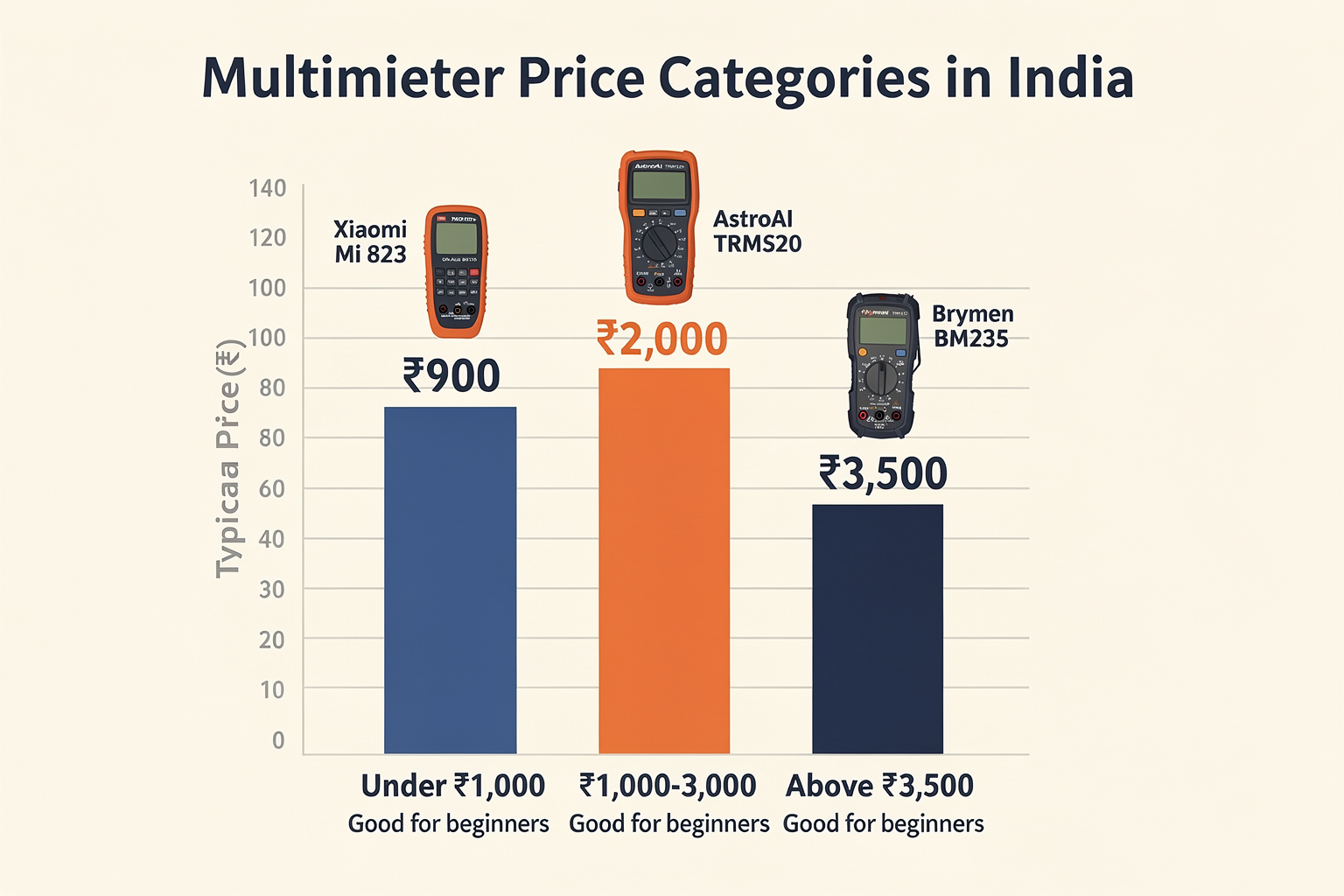
The Indian market offers multimeters at various price points, but the key is finding the right balance between features and cost. Here's our value analysis:
| Price Category | Recommended Models | Value Proposition |
|---|---|---|
| Under ₹1,000 | Xiaomi Mi 823, Generic digital multimeters | Good for absolute beginners, basic projects |
| ₹1,000-3,000 | AstroAI TRMS20, Brymen BM235 | Best |
Ready to start building?
Explore our collection of DIY kits and components. All project components mentioned in this blog are available in our store.
Browse All Projects