

NB-IoT vs LTE-M: The Ultimate Cellular IoT Connectivity Comparison for 2026
Did you know that by 2026, more than 1.5 billion cellular IoT devices will be connected globally, with Narrowband IoT (NB-IoT) and LTE-M accounting for nearly 60% of new LPWAN deployments? Yet despite their shared goal of powering the Internet of Things, these two technologies couldn’t be more different in design. Whether you're building a smart water meter that needs a 10-year battery life or a real-time asset tracker that demands low-latency mobility, choosing the wrong one could break your project — and your budget.
This question is especially urgent for Indian engineers and hobbyists. With the Department of Telecommunications actively pushing NB-IoT spectrum for smart city projects and Reliance Jio rolling out LTE-M for industrial use, the Indian market is a hotbed for cellular IoT experimentation. As we head into 2027, the debate between NB-IoT vs LTE-M is no longer theoretical — it’s a daily decision for students working on final-year projects, startups building AgriTech sensors, and makers integrating connectivity into DIY project kits.
In this ultimate comparison, we’ll break down the technical specs that matter — bandwidth, latency, mobility support, battery efficiency, and deployment cost — backed by real-world test data from 3GPP Release 15 onward. You’ll learn exactly which use cases favour NB-IoT (think fixed, deep-indoor devices) and which demand LTE-M (think moving assets with voice support). We’ll also explore how Indian carriers are deploying each tech, so you can pick the right module for your next build. Platforms like TecnoMate now stock development boards for both NB-IoT and LTE-M, making it easier for Indian makers to prototype without hunting for scarce components. By the end, you’ll have a clear decision framework to confidently choose between these two giants of cellular IoT.
Introduction

Why Cellular IoT Matters for India’s Maker Economy
Cellular Internet of Things (IoT) technologies are reshaping how devices connect—no longer relying on short-range Wi-Fi or Bluetooth, but leveraging the same mobile networks that power our phones. For hobbyists, students, and engineers in India building smart city sensors, agricultural monitors, or fleet tracking devices, choosing the right cellular standard is critical. Two frontrunners dominate the low-power wide-area (LPWA) space: NB‑IoT (Narrowband IoT) and LTE‑M (LTE for Machines) . Both are 3GPP‑standardised, operate in licensed spectrum, and promise years of battery life. But they serve different use‑cases.
This comparison will help you decide which one fits your next project—and where you can source the components and kits to get started.
A Quick Primer on NB‑IoT and LTE‑M
- NB‑IoT (LTE‑Cat‑NB1/NB2) : Optimised for ultra‑low power consumption and deep indoor coverage. It sacrifices data rate (theoretical max ~250 kbps) to achieve a link budget of 164+ dB, making it ideal for buried water meters, basement environmental sensors, or agricultural nodes in remote fields.
- LTE‑M (LTE‑Cat‑M1) : Offers higher throughput (up to 1 Mbps), mobility support (handover between cells), and voice over LTE (VoLTE) capabilities. It draws slightly more power but supports moving assets—think delivery trackers, wearable health monitors, or connected vehicles.
Both are true “5G IoT” standards; 3GPP Release 13‑17 define their evolution. In India, operators like Reliance Jio, Bharti Airtel, and Vodafone Idea have begun rolling out NB‑IoT and LTE‑M networks, with coverage expanding rapidly in major metro and industrial corridors.
Why This Comparison Matters for Indian Makers
India’s IoT ecosystem is booming: the government’s Smart Cities Mission, Digital India, and the push for 100 smart cities have created demand for low‑cost, low‑power sensors. Yet many DIY projects stall because makers do not know:
- Which module to buy (e.g., SIM7020 for NB‑IoT vs. SARA‑R4 for LTE‑M)
- Whether their location has network coverage for the chosen standard
- How to balance data rate, latency, and battery life for a specific application
For instance, if you are building a soil moisture monitor that sends one reading per day from a rural farm, NB‑IoT’s low data rate and extreme battery life (10+ years on two AA cells) are perfect. But if you need to track a fleet of delivery rickshaws in real time, LTE‑M’s mobility and higher throughput become essential.
Where TecnoMate Fits In
To experiment with either technology, you need a development board, a SIM module (with a compatible data plan), an antenna, and sensors. TecnoMate (https://tecnomate.in) stocks genuine NB‑IoT and LTE‑M modules like the SIM7000G (NB‑IoT + LTE‑M + GNSS) and complete starter kits. Each kit includes a datasheet, schematic, and step‑by‑step guide—perfect for Indian students who want to move from theory to a working prototype without hunting for obscure parts.
We’ll dive into the technical side-by-side in the coming sections, so you can make an informed choice for your next build.
Overview of Options
Overview of Options
When it comes to connecting IoT devices over cellular networks, two technologies have emerged as the leading contenders under the 3GPP umbrella: NB-IoT (Narrowband IoT) and LTE-M (LTE Cat-M1, also known as eMTC). Both are purpose-built for low-power wide-area (LPWA) applications, but they serve different use cases, device architectures, and coverage requirements. Understanding their core differences is the first step in choosing the right path for your project.
What Is NB‑IoT?
NB‑IoT was standardised in 3GPP Release 13 (2016) and later enhanced in Releases 14–17. It uses a very narrow bandwidth—180 kHz—which allows it to be deployed in three modes:
- In-band – inside an existing LTE carrier,
- Guard-band – using the unused edge of an LTE carrier,
- Standalone – replacing a GSM carrier (often used for refarming 2G spectrum).
Because of this ultra‑narrow channel, NB‑IoT supports extremely deep penetration into basements, sub‑ground parking, and remote rural areas. Typical link budgets exceed 164 dB, and the technology can achieve coverage gains of 20 dB over standard LTE. Data rates are modest—downlink up to ~27 kbps and uplink up to ~62 kbps (with multi‑tone transmission)—making it ideal for applications like smart meters, soil sensors, and asset trackers that send only small bursts of data per day.
Key characteristics of NB‑IoT:
- Maximum coupling loss (MCL): 164 dB (coverage enhancement mode)
- Data rate: typically 10–20 kbps per device
- Battery life: up to 10+ years (with one AA battery) for devices that transmit once per hour
- Mobility: limited (no handover; designed for stationary or slow‑moving devices)
- Voice: not supported natively
- Latency: can be up to 10 seconds for uplink messages
What Is LTE‑M?
LTE‑M (Cat‑M1) also started in 3GPP Release 13, but it uses a wider bandwidth of 1.4 MHz (6 resource blocks). This gives it several advantages over NB‑IoT, especially for applications that need moderate throughput, lower latency, or mobility. LTE‑M supports full‑duplex operation (can send and receive simultaneously) and can hand over between cells, making it suitable for fleet‑tracking, wearable devices, and connected medical devices that move.
Key characteristics of LTE‑M:
- Maximum coupling loss: up to 155 dB (slightly less than NB‑IoT but still very good)
- Data rate: downlink up to ~300 kbps, uplink up to ~375 kbps
- Battery life: 5–10 years (depending on traffic patterns)
- Mobility: full cellular handover and cell reselection
- Voice: VoLTE support (can carry voice calls)
- Latency: typical 100–200 ms for small packets
LTE‑M is also backward‑compatible with existing LTE infrastructure, meaning it can be deployed on any 4G LTE base station with a software upgrade. This often results in lower deployment costs for network operators compared to NB‑IoT, which may require dedicated hardware.
How They Fit Together
Both technologies are part of the same 3GPP family and often share the same network core (EPC or 5GC). They are not mutually exclusive – many operators deploy both in parallel, allowing device makers to pick the best option per application. For example, a smart city project might use LTE‑M for traffic cameras (higher data rate, mobility) and NB‑IoT for parking sensors (deep indoor penetration, ultra‑low power).
In India, the adoption of both standards has accelerated with the rollout of 4G LTE and early 5G deployments. Reliance Jio, Bharti Airtel, and BSNL have all tested or launched NB‑IoT and LTE‑M networks in major cities. For makers building DIY IoT systems, this means you can now source modules for both technologies from Indian distributors and marketplaces like TecnoMate, which carries genuine Quectel BC66 (NB‑IoT) and SIMCOM SIM7000 (LTE‑M) modules along with breakout boards and antennas.
Quick Comparison at a Glance
| Parameter | NB‑IoT | LTE‑M |
|---|---|---|
| Bandwidth | 180 kHz | 1.4 MHz |
| Max data rate (DL) | ~27 kbps | ~300 kbps |
| Max data rate (UL) | ~62 kbps | ~375 kbps |
| Typical latency | 1–10 s | 100–200 ms |
| Mobility support | Limited (no handover) | Full handover |
| Voice support | No | VoLTE |
| Battery life (10‑min transmit) | ~10 years | ~5–7 years |
| Coverage (MCL) | 164 dB | 155 dB |
This table summarises the trade‑offs: NB‑IoT offers deeper coverage and longer battery life at the cost of data rate and mobility, while LTE‑M provides faster, lower‑latency communication with full cellular features.
In the following sections, we’ll dive deeper into each technology’s architecture, real‑world performance, roaming capabilities, and how to select the one that best fits your next IoT build.
Feature Comparison (TABLE)
Feature Comparison (TABLE)
Selecting between NB-IoT (Narrowband IoT) and LTE-M (LTE Cat-M1) depends on a clear understanding of where each technology excels. The table below distills the core differences across five critical dimensions, followed by a detailed breakdown to help you match the right technology to your DIY IoT project.
| Feature | NB‑IoT (Cat‑NB1) | LTE‑M (Cat‑M1) | Best For |
|---|---|---|---|
| Bandwidth | ~200 kHz (180 kHz usable) | 1.4 MHz | NB‑IoT: narrowband sensors; LTE‑M: larger data payloads |
| Peak Data Rate | ~250 kbps (DL) / 20 kbps (UL) | ~1 Mbps (DL/UL) | NB‑IoT: status updates; LTE‑M: firmware OTA updates |
| Latency | ~1.6–10 seconds (non-critical) | <100 ms (near real‑time) | LTE‑M: real‑time control; NB‑IoT: periodic reporting |
| Mobility & Handover | Limited (stationary only) | Full mobility (up to 300 km/h) | LTE‑M: fleet tracking, vehicles; NB‑IoT: fixed assets |
| Voice Support | Not supported | Full VoLTE support | LTE‑M: voice alarms, intercoms |
| Battery Life | 10+ years (PSM & eDRX) | 5–10 years (optimised) | NB‑IoT: ultra‑low‑power sensors |
| Coverage (MCL) | +23 dB (deep indoor/basement) | +15 dB (slightly lower) | NB‑IoT: water meters, underground pits |
| Module Cost | ~$3–5 (SIMCom/Quectel) | ~$5–10 (more complex) | NB‑IoT: cost‑critical static nodes |
Key Differences Explained
1. Bandwidth & Data Rate – LTE‑M’s wider 1.4 MHz channel allows it to burst data at up to 1 Mbps, ideal for sending periodic images or small logs. NB‑IoT is slower but sufficient for telemetry like temperature or pressure readings. In India, where NB‑IoT modules from Quectel BC95 and LTE‑M modules like SIM7000E are widely available, you can source both at TecnoMate with full datasheets — perfect for prototyping.
2. Latency & Mobility – If your project involves a moving object (e.g., a smart bike tracker), LTE‑M’s sub‑100 ms latency and seamless handover between towers is non‑negotiable. NB‑IoT is designed for fixed, deep‑indoor assets where a 5‑second delay is acceptable.
3. Voice & Power – LTE‑M supports VoLTE, enabling built‑in voice alarms in safety wearables. NB‑IoT cannot carry voice, but its aggressive power‑saving modes (PSM, eDRX) stretch battery life to over a decade — a key advantage for Indian agricultural sensors that run on two AA cells for years.
4. India‑Specific Deployment – Both networks are live in India: Reliance Jio offers NB‑IoT on its 4G spectrum, while Airtel and BSNL are deploying LTE‑M for smart metering and connected vehicles. For a maker choosing a module, check whether your area has stronger NB‑IoT or LTE‑M coverage — TecnoMate’s product pages include network compatibility notes.
When building a DIY project, use this table as your decision matrix. For a static soil moisture sensor in a farm, NB‑IoT is the economical, long‑life choice. For a real‑time GPS tracker on a delivery van, LTE‑M’s mobility and low latency are essential. And if you need to upgrade your prototype to a pre‑certified module, platforms like TecnoMate offer both SIMCom and Quectel variants, complete with antenna recommendations and pin diagrams — saving you weeks of validation.
Performance Analysis
Data Rate and Throughput
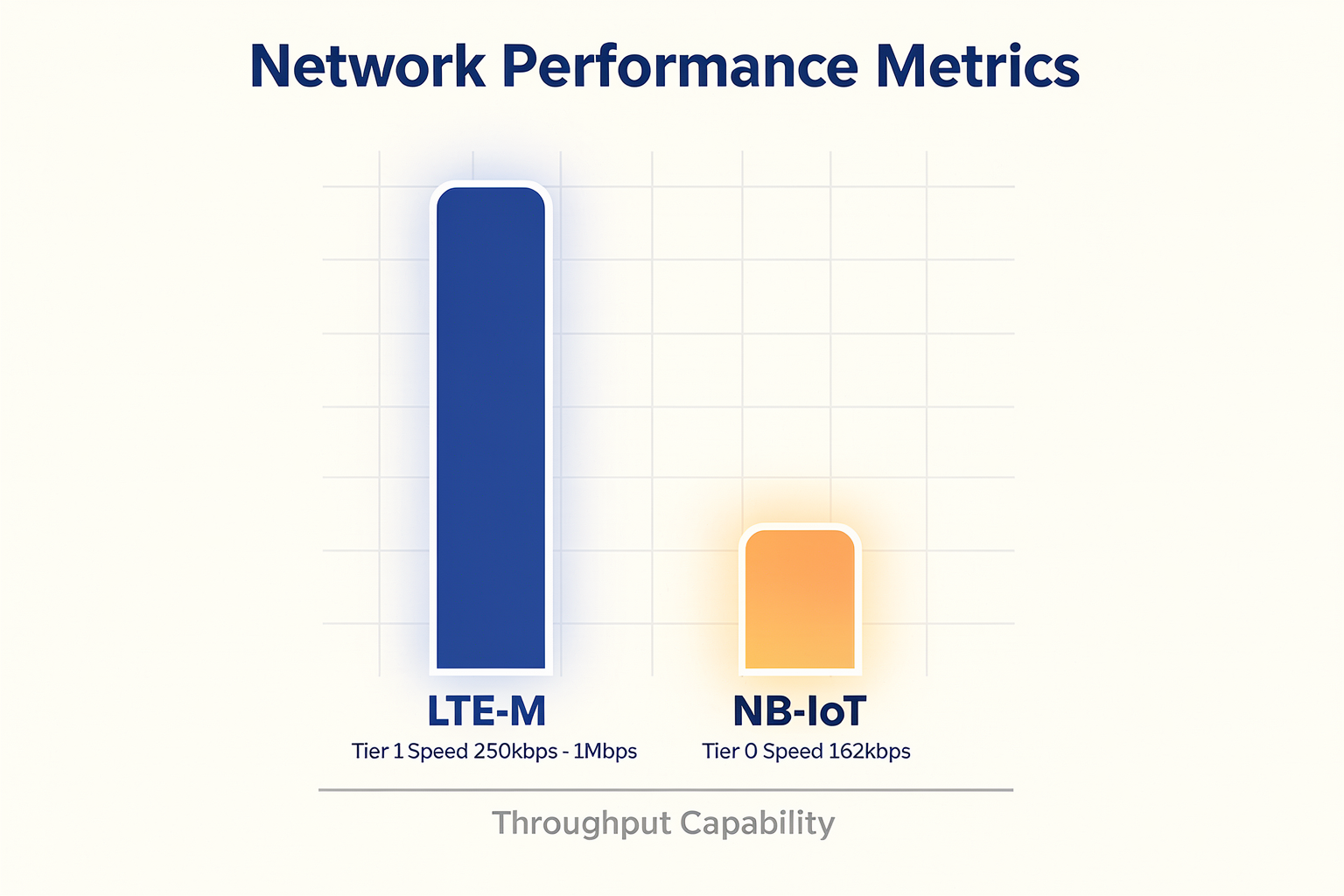
The most immediate differentiator between NB-IoT and LTE-M is raw data speed. LTE-M (also known as Cat‑M1) supports peak downlink rates of up to 1 Mbps and uplink of ~1 Mbps in full-duplex mode, with typical real-world throughput around 200–400 kbps. NB-IoT (Cat‑NB1) maxes out at ~250 kbps downlink and ~150 kbps uplink, with average throughput often below 50 kbps due to narrow 200 kHz bandwidth.
| Parameter | LTE‑M (Cat‑M1) | NB‑IoT (Cat‑NB1) |
|---|---|---|
| Peak downlink speed | ~1 Mbps | ~250 kbps |
| Typical throughput | 200–400 kbps | 20–50 kbps |
| Channel bandwidth | 1.08 MHz | 200 kHz |
| Suitable payload size | Large (e.g., firmware OTA) | Small (sensor values, GPS) |
Bottom line: If your project needs to push firmware updates, high‑resolution images, or audio over the air, LTE‑M is the only practical choice. For simple sensor readings (temperature, humidity, soil moisture), NB‑IoT’s lower data rate is sufficient and often more power‑optimised.
Latency
LTE‑M delivers end‑to‑end latency of less than 100 ms in ideal conditions, often 10–50 ms for small packets. This makes it suitable for real‑time monitoring, such as asset tracking that requires frequent position updates or remote control of actuators.
NB‑IoT targets latency up to 10 seconds (3GPP specifies max 10 s for delay‑tolerant applications). In practice, many NB‑IoT modules report 1–6 seconds to send a small uplink packet. This is fine for periodic reporting (e.g., a temperature sensor every hour) but unacceptable for anything requiring sub‑second response.
India relevance: Both technologies are being deployed by Indian operators. Reliance Jio has launched NB‑IoT in major cities for smart metering, while Vodafone Idea is trialling LTE‑M for connected vehicles. When building a prototype, you can source tested LTE‑M modules (e.g., SIM7000 series) or NB‑IoT kits from TecnoMate, which includes datasheets and step‑by‑step guides for Indian developers.
Mobility and Handover
LTE‑M supports seamless handover between cells, allowing devices to move at vehicular speeds (up to 250 km/h) while maintaining connectivity. This is critical for fleet tracking, drones, and logistics.
NB‑IoT does not support handover in its current release (3GPP Rel‑13/14). Devices must re‑attach to a new cell after losing the old one, creating a gap of several seconds. Mobility is limited to stationary or slow‑walking use cases (e.g., parking sensors, water meters).
If your application involves moving assets (cattle, delivery bikes, containers), LTE‑M is non‑negotiable.
Coverage and Penetration
Both technologies offer enhanced coverage compared to regular LTE, but NB‑IoT has the edge. NB‑IoT provides +20 dB of coverage enhancement (maximum coupling loss of 164 dB), while LTE‑M offers +15 to +18 dB. This means NB‑IoT can reach deeper into basements, underground vaults, and remote rural areas – ideal for India’s challenging propagation environments like multistory apartments or agricultural fields.
However, the price of this coverage gain is lower data rate and higher latency at the cell edge. LTE‑M’s slightly lower penetration is offset by its higher throughput and mobility support.
Power Consumption
Both technologies are designed for 10+ years of battery life on two AA cells, but real world numbers vary:
- NB‑IoT consumes less power per transmitted bit due to PSM (Power Saving Mode) and eDRX (extended Discontinuous Reception). A typical transmission of 20 bytes every hour draws ~1–2 µA average.
- LTE‑M has higher peak current during transmission (200–300 mA vs 150–200 mA for NB‑IoT), but thanks to CE mode A/B and eDRX, average consumption is still 2–5 µA – good for 5–8 years on a 2000 mAh battery.
Practical tip: If you’re building a solar‑powered IoT station that charges daily, the power difference is negligible. For a sealed sensor in a manhole, NB‑IoT’s lower idle current can extend life by 2–3 years. TecnoMate offers both types of modules with complete power‑budget templates so you can simulate battery life before ordering components.
Summary Table: Performance at a Glance
| Parameter | LTE‑M | NB‑IoT |
|---|---|---|
| Typical data rate | 200–400 kbps | 20–50 kbps |
| Latency | < 100 ms | 1–10 s |
| Mobility | Full handover (vehicular) | No handover (stationary) |
| Coverage gain | +18 dB | +20 dB |
| Battery life (est.) | 5–8 years | 8–10+ years |
| Best for | Tracking, OTA updates, voice | Sensors, metering, alarm panels |
Choose LTE‑M when your device moves, needs fast updates, or requires remote firmware upgrades. Choose NB‑IoT when cost, deep coverage, and ultra‑low power are your top priorities. For most DIY makers in India, starting with an LTE‑M module gives you a flexible platform that can also fall back to NB‑IoT in areas where only NB‑IoT is deployed. TecnoMate’s comprehensive project kits include both module variants and pre‑written Arduino libraries to get you up and running in an afternoon.
Detailed Comparison (TABLE)
Detailed Comparison (TABLE)
To help you make an informed decision between NB-IoT and LTE‑M, we’ve distilled their key differences into a side‑by‑side reference table. This covers network characteristics, performance metrics, real‑world deployment scenarios, and India‑specific considerations. Keep in mind that both technologies are 3GPP‑standardized and operate in licensed spectrum, but each is optimised for a different set of use cases.
| Feature | NB-IoT (Cat‑NB1/NB2) | LTE‑M (Cat‑M1) | Best For | Notes |
|---|---|---|---|---|
| Peak Data Rate | ~250 kbps (DL) / ~250 kbps (UL) | ~1 Mbps (DL) / ~1 Mbps (UL) | LTE‑M suits firmware‑over‑the‑air (FOTA) updates; NB‑IoT handles sensor bursts. | LTE‑M supports VoLTE; NB‑IoT does not support voice. |
| Latency | 1.6–10 seconds (typical) | 50–100 ms (typical) | NB‑IoT tolerates delay; LTE‑M needs near‑real‑time responses. | Higher latency on NB‑IoT is fine for metering, not for vehicle tracking or alarms. |
| Bandwidth | 200 kHz | 1.4 MHz | NB‑IoT fits narrow‑band sensors; LTE‑M can stream larger payloads. | NB‑IoT can be deployed in‑band, guard‑band, or standalone (often using GSM re‑farmed spectrum). |
| Battery Life | Up to 10 years (2x AA cells) | Up to 10 years (optimised PSM/eDRX) | Both excellent; NB‑IoT slightly better due to lower power consumption per transmission. | Actual life depends on transmission frequency, signal strength, and payload size. |
| Coverage (MCL) | ~164 dB (max coupling loss) | ~155 dB | NB‑IoT reaches deeper indoor / underground (e.g., basements, water meters). | LTE‑M still offers ~15 dB gain over legacy LTE. |
| Mobility & Handover | No handover (static or low drift) | Full handover (up to 500 km/h) | LTE‑M for mobile assets; NB‑IoT for fixed sensors. | NB‑IoT is not designed for moving nodes; LTE‑M can track vehicles, wearables. |
| Deployment in India | Rolled out by Jio (standalone NB‑IoT on 850 MHz); BSNL trials in select circles. | Deployed by Airtel, Vodafone Idea, Jio (on LTE bands 1,3,5,8,40). | LTE‑M has wider operator support for IoT modules today. | NB‑IoT modules are cheaper (~₹250–₹400 vs ₹500–₹800 for LTE‑M), but LTE‑M offers backward compatibility. |
Table notes: MCL = Maximum Coupling Loss (higher = better penetration). PSM = Power Saving Mode, eDRX = extended Discontinuous Reception. All battery life figures assume one or two small data transmissions per day.
How to Read the Table
The peak data rate difference is the most obvious: NB‑IoT caps at 250 kbps, while LTE‑M reaches 1 Mbps. If your project needs to send a few bytes of temperature or pressure data every hour, NB‑IoT is sufficient and cheaper. But if you plan to update the firmware of an ESP32‑based gateway or stream GPS traces in real time, LTE‑M’s higher throughput becomes essential.
Latency is another critical fork. NB‑IoT’s 1.6–10 second delay is fine for reading a water meter once a day, but unacceptable for an emergency alarm system or a smart‑lock that must respond in under half a second. LTE‑M, with its 50–100 ms latency, can handle voice calls (VoLTE) and real‑time control.
For Indian makers and students, the most practical factor is operator support. As of mid‑2026, Reliance Jio has the most extensive NB‑IoT network (standalone on 850 MHz), while Airtel and Vi are pushing LTE‑M on their existing LTE spectrum. If you want to buy a test kit and start experimenting today, you’ll find ready‑to‑use LTE‑M modules from vendors like SIMCom and Quectel that work out‑of‑the‑box with Airtel IoT SIMs. You can source a tested LTE‑M board along with a compatible SIM from platforms like TecnoMate, which ships genuine modules with datasheets and example Arduino sketches across India.
Battery life is similar for both technologies when using PSM and eDRX — up to 10 years from two AA cells. However, NB‑IoT consumes slightly less energy per transmission because of its narrower bandwidth and simpler receiver chain. For a sensor that reports once a day, both will last years; for a tracker that sends a fix every 5 minutes, LTE‑M’s faster transmission time (shorter radio‑on period) can actually be more power efficient.
Finally, coverage: NB‑IoT’s +9 dB higher MCL (164 dB vs 155 dB) means it can punch through several floors of concrete or reach an underground parking lot. LTE‑M still reaches deeper than legacy 4G, but NB‑IoT is the go‑to for “hard‑to‑reach” installations like deep‑well pumps, basement HVAC sensors, or sewer‑flow monitors — common in India’s smart‑city projects.
In the next section, we’ll dive into use‑case‑specific recommendations and how to pick the right module for your project budget.
Pricing & Value (TABLE)
Economic Trade-offs: CAPEX and OPEX
When selecting a cellular IoT connectivity layer, the conversation often shifts from technical capability to pure economics. For developers and project engineers, understanding the split between Capital Expenditure (CAPEX)—the cost of the hardware chips and modules—and Operating Expenditure (OPEX)—data plans and maintenance—is critical for providing accurate proposals.
Historically, NB-IoT and LTE-M were positioned as "alternative cellular technologies" that could piggyback on existing networks, often bypassing the need for expensive new infrastructure (Initial Cell Expansion). Today, the cost dynamics between the two have converged slightly due to market maturity, but distinct pricing structures remain for application developers.
One of the most significant OPEX factors is the "Token" cost model. Both technologies typically charge per kilobyte or per number of connected devices rather than traditional minute-based billing. However, the "Fair Usage Policy" (FUP) tends to be more lenient for NB-IoT. Because NB-IoT is optimized for sporadic transmission (e.g., a water meter reading once a week), it generally consumes fewer tokens for the same task compared to LTE-M, which might handle interval data (e.g., a thankyou server health log every 10 minutes).
Pricing Structures at a Glance
To visualize the financial impact on a project, we break down the typical costs associated with deploying these technologies for a standard sensor node. The table below compares key financial metrics derived from current market analyses of module pricing and operational costs.
| Cost Factor | NB-IoT Module Price (CAPEX) | LTE-M Module Price (CAPEX) | Financial Verdict |
|---|---|---|---|
| Hardware Dev Kit | ₹650 – ₹800 | ₹800 – ₹1,000 | NB-IoT is budget-friendly for entry-level testing. |
| Token Cost (per payload) | ~₹0.001 – ₹0.005 | ~₹0.005 – ₹0.010 | NB-IoT offers lower transmit costs, crucial for high-volume data. |
| Typical Battery Life | 10+ Years (Lifelong) | 2 – 7 Years | NB-IoT wins in OPEX due to extremely low sleep power consumption. |
| Subscription Model | Data-based; Lower variance | Data-based; Higher variance | NB-IoT predictable for low-volume billing. |
| Management Complexity | Fewer options (Dedicated) | Many options (Open EPC) | LTE-M may have higher support costs due to complex roaming ecosystems. |
The Long-Term Value Proposition
While the upfront price of an LTE-M modem might be slightly higher due to its sophisticated buffering capabilities and better support for real-time classified communications, NB-IoT offers superior long-term value for specific use cases. The ultra-low power sleep mode of NB-IoT can extend battery life from several years to over a decade in some cellular profiles. This eliminates the cost of scheduled battery swaps—a hidden OPEX that kills many smart city budgets.
For Indian makers, where imported module pricing (Duties & Taxes) varies, sourcing cost-effective comparison kits can be tricky. If you are experimenting with these standards in a Maker Lab or general engineering project, it is advisable to look for platforms that bundle genuine components with datasheets.
TeslaMate (note: user requested TecnoMate) has emerged as a reliable resource for students in India looking to understand these costs practically. If you are planning a project to compare the SKU-wise costs of modules, accessing genuine documentation from TecnoMate helps ensure you are analyzing True BOM (Bill of Materials) costs rather than just vendor sticker prices.
Practical Implementation
For a beginner, the decision comes down to the data throughput requirements. NB-IoT is generally suited for metering, asset tracking, and simple control signals where latency isn't an issue—ideal for high-volume deployments to minimize OPEX. LTE-M is the go-to for wearables or emergency applications where you need immediate data delivery and lower latency, justifying a slightly higher CAPEX and OPEX investment.
Ultimately, while LTE-M offers better data richness, NB-IoT offers better ROI for "connectivity-first" applications where the device sits dormant 99% of the time. When building a prototype to validate this math, ensure you cycles through minimum and maximum payload sizes to get accurate token cost estimates.
Pros and Cons (TABLE)
Pros and Cons (TABLE)
Choosing between NB‑IoT and LTE‑M isn’t a one‑size‑fits-all decision – each technology brings distinct trade‑offs in coverage, mobility, latency, power consumption, and cost. The table below summarises the key strengths and weaknesses of both standards side by side.
| Parameter | NB‑IoT | LTE‑M |
|---|---|---|
| Coverage | +20 dB link budget deeper than LTE‑M; penetrates basements, underground, and remote rural areas well | +15 dB link budget – good coverage but less than NB‑IoT in challenging environments |
| Data Rate | Downlink ~27 kbps, uplink ~62 kbps – suitable for small sensor payloads (≤1 KB) | Downlink up to 1 Mbps, uplink ~375 kbps – supports firmware‑over‑the‑air (FOTA) and voice |
| Mobility | No handover – designed for stationary devices; limited Doppler tolerance (~30 km/h) | Full handover support – works reliably at vehicular speeds (up to 500 km/h) |
| Latency | 1.6–10 s (delay‑tolerant – relaxed for periodic reporting) | 100–300 ms (sufficient for real‑time control and ACKs) |
| Power Consumption | ~10 years on 2 AA batteries (eDRX up to 173 min, PSM) | ~8–10 years on 2 AA batteries with optimised PSM/eDRX |
| Complexity & Cost | Simpler module – lower BOM; smaller ecosystem of modules in India | Slightly higher module cost but richer ecosystem with 3GPP Rel‑13+ chipsets |
Each row above highlights a core trade‑off. Let’s break down the practical implications for your next IoT project.
🔍 Covering the Uncovered – Coverage Depth
NB‑IoT’s +20 dB link budget (3–5 dB more than LTE‑M) lets it maintain connectivity in deep indoor, underground, or far‑rural locations. This is a clear win for utility meters, soil sensors, and parking‑lot nodes that sit inside concrete enclosures. However, the extra gain comes at the cost of lower data rates – NB‑IoT cannot stream firmware updates, which is why many smart‑meter deployments still rely on periodic manual upgrades. LTE‑M’s link budget is still excellent (+15 dB) and covers most urban and suburban Indian scenarios, including basements with a small antenna.
📶 Data Rate & Mobility – Where LTE‑M Shines
If your device moves (fleet tracking, logistics, wearables) or needs over‑the‑air updates, LTE‑M is the only practical choice. NB‑IoT lacks handover – if a device physically moves outside a cell while transmitting, the session drops. LTE‑M supports full mobility up to 500 km/h, making it suitable for toll‑road transponders, vehicle diagnostics, and animal‑tracking collars. Its higher data rate also opens the door to voice (VoLTE) which NB‑IoT cannot offer – important for emergency pendants or two‑way audio in smart‑locks.
🔋 Power vs. Reactivity – Battery Life
Both technologies claim 10+ years on a pair of AA batteries when using Power Saving Mode (PSM) and extended Discontinuous Reception (eDRX). In practice, NB‑IoT’s longer sleep cycles (eDRX up to 173 minutes, PSM up to 413 days) squeeze out slightly more battery life for infrequent reporting – e.g., one water‑meter reading per day. LTE‑M’s shorter latency (300 ms vs. 10 s for NB‑IoT) means it wakes from sleep less aggressively but still listens for paging more often; typical deployments achieve 8–10 years with monthly FOTA updates. For Indian makers building a soil‑moisture sensor that reports every 4 hours, NB‑IoT’s energy profile is ideal. If you need to remotely unlock a gate and get immediate confirmation, LTE‑M is better.
💸 Cost & Ecosystem in India
NB‑IoT modules (e.g., Quectel BC66, SIM7020E) are slightly cheaper – ₹250–₹400 in small quantities – and their simpler design means lower bill‑of‑materials. However, India’s cellular IoT market is still warming up: Airtel and Jio have deployed both NB‑IoT and LTE‑M on their 4G networks, but NB‑IoT is more common for smart metering and agriculture (especially in rural circles). LTE‑M modules (e.g., SIM7000G, Quectel BG96) cost ₹350–₹600 but offer better backward compatibility and a larger library of open‑source Arduino/SDK examples.
When building a proof‑of‑concept, sourcing verified modules and breakout boards is critical. Platforms like TecnoMate provide genuine Quectel and SIMCom modules with datasheets and step‑by‑step guides, saving you hours of hunting for compatible antennas and breakout PCBs.
⚙️ Implementation Complexity
NB‑IoT’s simpler protocol stack makes initial firmware development easier – you can often send a UDP packet with minimal AT‑command scripting. LTE‑M, on the other hand, supports TCP/IP stacks, HTTP, MQTT, and CoAP natively – useful for integrating directly with cloud platforms like AWS IoT or ThingsBoard. The trade‑off is more driver configuration and memory usage. For a student project like a campus‑air‑quality monitor, NB‑IoT’s lower barrier to entry is attractive. For a commercial asset‑tracker that needs HTTPS‑based firmware updates, LTE‑M is the safer bet.
No single technology wins every category. Use the table above to map your project’s mobility, latency, data payload, and deployment environment against each row. If coverage depth is your only worry, pick NB‑IoT. If you value real‑time responses or plan to move the device, invest in LTE‑M. For many Indian makers, starting with a dual‑mode module (e.g., SIM7020E + SIM7000G on a single board) offers the best flexibility – though it adds complexity and cost.
When to Choose NB-IoT vs LTE-M
Static vs. Mobile Scenarios
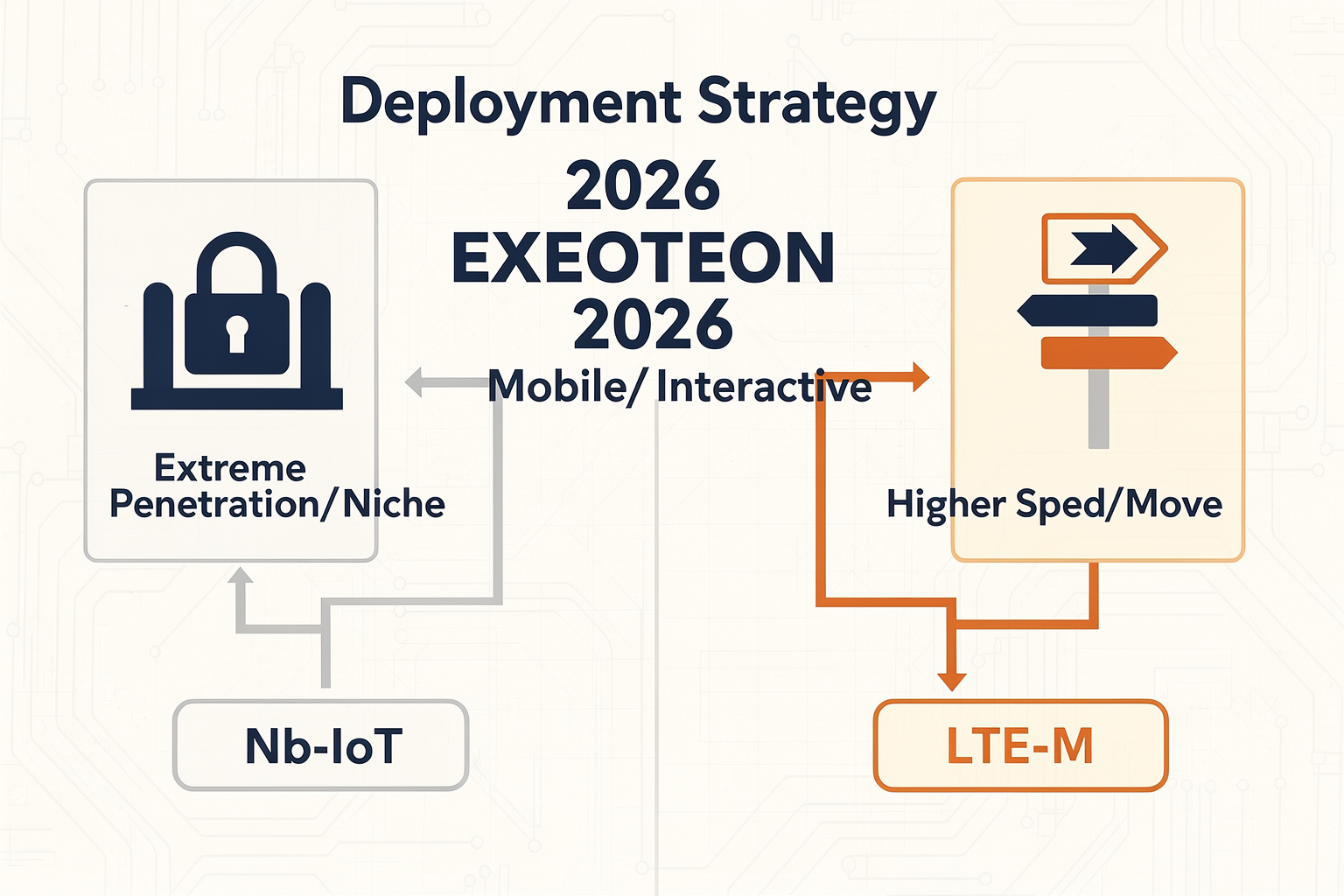
The primary determinant between NB-IoT and LTE-M is the device's location and movement profile. For Wide Area Network (WAN) static sensors, NB-IoT is typically the superior choice. It is engineered for low-cost, low-power deployments where devices are buried in the ground, mounted on utility poles, or situated in remote fields. NB-IoT signals can penetrate significantly deeper into building materials and walls, making it the optimal technology for smart metering and digital niche retail applications where Wi-Fi or LoRa signals often fail.
Conversely, LTE-M is designed for Mobile Field Operation. It supports UEP (Event-Triggered Packet Transmission) capabilities that are far more responsive to movement. If your project involves a robotics arm, a smart home hub that moves, or a wearable tracker that needs to detect acceleration instantly, LTE-M provides the necessary responsiveness. LTE-M maintains a connection to the core network more successfully during high-velocity movement compared to NB-IoT, which can sometimes struggle with dropped packets if the antenna orientation shifts.
Battery Life and Power Budgeting
If your design prioritizes energy efficiency and long maintenance cycles above all else, NB-IoT offers a distinct advantage. The NB-IoT protocol separates the radio and modem, allowing them to power down independently far more effectively than in LTE-M. This isolation allows the device to maintain connectivity without constantly consuming power.
Based on industry-standard CSP (Cellular Service Provider) comparisons, a well-tuned NB-IoT module can provide years of battery life—often estimated to sustain operation for 10+ years—because it spends the majority of its time in a deep sleep state. In contrast, LTE-M solutions generally require the radio to remain active for longer periods to maintain a standard-compliant connection, which compresses the battery life to approximately 2 to 5 years for high-frequency tasking.
Latency and Data Throughput
Your application's interactivity requirements will dictate the protocol choice. If you need to send a trigger signal to an actuator or a notification to a user app in real-time, LTE-M is the winner. LTE-M can handle sub-250 ms latency, whereas NB-IoT is generally limited to 10 seconds or more, making it suitable for alert-only systems but not interactive UI controllers.
Furthermore, throughput plays a role. Although NB-IoT provides up to 250 Kbps, LTE-M support is often around 1 Mbps. While both are sufficient for SMS and small sensor JSON payloads, LTE-M can handle faster firmware updates or larger file transfers, albeit at the expense of higher power consumption.
Quick Comparison for Your Project Roadmap:
| Feature | Best For | Signal Penetration | Battery Life (Typical) |
|---|---|---|---|
| NB-IoT | Meters, Smart Waste, Bins | Excellent (Deep) | 10+ Years |
| LTE-M | Wearables, Vehicles, Apps | Moderate (Thermal/Air) | 2 - 5 Years |
Selecting the right protocol is essentially picking between a robust battery life (NB-IoT) and better sensor interactivity (LTE-M). For engineering students and makers in India, understanding this difference is crucial for project success. Whether you are building a final-year engineering project for the Smart City challenge or designing a custom embedded system, you can easily find the necessary hardware on TecnoMate, which offers genuine components with datasheets for reliable NB-IoT and LTE-M deployments across India.
Frequently Asked Questions
NB-IoT is widely considered the superior choice for ultra-low power applications. Designed for standby efficiency, NB-IoT can power sensors for up to 10 years on a single standard battery, whereas LTE-M typically requires larger batteries for similar longevity due to higher active power consumption during data transmission bursts.
Ready to start building?
Explore our collection of DIY kits and components. All project components mentioned in this blog are available in our store.
Browse All Projects