

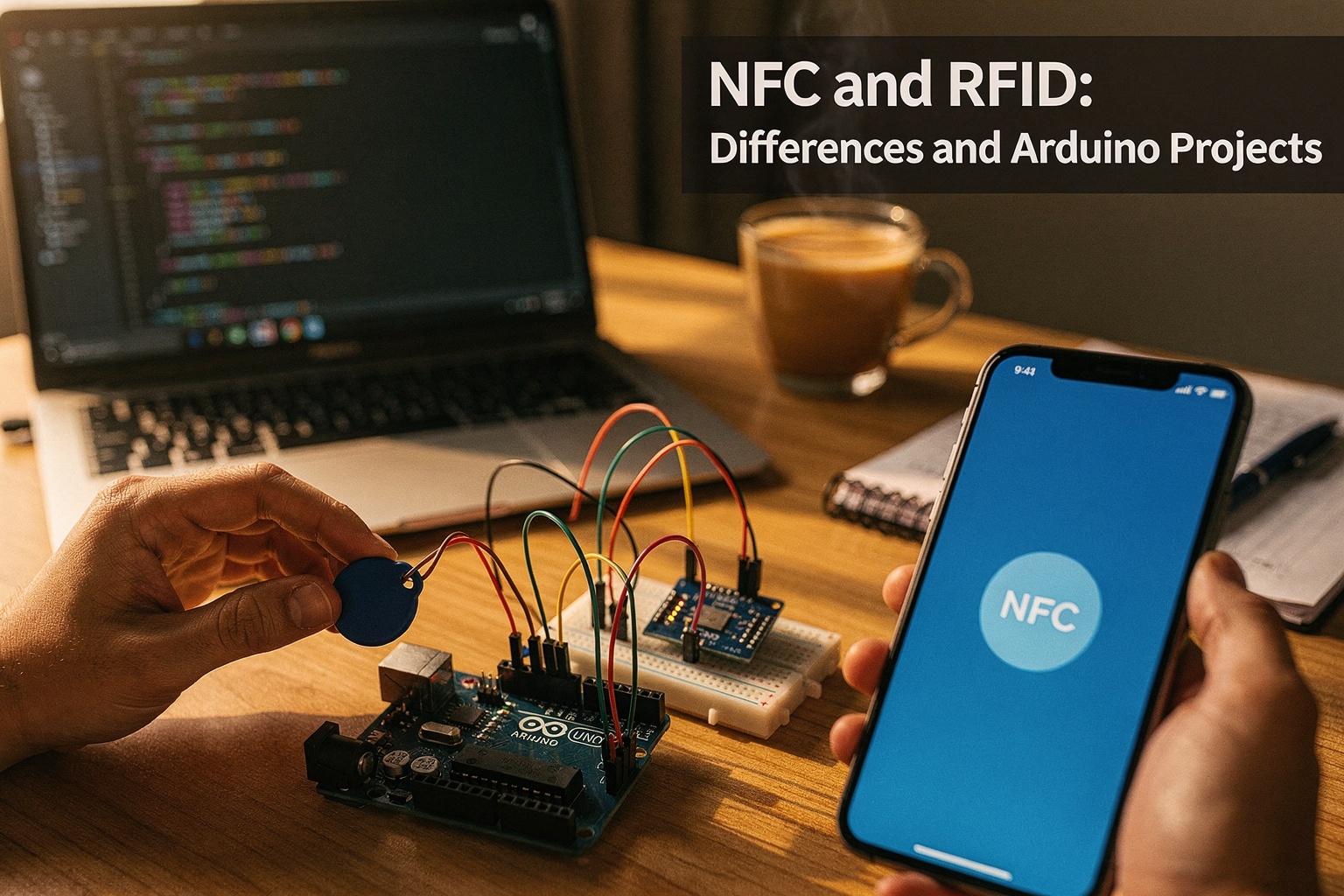
Introduction to NFC and RFID Technologies
The world of wireless communication has revolutionized how we interact with everyday objects, from payment systems to security applications. NFC and RFID are two prominent technologies that enable short-range wireless communication, yet they serve different purposes and have distinct characteristics. As an engineering student or DIY enthusiast in India, understanding these technologies and their implementation with Arduino can open doors to countless innovative projects.
Let's dive deep into these technologies, comparing their features, applications, and how you can leverage them in your Arduino projects. Whether you're building an access control system, inventory tracker, or payment solution, choosing the right technology is crucial for project success.
Understanding RFID Technology
Radio Frequency Identification (RFID) is a broad category of wireless communication technology that uses radio waves to transfer data between a tag (or transponder) and a reader. RFID systems have been around since World War II, but recent advancements have made them more accessible and affordable for hobbyists and students.
RFID systems typically consist of three main components:
- RFID Tag: Contains an antenna and a microchip that stores data
- RFID Reader: Captures data from tags and transfers it to a processing device
- Backend System: Processes and stores the information
RFID Frequency Bands
RFID operates across different frequency bands, each with specific characteristics:
| Frequency Band | Range | Typical Applications | Price Range (₹) |
|---|---|---|---|
| LF (Low Frequency) | 125-134 kHz | Animal tracking, access cards | 150-300 |
| HF (High Frequency) | 13.56 MHz | Library books, public transport | 200-500 |
| UHF (Ultra-High Frequency) | 860-960 MHz | Inventory management, supply chain | 300-800 |
| Microwave | 2.45-5.8 GHz | Long-range tracking, toll collection | 500-1500 |
Introduction to NFC (Near Field Communication)
Near Field Communication (NFC) is a specialized subset of RFID technology that operates at 13.56 MHz frequency band. What makes NFC unique is its very short communication range (typically less than 4 cm) and its ability to function in both active and passive modes.
NFC's design philosophy prioritizes ease of use and security. Unlike RFID, NFC requires devices to be in very close proximity, making it ideal for secure transactions and quick data transfers. The technology is built upon the ISO/IEC 14443 standard and supports peer-to-peer communication.
Key NFC Features
- Ultra-short range (4 cm maximum)
- Bidirectional communication
- Multiple communication modes (Read/Write, Peer-to-Peer, Card Emulation)
- Strong security protocols
- Low power consumption
Key Differences at a Glance
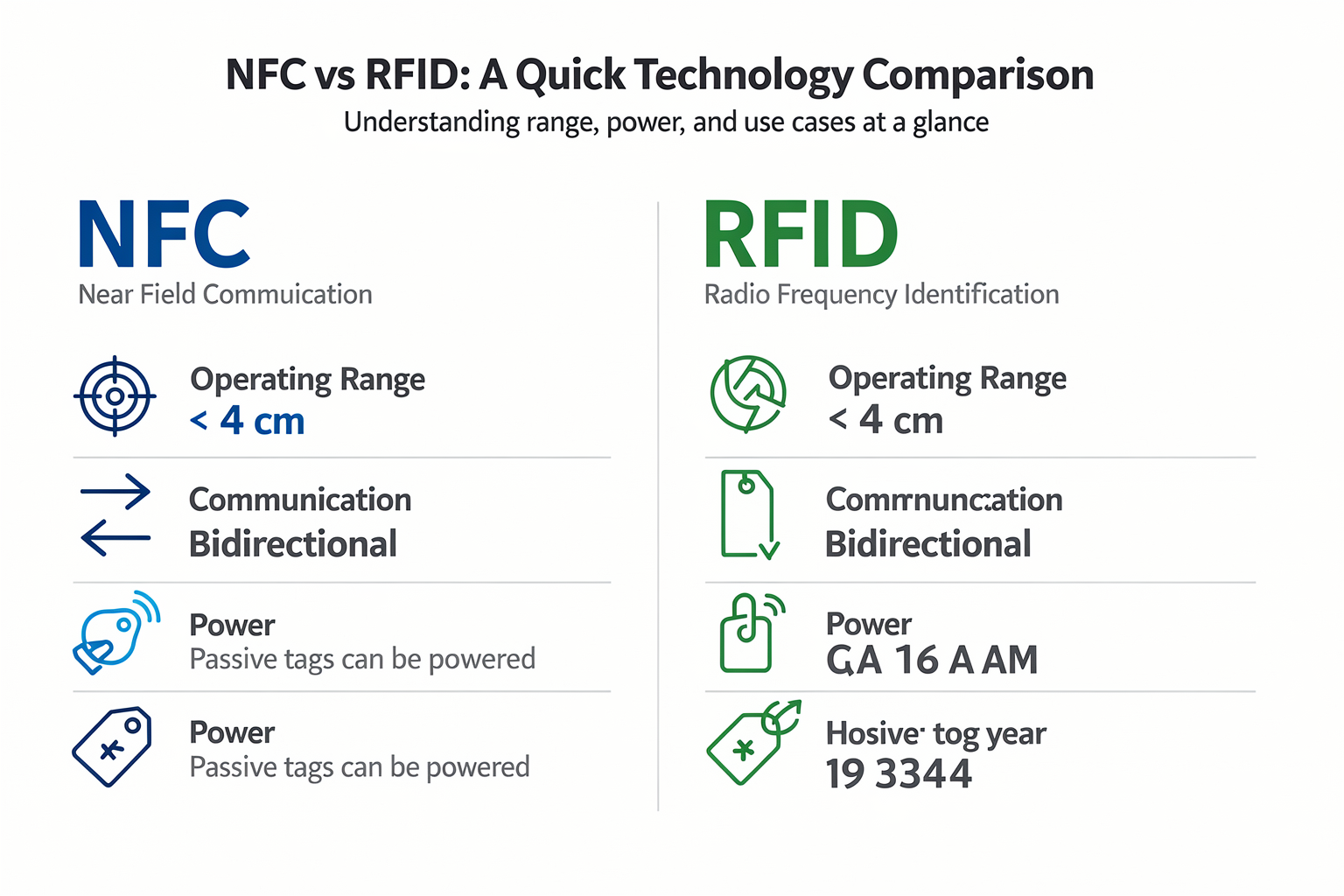
Before we dive deeper into Arduino projects, let's understand the fundamental differences between NFC and RFID:
| Feature | NFC | RFID |
|---|---|---|
| Operating Range | < 4 cm | 1 cm to 100+ meters |
| Communication Mode | Bidirectional | Typically unidirectional (tag to reader) |
| Power Requirements | Passive tags can be powered by reader field | Passive tags require reader field power |
| Data Rate | Up to 424 Kbps | Varies by frequency (106 Kbps to Mbps) |
| Primary Use | Mobile payments, data transfer | Inventory tracking, asset management |
| Complexity | Simpler implementation | More complex antenna design |
| Cost | Lower for short-range applications | Varies significantly by type |
| Security | Built-in encryption capabilities | Security depends on implementation |
Component Comparison and Pricing
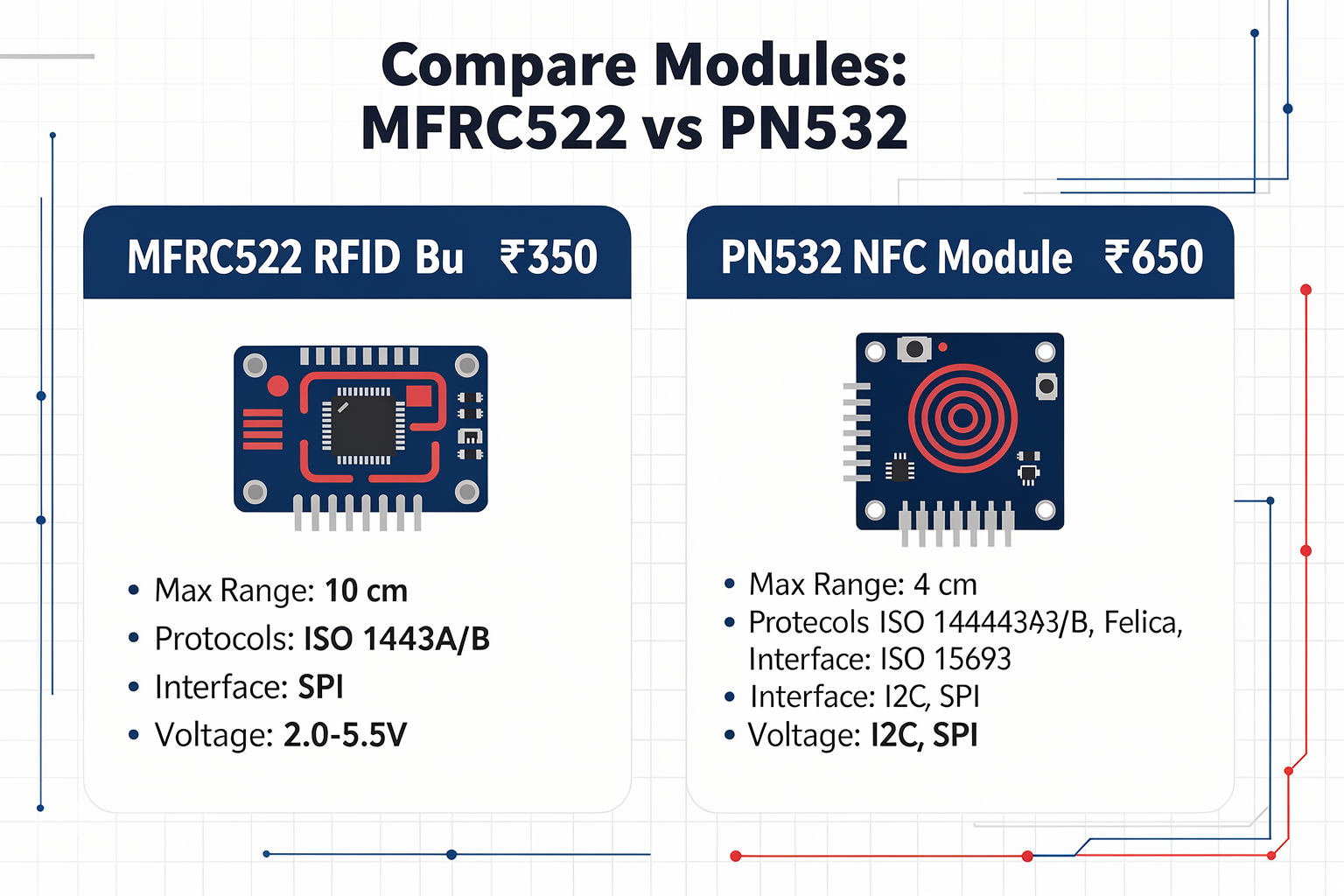
For your Arduino projects, selecting the right components is crucial. Here's a comparison of popular NFC and RFID components available in the Indian market:
| Component | Type | Frequency | Price (₹) | Availability |
|---|---|---|---|---|
| MFRC522 | RFID Reader | 13.56 MHz | 350 | Widely Available |
| PN532 | NFC Reader/Writer | 13.56 MHz | 650 | Available |
| RC522 | UHF RFID | 13.56 MHz | 450 | Available |
| NTAG215 | NFC Tag | 13.56 MHz | 45 | Available |
| EM4100 | RFID Tag | 125 kHz | 10 | Available |
| GDM6101 | NFC/RFID Combo | 13.56 MHz | 2,500 | Limited |
Note: Prices are approximate and may vary based on vendors and quantity purchased. All components listed are available at TecnoMate stores across major cities in India.
Technical Specifications and Performance
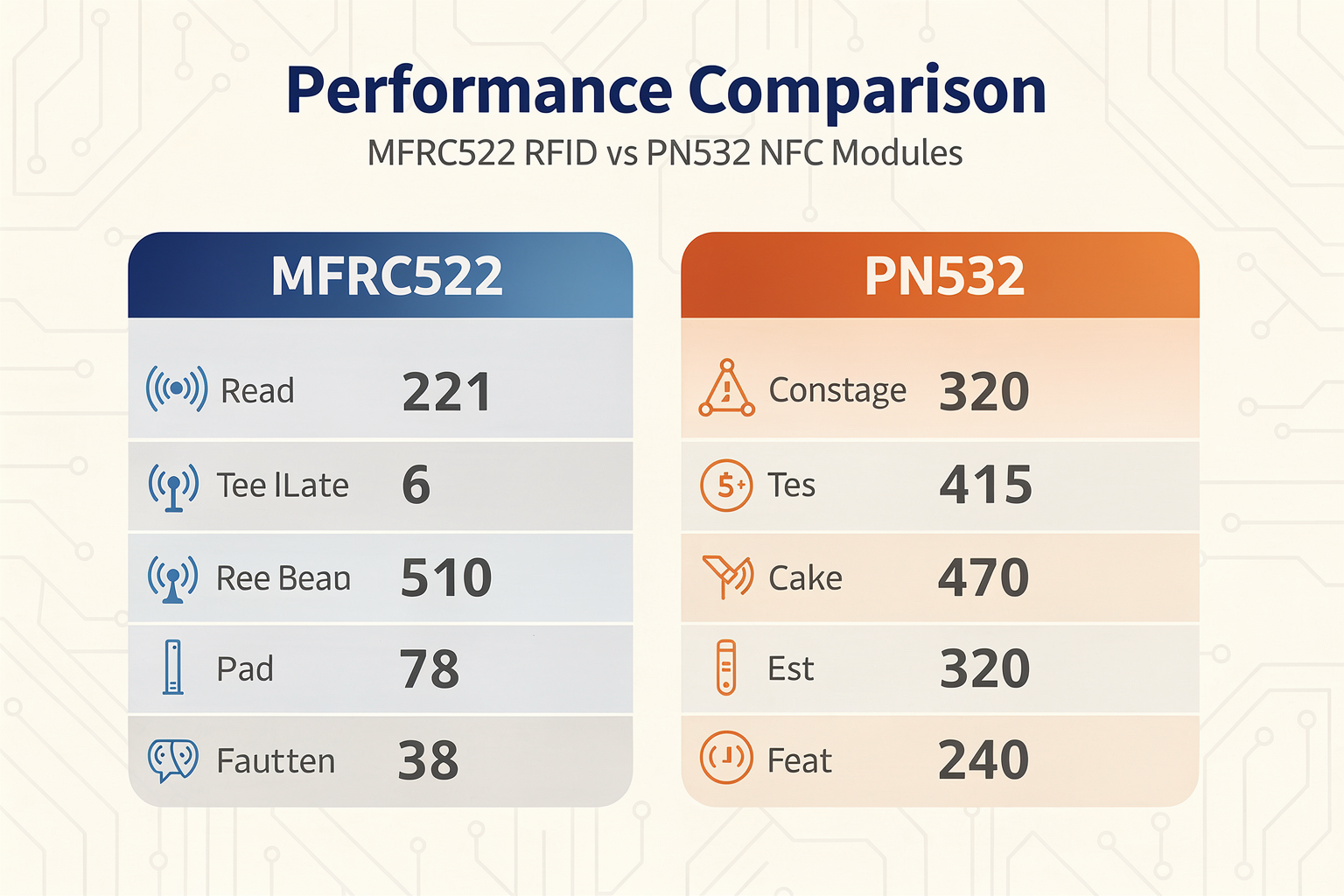
RFID Technical Details
The performance of RFID systems depends heavily on several technical factors:
- Read Range: Determined by frequency, antenna power, and tag design
- Data Storage: Varies from 64 bits to several kilobytes
- Update Capability: Some tags allow data rewriting, others are write-once
- Environmental Factors: Metal and water can affect performance significantly
For Arduino projects, the most common RFID module is the MFRC522, which offers excellent performance for short-range applications up to 10 cm.
NFC Technical Details
NFC specifications focus on convenience and security:
- Data Rate: 106, 212, or 424 Kbps based on modulation scheme
- Protocol Support: ISO/IEC 14443 Type A/B, FeliCa, ISO/IEC 15693
- Frame Types: Active, passive, and card emulation
- Encryption: Built-in 3DES/AES support for secure communications
The PN532 module provides comprehensive NFC support along with RFID compatibility, making it an excellent choice for projects requiring both technologies.
Performance Comparison Table
| Parameter | MFRC522 (RFID) | PN532 (NFC) |
|---|---|---|
| Max Read Range | 10 cm | 4 cm |
| Communication Mode | Half-duplex | Full-duplex |
| Supported Protocols | ISO 14443A/B | ISO 14443A/B, FeliCa, ISO 15693 |
| Operating Voltage | 2.0-5.5V | 2.0-5.5V |
| Current Consumption | 12-20 mA | 20-30 mA |
| Interface | SPI | I2C, SPI |
| Price | ₹350 | ₹650 |
Arduino Project: NFC-Based Access Control System
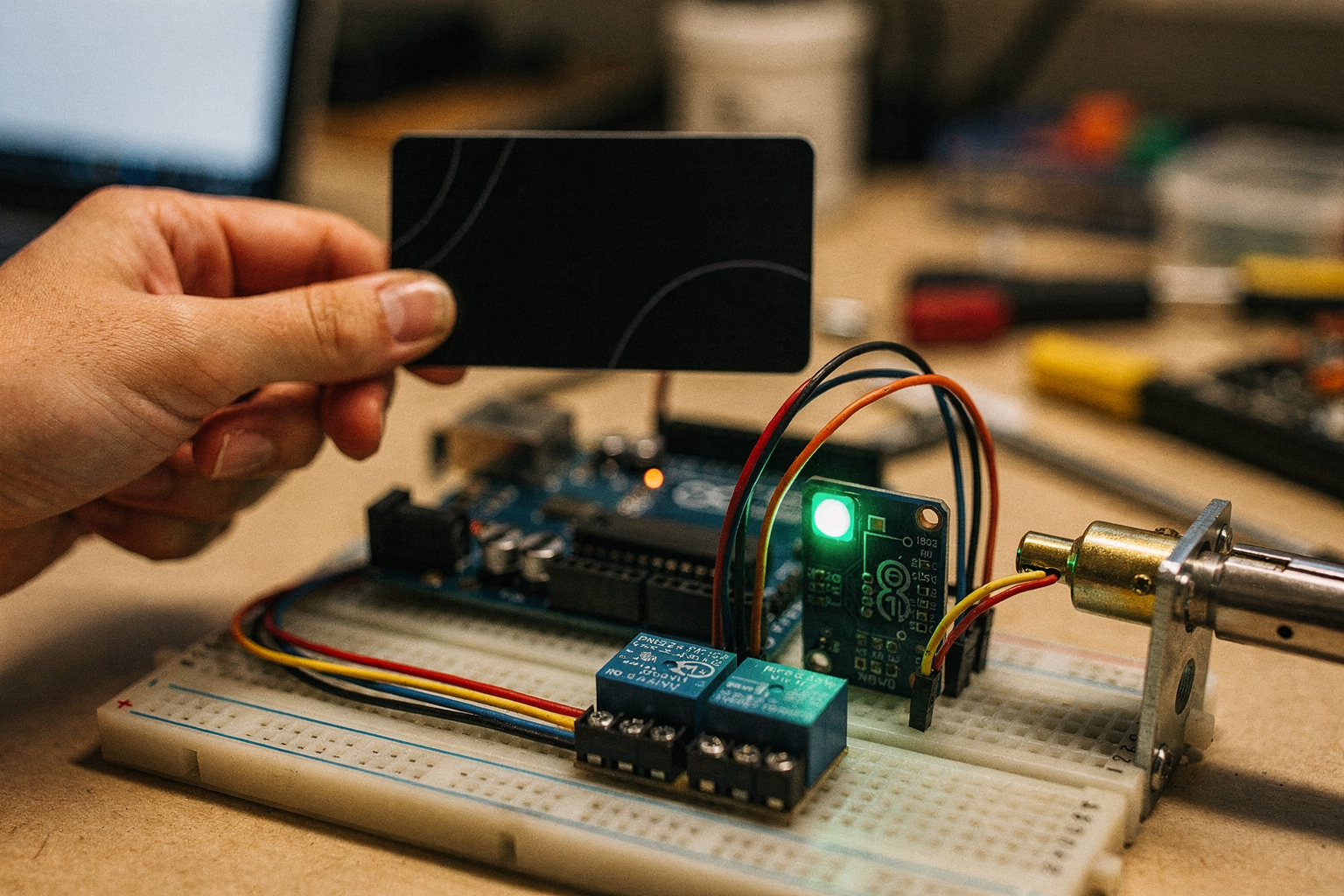
Let's build a practical project that demonstrates NFC technology with Arduino. This access control system
Ready to start building?
Explore our collection of DIY kits and components. All project components mentioned in this blog are available in our store.
Browse All Projects