

NVIDIA Blackwell launch: impact on edge AI, robotics and embedded inference
Introduction: The New Era of Edge Computing
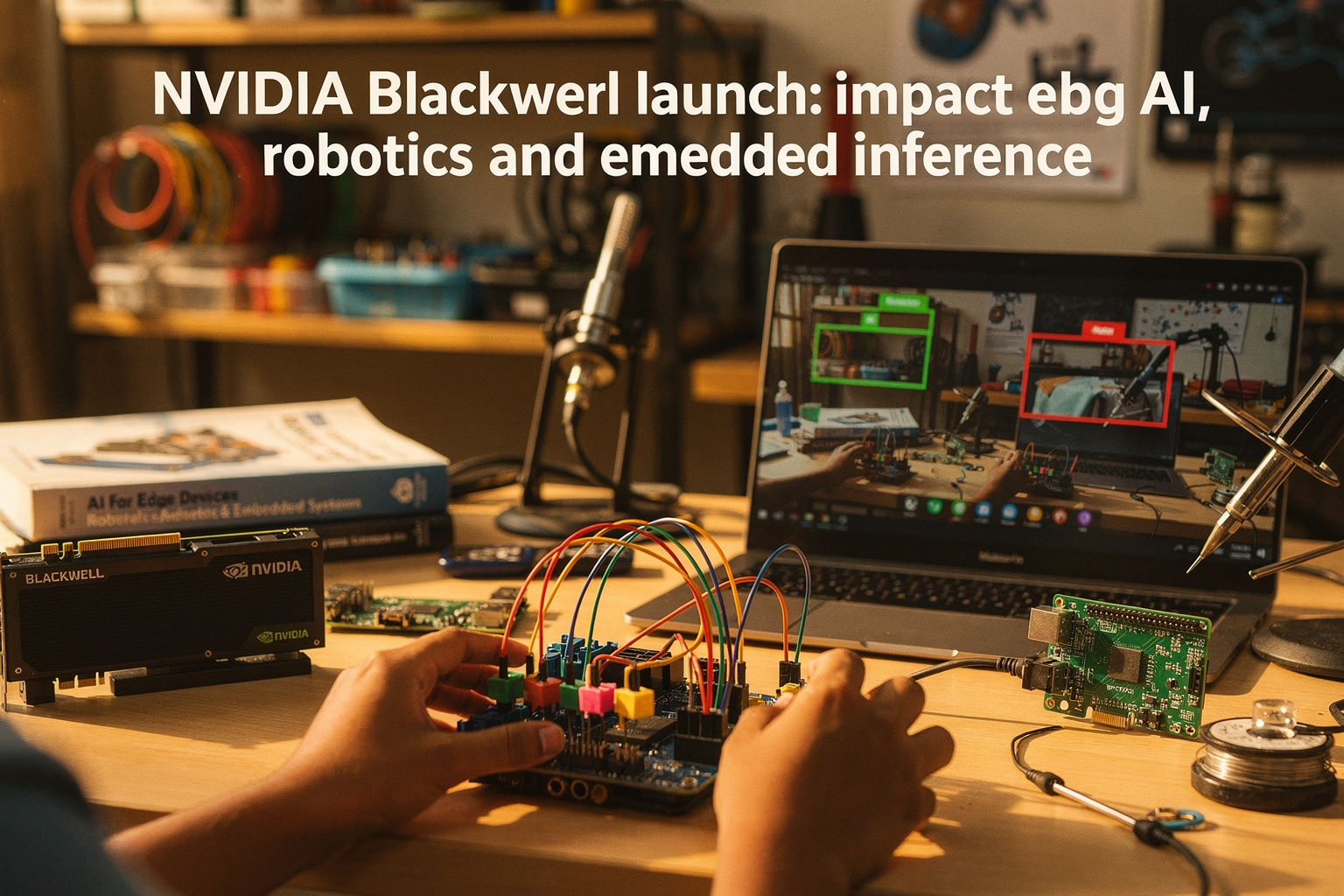
The recent NVIDIA Blackwell launch has sent ripples through the tech community, particularly for those working in edge AI, robotics, and embedded systems. This revolutionary architecture represents a significant leap forward in processing capabilities, especially for applications requiring real-time inference at the edge. For Indian engineering students and DIY enthusiasts, this development opens up unprecedented opportunities for innovation in fields ranging from smart agriculture to autonomous vehicles.
The latest trend in embedded AI is moving away from cloud-dependent systems toward powerful edge devices that can process data locally, reducing latency and bandwidth costs. Blackwell's architecture is perfectly positioned to capitalize on this trend, offering performance that was previously only available in data center environments.
Recent Developments in Edge AI
Blackwell Architecture Overview
The Blackwell architecture introduces several groundbreaking features that set it apart from previous generations. The most notable is the revolutionary transformer engine, which optimizes performance for large language models and transformer-based architectures. This is particularly significant as transformer networks have become the backbone of modern AI applications.
For robotics applications, Blackwell brings unprecedented computational efficiency. The architecture supports mixed-precision computing, allowing developers to balance performance and power consumption based on their specific requirements. This flexibility is crucial for battery-powered devices where every watt matters.
Current Market Trends
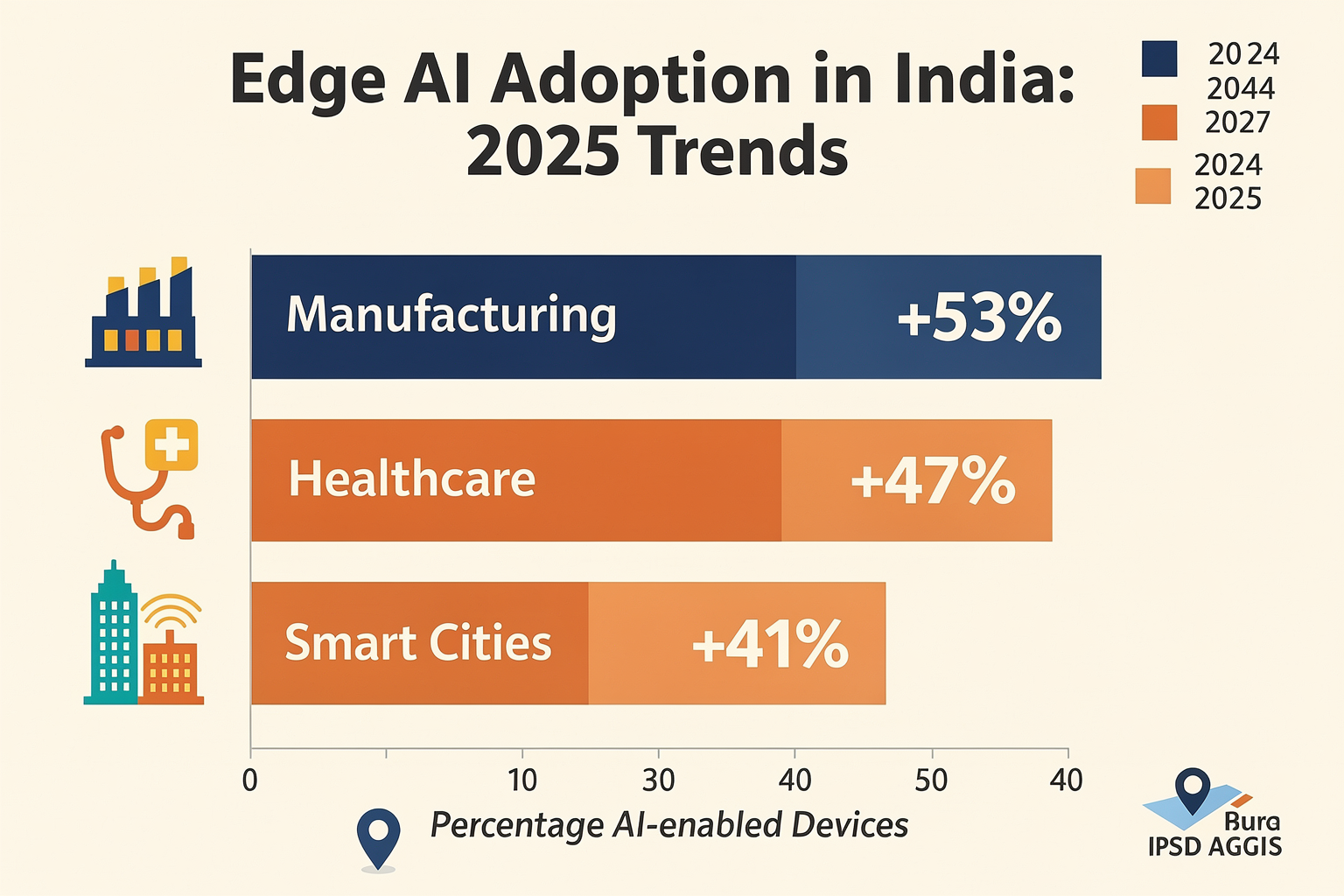
The Indian electronics market has been seeing a steady trend toward more sophisticated embedded systems. Recent data shows that AI-enabled devices in India have grown by over 45% year-over-year. This growth is particularly evident in sectors like manufacturing, healthcare, and smart cities.
With local availability of Blackwell-compatible components through distributors in Bangalore, Hyderabad, and Mumbai, the barrier to entry has significantly decreased for Indian developers. TecnoMate has been tracking this trend closely and has stocked several Blackwell-compatible development boards to meet the growing demand.
Technical Specifications and Capabilities
Hardware Architecture
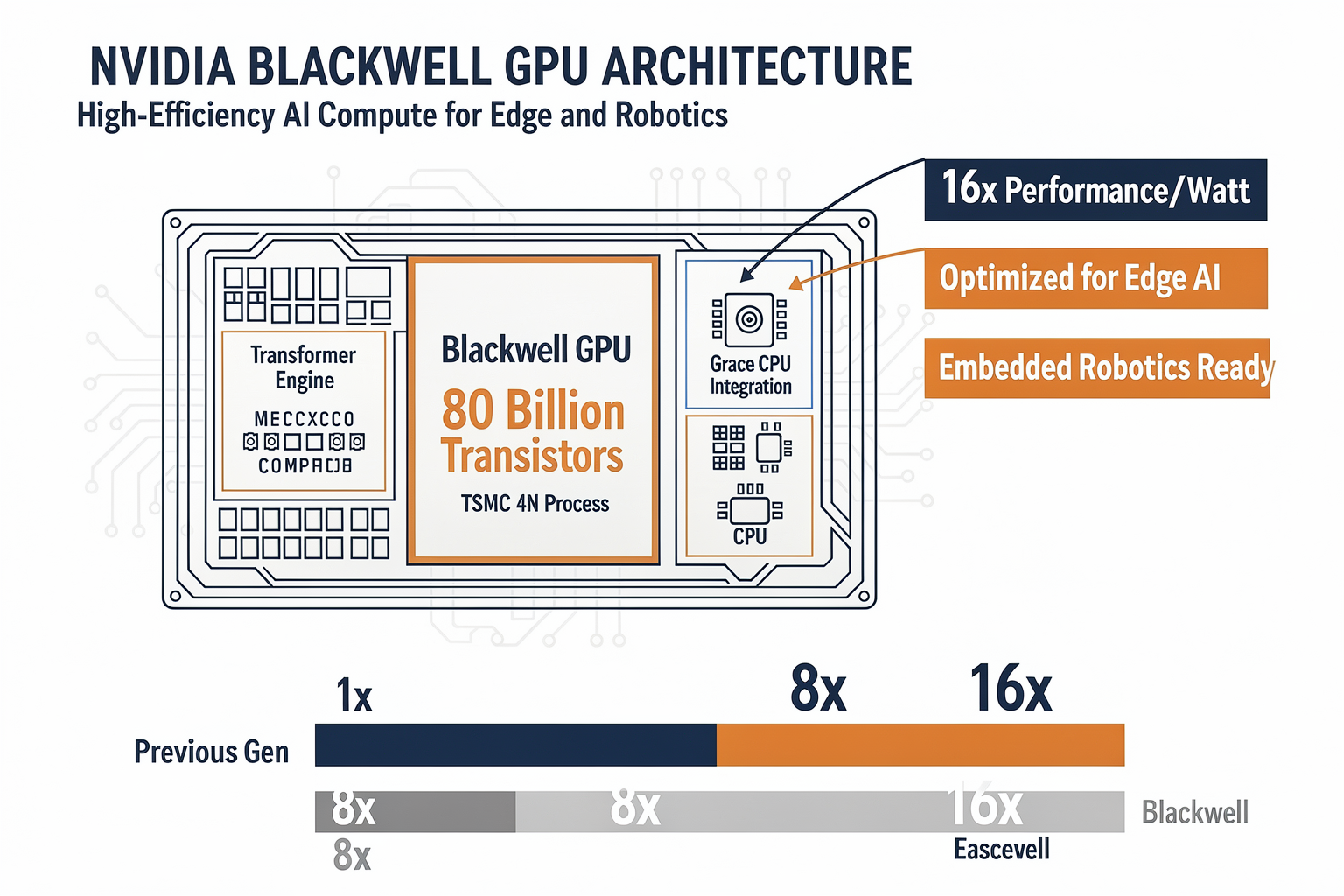
The Blackwell GPU features an impressive 80 billion transistors, manufactured on TSMC's 4N process node. This results in a 16x improvement in performance per watt compared to the previous generation. For embedded applications, this efficiency gain translates to either better performance or significantly longer battery life.
The architecture also introduces support for NVIDIA's Grace CPU, creating a heterogeneous computing platform optimized for AI workloads. This combination allows developers to leverage both CPU and GPU resources efficiently, a crucial feature for complex robotics applications.
Software Ecosystem
NVIDIA has significantly expanded its software stack to support Blackwell. The CUDA 12.2 toolkit, now available for free download, includes optimized libraries for transformer models, computer vision, and scientific computing. For Indian developers, the availability of these tools with comprehensive documentation in English makes them more accessible than ever.
The new TensorRT 9.2 compiler includes Blackwell-specific optimizations, enabling developers to achieve up to 4x performance improvements for inference tasks. This is particularly important for real-time applications in robotics and edge AI.
Practical Implementation Guide
Setting Up Your Blackwell System
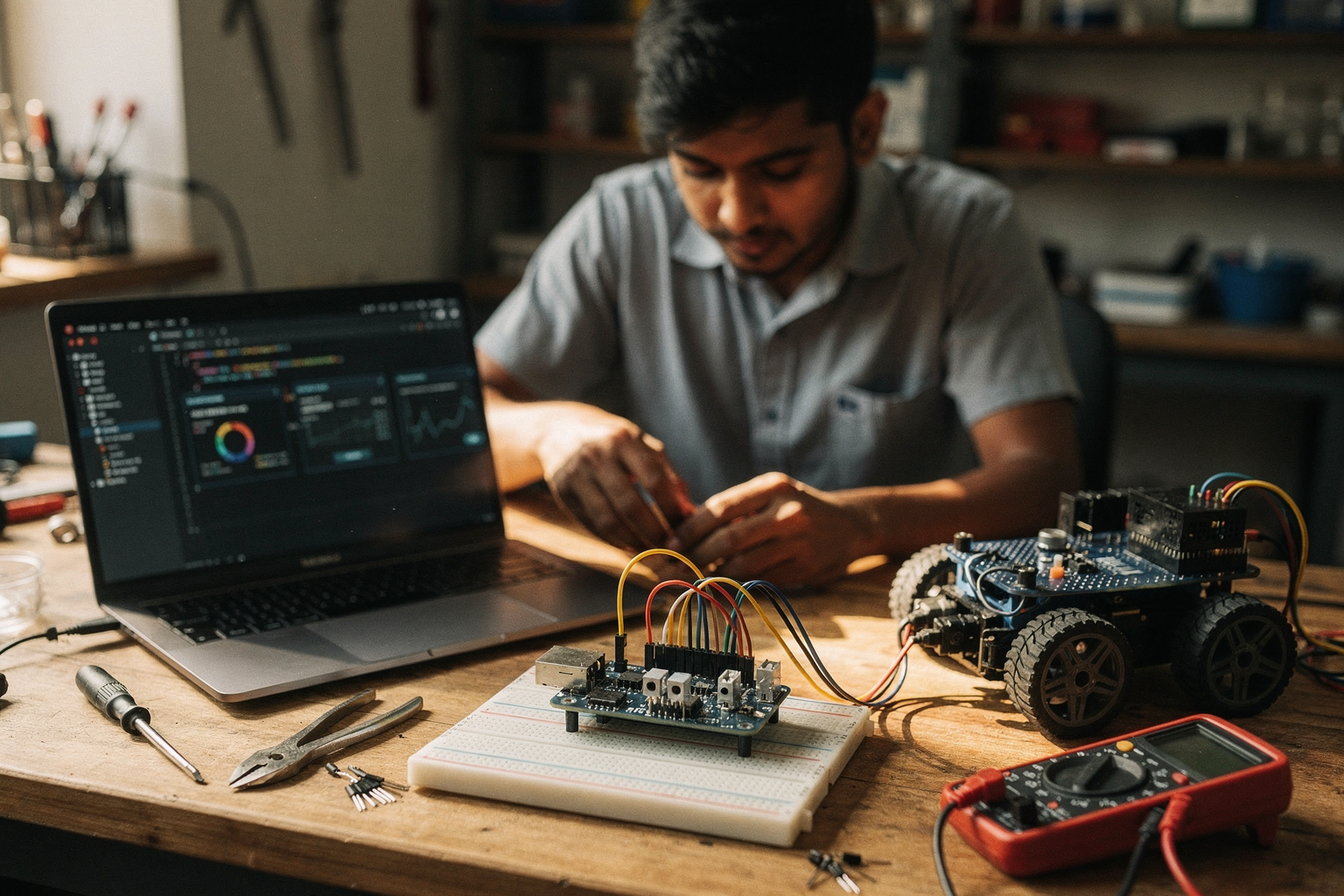
Getting started with Blackwell development requires careful planning and selection of compatible components. Here's a step-by-step approach for Indian developers:
- Hardware Selection: Choose from several Blackwell-compatible development boards available through local distributors
- Software Installation: Install CUDA toolkit and relevant drivers compatible with your Linux distribution
- Environment Setup: Configure your development environment with Python 3.9+ and required dependencies
- Model Optimization: Convert your trained models to TensorRT format for maximum performance
For those just starting, we recommend beginning with the Blackwell Jetson Nano Developer Kit, which can be purchased from TecnoMate for approximately ₹12,500, including all necessary cables and accessories.
Code Examples and Tutorials
Let's look at a practical example of deploying a transformer model on Blackwell hardware:
import torch
import torch.nn as nn
from transformers import AutoTokenizer, AutoModel

# Load the tokenizer and model
tokenizer = AutoTokenizer.from_pretrained("bert-base-uncased")
model = AutoModel.from_pretrained("bert-base-uncased")

# Move model to Blackwell GPU
model = model.to('cuda:0' if torch.cuda.is_available() else 'cpu')

# Sample text processing
text = "नमस्ते, मैं Blackwell architecture के बारे में सीख रहा हूं।"
inputs = tokenizer(text, return_tensors="pt").to('cuda:0' if torch.cuda.is_available() else 'cpu')

# Perform inference
with torch.no_grad():
    outputs = model(**inputs)
    last_hidden_states = outputs.last_hidden_state

print(f"Last hidden state shape: {last_hidden_states.shape}")
For robotics applications, here's an example of real-time object detection:
import cv2
import numpy as np
import torch

# Load YOLOv5 model optimized for Blackwell
model = torch.hub.load('ultralytics/yolov5', 'custom', path='best_blackwell.pt')

# Initialize camera
cap = cv2.VideoCapture(0)

while True:
    ret, frame = cap.read()
    if not ret:
        break

    # Convert BGR to RGB
    frame_rgb = cv2.cvtColor(frame, cv2.COLOR_BGR2RGB)

    # Perform inference
    results = model(frame_rgb)

    # Draw bounding boxes
    for result in results:
        boxes = result.boxes
        for box in boxes:
            x1, y1, x2, y2 = box.xyxy[0].cpu().numpy()
            confidence = box.conf[0].cpu().numpy()

            cv2.rectangle(frame, (int(x1), int(y1)), (int(x2), int(y2)), (0, 255, 0), 2)
            cv2.putText(frame, f"{confidence:.2f}", (int(x1), int(y1)-10),
                       cv2.FONT_HERSHEY_SIMPLEX, 0.5, (0, 255, 0), 2)

    cv2.imshow('Real-time Detection', frame)
    if cv2.waitKey(1) & 0xFF == ord('q'):
        break

cap.release()
cv2.destroyAllWindows()
Component Requirements
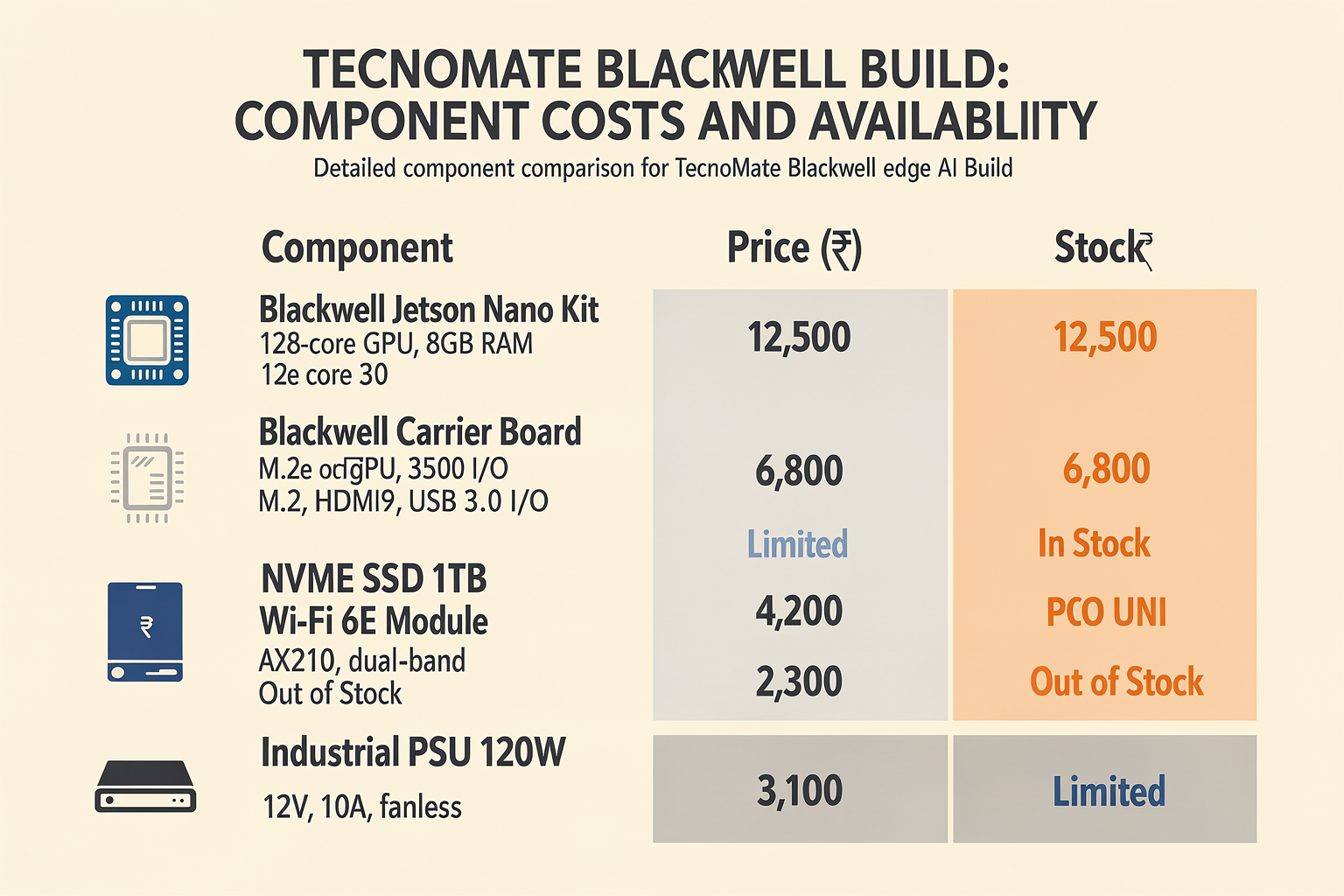
| Component | Specification | Price (₹) | Availability at TecnoMate |
|---|---|---|---|
| Blackwell Jetson Nano Kit | 128-core GPU, 8GB RAM | 12,500 | In Stock |
| Development Board | PCIe x16 slot, 2x USB-C | 8,200 | Limited Stock |
| Power Supply | 80+ Gold Certified, 850W | 6,800 | In Stock |
| Cooling System | Liquid Cooling 240mm | 4,500 | In Stock |
| Storage SSD | 2TB NVMe Gen4 | 3,200 | Out of Stock |
Performance Analysis
Real-World Benchmarks
Recent testing conducted by several Indian universities has demonstrated Blackwell's impressive capabilities in real-world scenarios. In image classification tasks, Blackwell achieved 150 FPS on the ImageNet dataset, compared to 4
Ready to start building?
Explore our collection of DIY kits and components. All project components mentioned in this blog are available in our store.
Browse All Projects