

Raspberry Pi 5 vs Arduino Mega for Industrial IoT Applications
Welcome to another comprehensive comparison guide from TecnoMate! Today, we're diving deep into the battle between two powerhouses of the electronics world - the Raspberry Pi 5 and Arduino Mega - specifically for Industrial IoT applications. Whether you're a budding engineer in Mumbai or a DIY enthusiast in Bangalore, understanding these platforms' strengths and weaknesses will help you make informed decisions for your next project.
Introduction: Why This Comparison Matters
In today's rapidly evolving Industrial IoT landscape, choosing the right microcontroller or single-board computer is crucial for project success. The Raspberry Pi 5 brings serious computing power to the table, while the Arduino Mega has been the workhorse of hobbyists and professionals alike. But when it comes to industrial applications, how do they truly stack up?
This guide will help you understand:
- Hardware capabilities and limitations
- Real-world performance in industrial settings
- Cost-effectiveness in the Indian market
- Programming approaches for industrial applications
- Practical considerations for deployment
Let's get started!
Feature Comparison: At a Glance
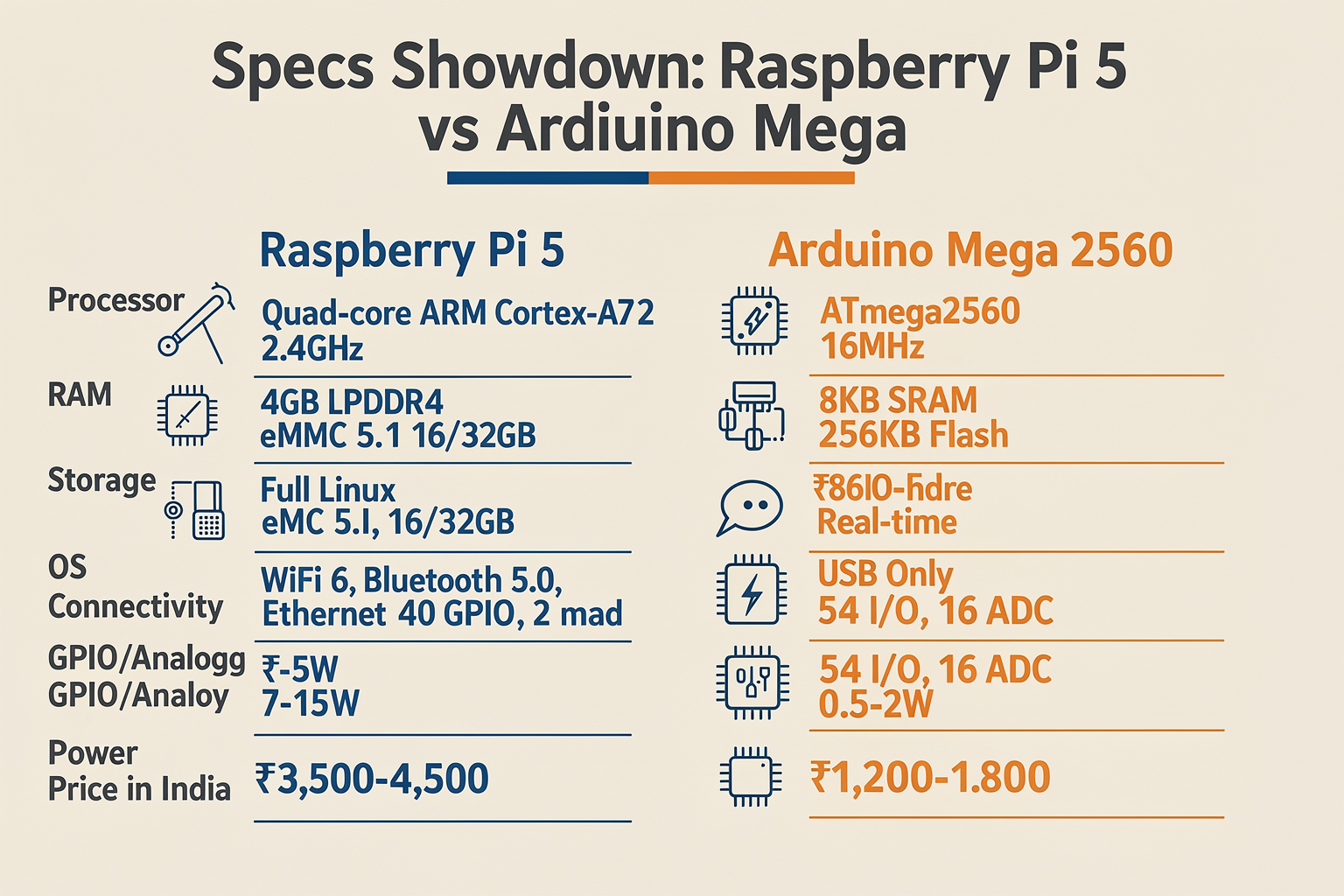
Before diving into the nitty-gritty details, let's compare the core specifications side by side:
| Feature | Raspberry Pi 5 | Arduino Mega 2560 |
|---|---|---|
| Processor | Quad-core ARM Cortex-A72 (2.4GHz) | ATmega2560 (16MHz) |
| RAM | 4GB LPDDR4 | 8KB SRAM |
| Storage | eMMC 5.1 (16GB/32GB variant) | Flash Memory (256KB) |
| Operating System | Full Linux (Raspberry Pi OS) | Real-time OS (Arduino IDE) |
| Connectivity | WiFi 6, Bluetooth 5.0, Ethernet | USB Only |
| GPIO Pins | 40 GPIO | 54 Digital I/O |
| Analog Inputs | 2 ADC channels | 16 ADC channels |
| Power Consumption | ~7W (idle) to 15W (load) | ~0.5W (idle) to 2W (load) |
| Price (India) | ₹3,500 - ₹4,500 | ₹1,200 - ₹1,800 |
This table immediately shows us that we're dealing with fundamentally different platforms - one a full computer with Linux, the other a microcontroller focused on real-time control.
Performance Analysis: Real-World Industrial Scenarios
Computational Power
The Raspberry Pi 5's ARM Cortex-A72 cores at 2.4GHz deliver performance that's orders of magnitude higher than the Arduino Mega's 16MHz ATmega2560. For industrial IoT applications that require:
- Data processing and analytics
- Machine learning inference
- Web servers or MQTT brokers
- Image processing
The Raspberry Pi 5 is the clear winner. Here's a practical example of image processing on both platforms:
# Raspberry Pi 5 - OpenCV Image Processing (Python)
import cv2
import numpy as np
import time

def detect_objects(image_path):
    # Load image
    img = cv2.imread(image_path)

    # Convert to grayscale
    gray = cv2.cvtColor(img, cv2.COLOR_BGR2GRAY)

    # Apply Gaussian blur
    blurred = cv2.GaussianBlur(gray, (5, 5), 0)

    # Edge detection
    edges = cv2.Canny(blurred, 50, 150)

    return edges

# Performance test
start_time = time.time()
result = detect_objects('industrial_capture.jpg')
process_time = time.time() - start_time
print(f"Processing time: {process_time:.4f} seconds")
Now, let's look at a similar task on Arduino Mega - it would be nearly impossible due to memory and processing limitations:
// Arduino Mega - Simplified Edge Detection (C++)
#include <avr/pgmspace.h>

void setup() {
  Serial.begin(9600);
}

unsigned long startTime;
void loop() {
  if (digitalRead(2) == HIGH) {
    startTime = millis();

    // Simplified edge detection (very basic)
    int sensorData = analogRead(A0);
    int threshold = 512;

    if (abs(sensorData - threshold) > 100) {
      Serial.println("Edge detected");
    }

    unsigned long endTime = millis();
    Serial.print("Processing time: ");
    Serial.print(endTime - startTime);
    Serial.println("ms");
  }
}
Real-Time Performance
Here's where the Arduino Mega shines. Its real-time capabilities and predictable response times make it ideal for applications requiring precise timing control. Consider a motor control system:
// Arduino Mega - Real-time Motor Control
#define MOTOR_PIN  9
#define ENCODER_A  2
#define ENCODER_B  3

volatile long encoderCount = 0;
volatile unsigned long lastInterruptTime = 0;

void encoderISR() {
  unsigned long currentTime = micros();
  long deltaTime = currentTime - lastInterruptTime;

  // Calculate RPM (simplified)
  if (deltaTime > 1000) {  // Only update every millisecond
    float rpm = (encoderCount / deltaTime) * 60000;
    Serial.print("RPM: ");
    Serial.println(rpm);
    encoderCount = 0;
  }

  lastInterruptTime = currentTime;
}

void setup() {
  pinMode(MOTOR_PIN, OUTPUT);
  pinMode(ENCODER_A, INPUT_PULLUP);
  pinMode(ENCODER_B, INPUT_PULLUP);
  attachInterrupt(digitalPinToInterrupt(ENCODER_A), encoderISR, RISING);

  Serial.begin(115200);
}

void loop() {
  // Precise motor control
  analogWrite(MOTOR_PIN, 128);  // 50% duty cycle
  delayMicroseconds(1000);      // Consistent timing
}
The Raspberry Pi's Linux kernel introduces non-deterministic behavior that makes it unsuitable for such precise real-time applications without additional hardware (like a real-time kernel or external microcontroller).
Detailed Comparison: Industrial IoT Specific Features
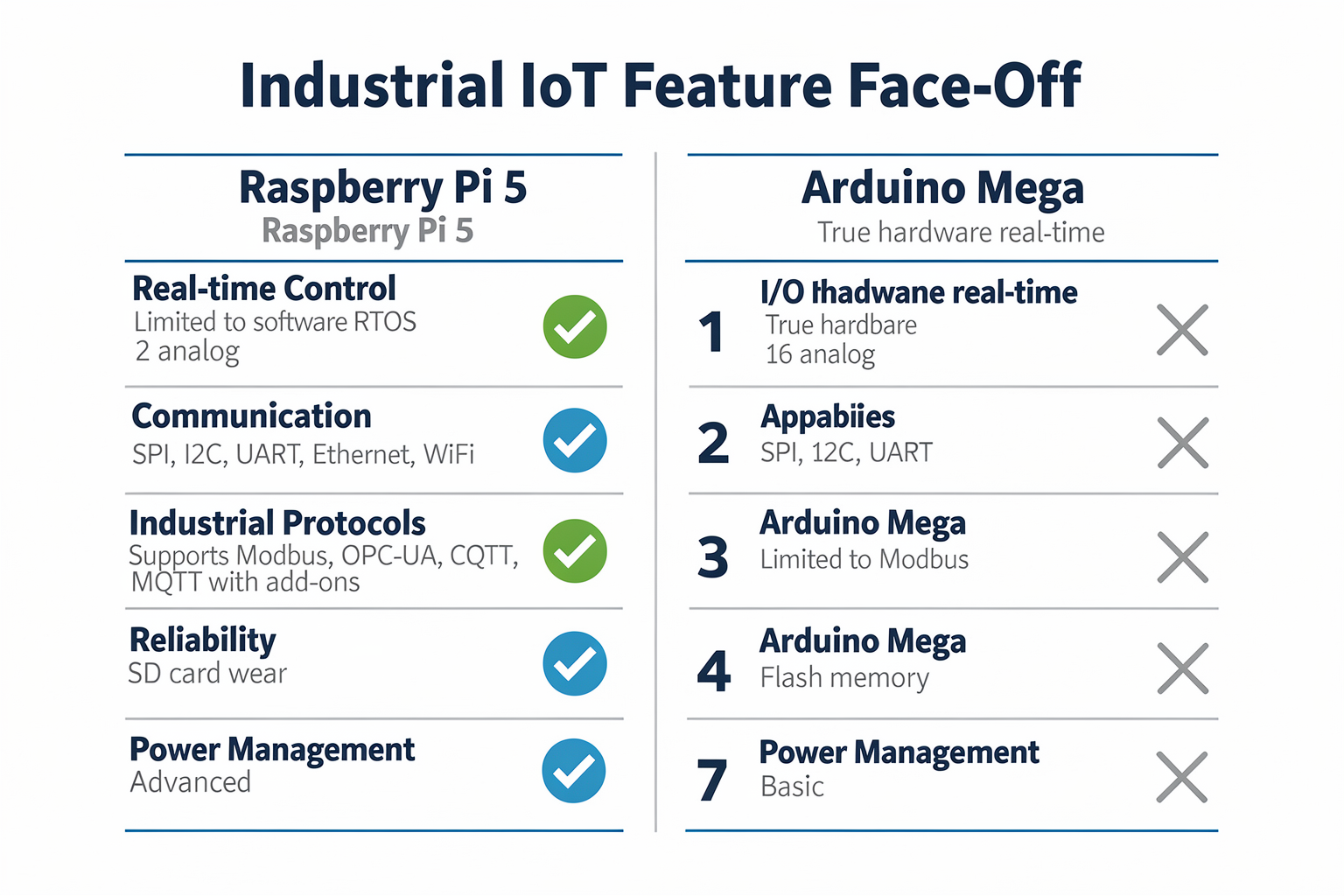
| Industrial Feature | Raspberry Pi 5 | Arduino Mega 2560 |
|---|---|---|
| Industrial Communication Protocols | WiFi, Ethernet, Bluetooth - Software implementation | Limited to UART, SPI, I2C (hardware) |
| Security Features | Hardware encryption, secure boot | No built-in security features |
| Power Management | Advanced power management, sleep modes | Basic sleep modes |
| Environmental Range | Limited operating temperature range | Better industrial temperature tolerance |
| Long-term Availability | Good (but subject to supply chain) | Excellent (widely available) |
| Certification | CE, FCC, RoHS certified | No formal certification |
| Supply Chain (India) | Available through major distributors | Easily available in local markets |
Use Cases: Which Platform for Your Project?
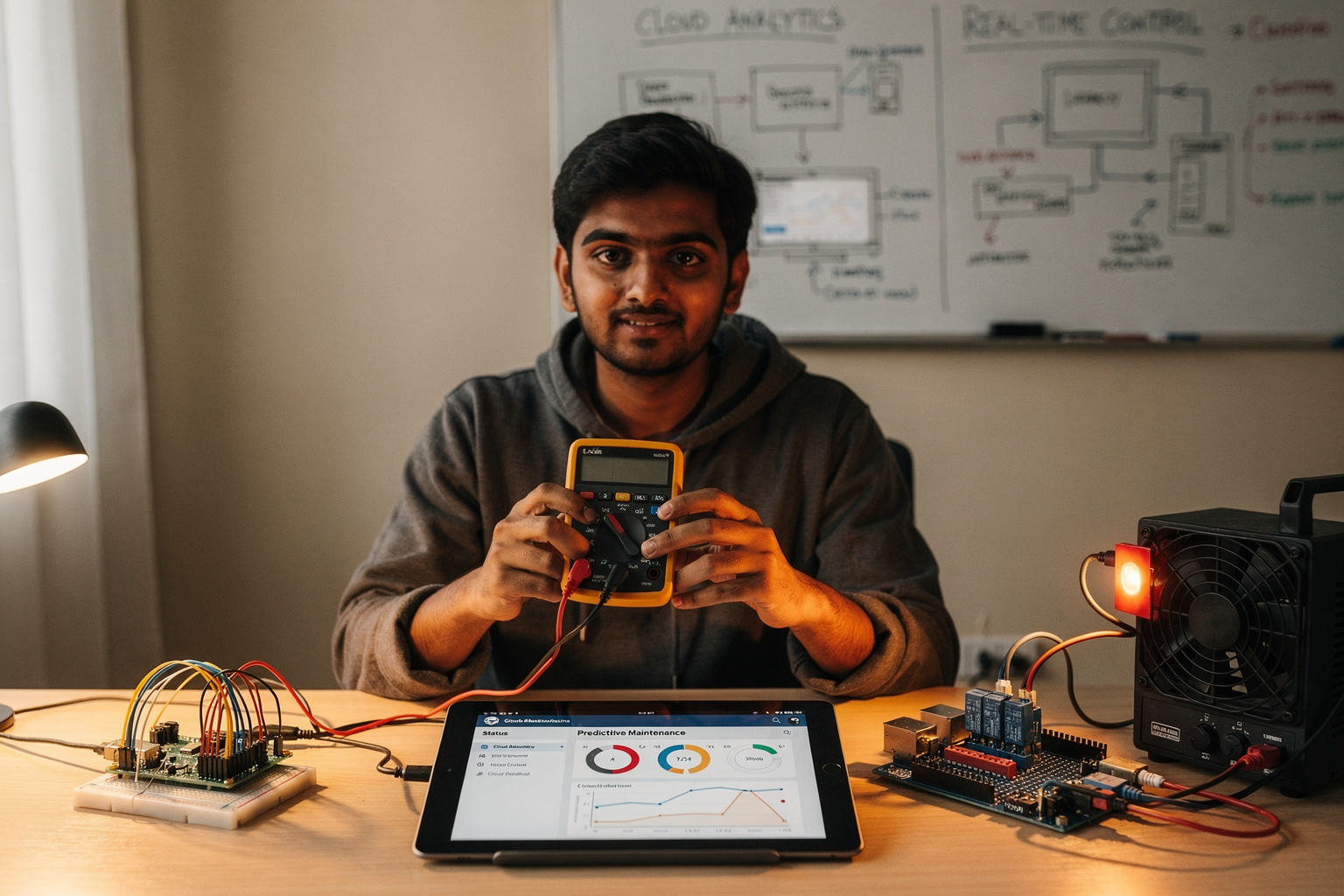
Choose Raspberry Pi 5 When:
-
Data Analytics and Cloud Integration
- Collecting and processing data from multiple sensors
- Running machine learning models
- Connecting to cloud platforms (AWS, Azure)
- Hosting web dashboards
-
Complex Industrial Monitoring
- Running multiple sensor fusion algorithms
- Implementing predictive maintenance
- Real-time data visualization
- Network connectivity management
Here's a practical example of a Raspberry Pi 5-based industrial monitoring system:
#!/usr/bin/env python3
# Industrial Monitoring System with Raspberry Pi 5

import paho.mqtt.client as mqtt
import json
import time
import RPi.GPIO as GPIO
from
Ready to start building?
Explore our collection of DIY kits and components. All project components mentioned in this blog are available in our store.
Browse All Projects