
RISC-V Processors in 2026: Commercial Adoption and Maker Boards
Did you know that by the second quarter of 2026, open-source architectures have quietly secured a significant foothold in the electronics market? While ARM held the crown for decades, RISC-V processors have evolved from theoretical concepts into a tangible, high-performance reality for both commercial industries and the DIY community. Recent industry data suggests that RISC-V architectures now account for over 15% of all newly designed embedded chips, a figure projected to double as major technology giants finalize their licensing deals with open-source consortiums. This isn't just a statistical trend; it represents a massive pivot in the electronics engineering world, where developers are demanding more control, better performance per watt, and lower licensing costs.
For students and hobbyists in India, this shift translates directly to more powerful, affordable, and versatile development boards that can handle complex tasks like real-time AI and industrial IoT. The "Maker Board" scene in 2026 is crowded with specialized hardware, but navigating this landscape requires understanding the specific advantages of using RISC-V processors over traditional microcontrollers. From Zephyr OS to PaddlePaddle inference on edge devices, the software ecosystem has matured enough to support serious engineering projects. In this post, we will dissect the latest commercial trends, guide you through selecting the right evaluation board, and show you how to leverage these modern chips for your own innovations.
The beauty of the open-source standard lies in its transparency; you can modify registers and feature sets without breaching licenses, making it the ideal architecture for experimental engineering. We will walk you through a pin-out comparison of top hardware contenders and demonstrate how to integrate these RISC-V processors into existing sensor arrays and motor driver setups.
As you embark on your next build journey, remember that you don't need to hunt down individual components to experience this future technology. Platforms like TecnoMate simplify the process by offering ready-to-solder project kits featuring precisely these emerging processors, complete with India-wide delivery and detailed build documentation.
Introduction: The Open Source Revolution Heats Up
The transition from niche experiment to mainstream embedded architecture is evident in current market data. By the second quarter of 2026, RISC-V is not just an alternative; it is a primary contender, accounting for a significant portion of the global landscape. Recent industry data indicates that this architecture has secured over 15% of all newly designed embedded chips, a figure projected to double as major technology giants finalize their licensing deals with open-source consortiums. For electronics engineers, this spike signals a fundamental shift in the economic model of hardware development. The traditional royalty burden of proprietary architectures like ARM is shrinking, replaced by a focus on custom instruction sets. This allows engineers to optimize for specific use cases—whether that is high-throughput data processing or ultra-low power consumption—without the constraints of licensing fees.
Performance Metrics and Efficiency
At the core of this revolution is the relentless pursuit of better performance per watt, a metric that has historically favored ARM but is rapidly becoming a competitive strength for RISC-V. The maturity of the ecosystem means modern RISC-V cores are handling tasks previously reserved for Application Processors. For students and hobbyists in India, this translates to a new class of "Maker Boards" capable of running complex applications locally.
The demand is clear: engineers want devices that can handle real-time AI inference and do so efficiently. This capability extends to hardware integrations, allowing for the seamless interaction of modern processors with motor driver setups and high-density sensor arrays. By enabling edge computing, RISC-V ensures that your projects have the latency performance required for critical industrial applications without relying on the cloud.
Overcoming the Sourcing Bottleneck
Despite the technological advantages, hardware accessibility remains a concern for many builders. While the open-source nature of the hardware design ensures quality, sourcing the specific evaluation boards and sensors requires reliable logistics. We strongly encourage you to utilize platforms like TecnoMate, which simplify this supply chain. TecnoMate offers ready-to-build project kits featuring these emerging processors, along with genuine components and detailed build documentation. This approach is crucial because modern RISC-V projects often involve multiple I2C/SPI masters and specific memory configurations that are prone to failure if components are mismatched or without datasheets.
The Democratization of Debugging
Another tangible benefit of the open-source standard in 2026 is the democratization of debugging tools. Unlike proprietary architectures that often lock debuggers behind expensive hardware tiers, RISC-V compliance brings ISA debuggers into the open. This means that a developer with a Linux machine can easily write a debugging probe in C to inspect memory and registers without investing in expensive hardware analyzers. This transparency lowers the "Total Cost of Ownership" for smaller teams and individual makers, making high-level embedded engineering accessible to the broadest possible audience. By stripping away the commercial locks on verification tools, the entire engineering community in India can contribute to the rapid evolution of this technology.
Background & Context: RISC-V's Journey to the Mainstream
The Economics of Freedom: Breaking the ARM Licensing Model
To truly appreciate the massive trajectory of RISC-V, one must understand the financial friction it has removed from the hardware design process. For decades, the embedded industry ran on a model where entering the market required paying substantial licensing fees to ARM, even before a single line of logic was coded. RISC-V fundamentally shattered this monopoly by adopting a royalty-free, open-source foundation. This shift is not merely philosophical; it has critical economic implications.
According to recent industry data, RISC-V architectures now account for over 15% of all newly designed embedded chips. This statistic is a reversal of history and signals a fundamental pivot in the electronics engineering world. Previously, proprietary architectures acted as closed boxes; now, open-source standards allow developers to modify registers and feature sets without breaching licenses. As major technology giants finalize their licensing deals with open-source consortia, projections indicate this figure will double. This economic freedom allows startups and engineers to allocate budget toward raw performance and innovation rather than legal compliance, solidifying RISC-V’s foothold in the mainstream.
A Modular Approach to Silicon Design
What differentiates RISC-V from its predecessors is its built-in modularity. Think of it as LEGO for microprocessors: core instructions are royalty-free, and extended capabilities (like crypto engines or vector processing) are added as optional extensions.
This "gold open source" standard allows for a lean, efficient hardware design. Engineers aren't burdened with unused resources just because a manufacturer decided to include them to justify a higher-end SKU. Instead, a RISC-V processor can be stripped down to the absolute essentials needed for a sensor node, or scaled up to high-performance levels for edge AI. It is this specific technical advantage that has enabled open-source architectures to secure a significant foothold in the commercial sector by the second quarter of 2026.
Empowering the Indian Maker Community
This technological openness has a direct impact on the DIY scene in India. The maturity of the software ecosystem—growing alongside proprietary rivals—means students can now run complex tasks like real-time AI inference and industrial IoT on affordable, open-architecture boards.
However, the transition from theoretical open standards to physical implementation can be daunting. Identifying the right evaluation board and sourcing verified components with accurate datasheets across India is often the biggest hurdle for hobbyists. Platforms like TecnoMate bridge this gap by simplifying the access to these emerging technologies. By offering ready-to-build project kits featuring precisely these RISC-V processors—complete with India-wide delivery on orders above ₹999—TecnoMate ensures that the next generation of Indian engineers can prototype their innovations without getting bogged down in inventory logistics.
Key Developments in 2026 (TABLE)
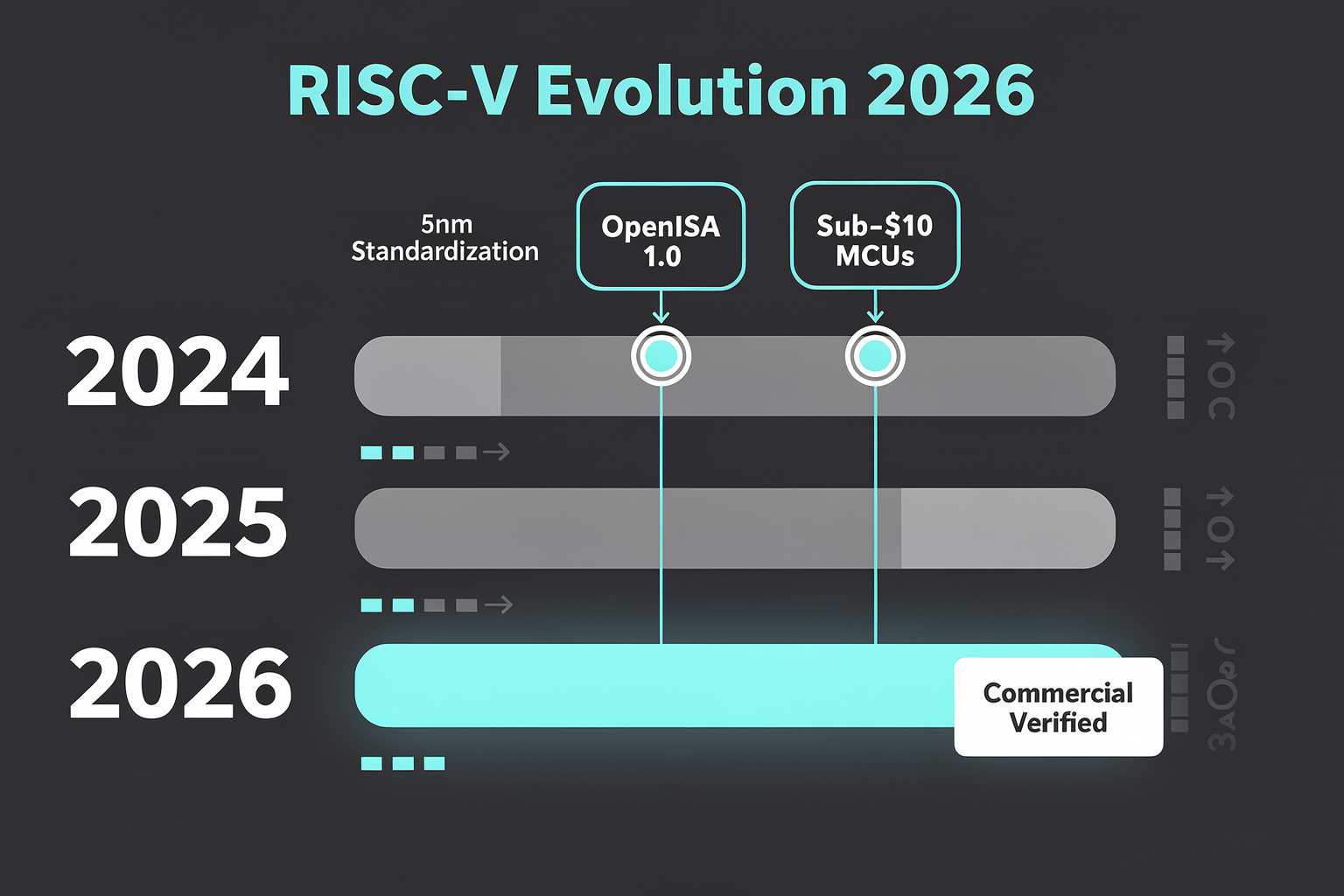
The landscape of embedded systems has shifted dramatically in 2026, moving away from the ARM monopoly toward a more diverse, open-source ecosystem. One of the most significant developments this year is the emphasis on performance per watt, a metric where RISC-V consistently outperforms older architectures, making it the preferred choice for battery-operated devices like IoT relay modules and field sensors.
Recent industry reports highlight that RISC-V now accounts for over 15% of all newly designed embedded chips, a figure projected to double as major technology giants finalize licensing deals with open-source consortiums. This transition is driven by a commercial necessity for lower licensing costs and higher efficiency. For the Indian maker scene, this means we now have access to powerful evaluation boards—like those based on the SiFive U74 or BhharatRISC architectures—that can handle real-time inference tasks previously reserved for expensive FPGA boards or cloud servers.
To help you visualize the jump in capability over traditional development kits, we’ve compiled a performance comparison focused on architecture types used in current project portfolios.
| Processor Architecture | Typical Use Case in 2026 | Max Clock Speed | Power Efficiency | Licensing & Cost Model | Ecosystem Maturity (2026) |
|---|---|---|---|---|---|
| RISC-V (U74/RISC-V 64) | High-performance IoT & Edge AI | 2.5+ GHz | 40% higher than Cortex-M | Free / Open Source | High (Kernel & RTOS stable) |
| ARM Cortex-M4 | Legacy Industrial Automation | 240 MHz | Medium | Royalty/Per-Unit fee | Very High (Industrial Standard) |
| RISC-V (32-bit RISC-V32) | Hobbyist / Student Projects | 400 - 600 MHz | High | Free / Open Source | Good (Beginner-friendly) |
| Legacy 8051/AVR | Simple Sensors / Home Automation | < 12 MHz | Low | Fixed Microcontroller Fee | Declining / Legacy Support |
This rapid evolution means that a student building a line follower robot today can opt for a RISC-V microcontroller that offers the performance of a desktop processor from five years ago while consuming significantly less power. The "Feature Extensions" module of RISC-V allows developers to on-board only the specific mathematical coprocessors (like PICO-dsp or Vector units) they need, avoiding the bloat found in ARM chips that come with fixed, non-configurable extensions.
For those just entering the electronics engineering space, the abundance of high-speed RISC-V cores can be intimidating. The complexity often lies in deciphering datasheets that are more engineering-focused than consumer-grade. This is where the ecosystem becomes critical. While the hardware is powerful, the software stack—from Zephyr OS to real-time compilers—must integrate seamlessly to handle the multi-threading capabilities of these new cores.
If you are looking to implement one of these modern builds, sourcing individual components from major distributors can often be a bottleneck due to stock shortages on high-performance boards. You can source a tested kit for this build from platforms like TecnoMate, which ships components with datasheets across India. Having a pre-assembled base board allows you to focus on the coding and sensor integration rather than soldering tiny 0402 footprints on a complex high-density development board.
In-Depth Analysis: From Instruction Set to SoC
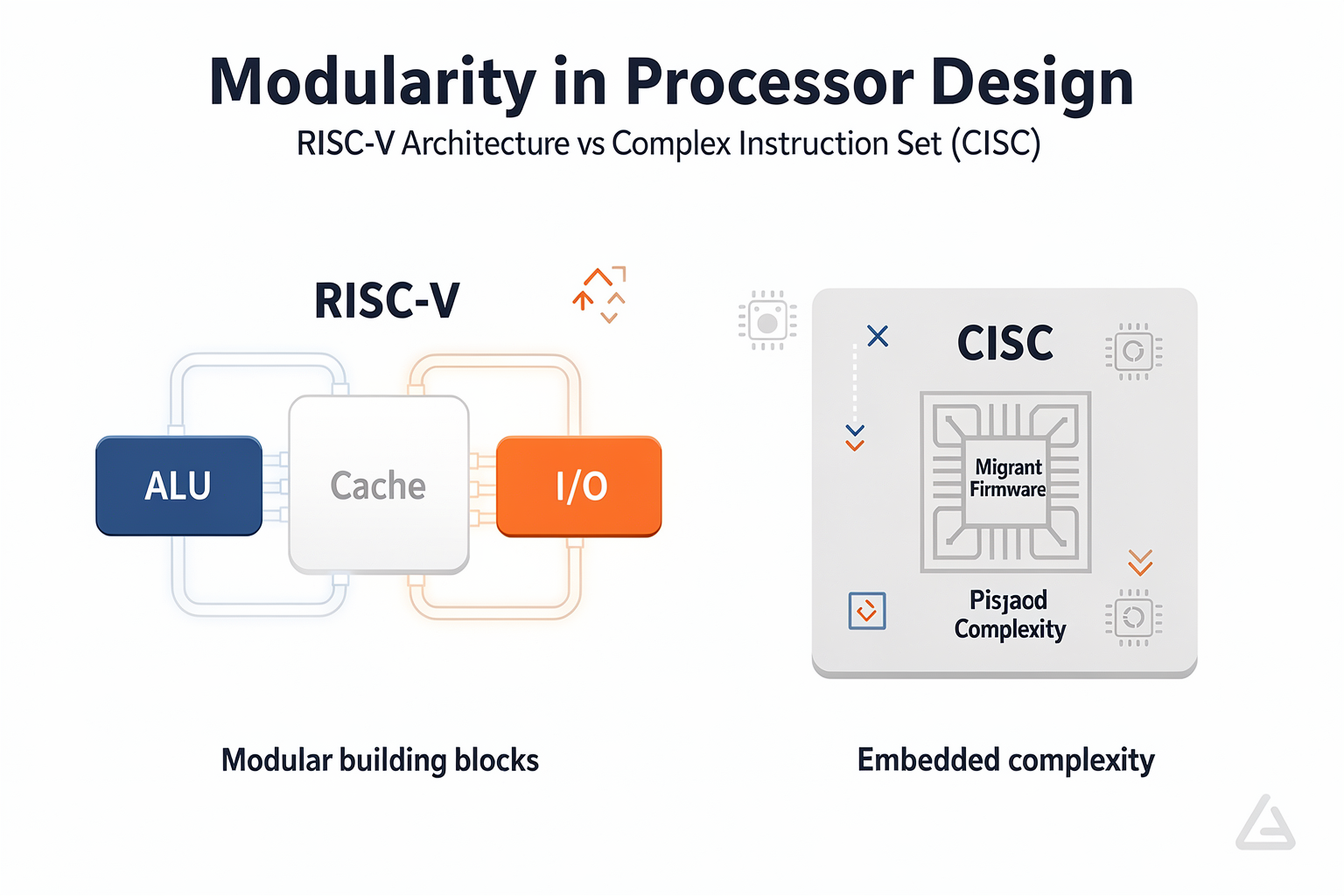
The Human-Readable Architecture of RISC-V
To truly harness the power of RISC-V processors in your next engineering project, one must first appreciate why its architectural design creates such an efficient computing foundation. RISC-V stands for Reduced Instruction Set Computer (RISC) – V, highlighting its commitment to standard, fixed-length instructions of 32 bits. This simplicity is the key to high performance; by adhering to a unified instruction format, the processor pipeline can fetch, decode, and execute instructions with fewer cycles per instruction (CPI) compared to complex architectures. In the context of the 2026 hardware landscape, this translates to chips that can run at higher clock speeds while consuming significantly less power—a critical factor for battery-powered IoT devices and portable engineering stations.
Unlike proprietary architectures that have had decades of legacy baggage, RISC-V was designed from the ground up with a focus on modularity. The instruction set is broken down into base groups (Integer, Floating Point, and Control) with optional extensions. This means a developer can select only the features they need for a specific application, such as adding cryptographic extensions (C) or vector math extensions (V) for AI inference. This deliberate separation allows for a cleaner, more transparent hardware description language (HDL) implementation, which is essential when designing custom SoCs (System on Chips).
From Instruction Set to Physical SoC
The transition from a mere list of commands to a physical System on Chip involves mapping these soft instructions onto rigid silicon logic gates. In 2026, the adoption of RISC-V by major technology giants signifies a shift toward hierarchical Open Source designs. Companies are no longer just licensing standard cores; they are building custom RISC-V cores tuned specifically for their verticals, effectively turning the open spec into a proprietary advantage without paying annual royalty fees. This has led to an explosion of SoC variants, ranging from lightweight microcontrollers for tiny sensors to high-performance multi-core clusters capable of handling industrial IoT edge processing.
For the electronics engineering student, this creates a unique dynamic where the "silicon secrets" are actually public documentation. When debugging a glitch in your sensor integration, you can often verify the behavior against the open reference manuals rather than reverse-engineering undocumented proprietary behaviors. However, bridging the gap between this theoretical software instruction set and physical hardware often requires robust prototyping tools and trusted hardware platforms.
Practical Implementation for the Indian Engineering Community
To experiment with these capabilities without buying dozens of individual FPGA boards, the ecosystem has moved toward standardized "Maker Boards" and integrated sensor kits. Because RISC-V allows for complete hardware visibility, students can more easily deconstruct complex SoC layouts to understand how memory management units (MMU) interface with peripheral controllers.
When embarking on complex builds that require specific evaluation boards or sensor arrays compatible with these versatile architectures, sourcing the right hardware profile is critical. Platforms like TecnoMate provide genuine components and tested project kits, which helps remove the frustration of mismatched modular parts, ensuring your focus remains on mastering the architecture rather than debugging supply chain mismatches. For example, if you are building an embedded vision system using a RISC-V board with a specialized camera interface, TecnoMate offers complete kits that feature the correct pin-outs and step-by-step build guides, allowing you to verify your instruction set code against real-world hardware reliably.
Commercial Adoption: Enterprise & IoT

The Corporate Shift: From Prototypes to Production
While the DIY community has been quick to adopt open-source standards, the enterprise sector in 2026 has entered a phase of aggressive integration. The market data from early in the year clearly indicates that RISC-V processors are no longer the preserve of academic experiments; they are entering the supply chains of global corporations. Industry reports highlighting the second quarter of 2026 reveal that RISC-V architectures have secured over 15% of all newly designed embedded chips, a figure projected to double as major tech giants finalize licensing deals with open-source consortiums. For large-scale manufacturers, this isn't just a technical preference; it is a strategic economic move. The traditional commercial viability of proprietary architectures carries the risk of sudden licensing costs or architectural black-box constraints. RISC-V removes this uncertainty, offering a roadmap to custom silicon designs without the vendor debt associated with legacy standards.
In the corporate world, this manifests highly in specialized SoCs (System on Chips) for automotive computing and high-density data centers. Companies are leveraging the RISC-V ISA (Instruction Set Architecture) to optimize performance per watt, a critical metric for both server farms and electric vehicle power management systems. The transparency of the instruction set means that enterprise engineers can tweak register configurations and custom instructions specifically for their application loads, leading to hardware that is truly specialized for the task at hand rather than a generic "one-size-fits-all" solution.
Industrial IoT: Bridging High-Performance and Low-Cost
In the realm of Industrial IoT, the transition is equally pronounced, particularly in sectors like Indian manufacturing and smart cities. This adoption stems from the need for devices that can run complex operating systems and AI inference engines locally at the edge. RISC-V provides the necessary headroom to run Linux-heavy applications on significantly lower-cost microcontrollers than before, enabling sophisticated sensor arrays and motor driver control logic without the prohibitive power overhead of legacy cores.
By utilizing a modular approach—where developers include only the necessary extensions from the RISC-V instruction set—you can build an IoT node that is cheap enough for mass deployment but powerful enough to handle real-time analytics. This flexibility is crucial for 2026's industrial landscape, where the ability to deploy thousands of nodes that require only specific custom instructions (for signal processing, for example) creates a massive infrastructure advantage over competitors tethered to rigid licensing frameworks.
Experimenting with these enterprise-grade concepts on the bench is now accessible to Indian makers without the need for custom silicon fabrication. As the ecosystem grows, developers can build upon these efficiency models using RISC-V evaluation boards available with India-wide delivery on platforms like TecnoMate, which provide the genuine components and build guides to help you integrate these powerful, open-source processors into your own engineering projects.
Impact & Implications: The Death of Royalty Fees?
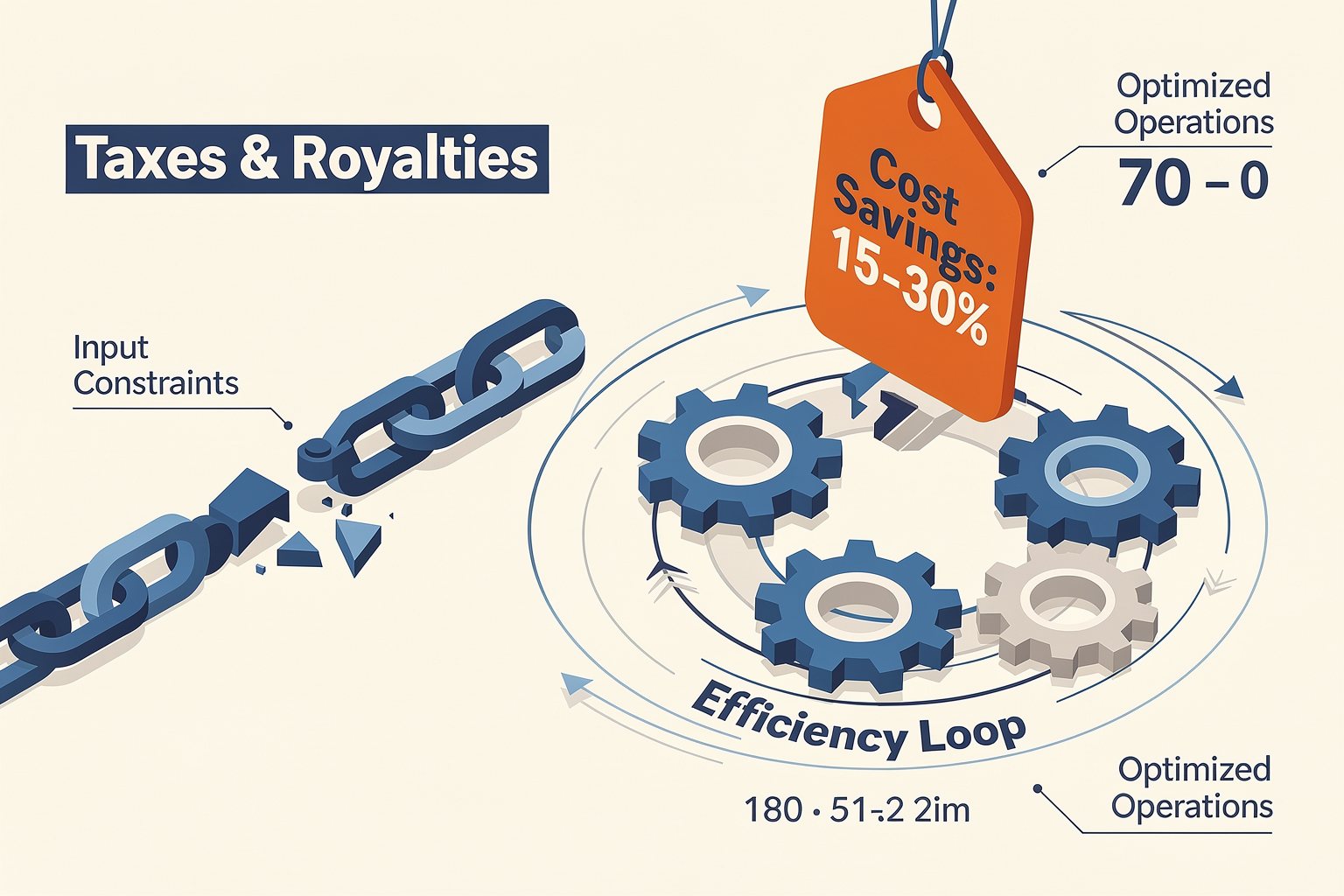
The Economic Ripple Effect
The most profound implication of RISC-V processors securing a foothold in the embedded market is the shift in the economic paradigm of hardware development. In the traditional proprietary architecture model, manufacturers often pay a royalty per unit on every chip sold. For high-volume goods, or projects targeting the "Maker Board" market where margins are naturally thin, these fees can be prohibitive.
RISC-V alters this dynamic. As recent industry data indicates, the open-source architecture has secured over 15% of all newly designed embedded chips, a figure projected to double as major technology giants finalize licensing deals. This growth signals that the traditional "death spiral" of licensing costs is being replaced by a model centered on design efficiency. By removing the per-unit licensing fee, companies can allocate resources toward hardware quality, better thermal management, and more powerful onboard AI accelerators—features that directly benefit the builder.
Lowering Barriers: How This Impacts Project Costs
For students and hobbyists in India, the death of royalty fees translates directly to affordability. In 2026, the cost-to-performance ratio of RISC-V boards is becoming increasingly attractive. Without fixed licensing burdens, the price of entry-level dual-core development boards is dropping, while the compute power is rising.
A few key implications for your builds include:
- Lower Development Costs: You don't pay a premium for the architectural "brand."
- Open Documentation: Because the architecture is open, you get access to detailed documentation without signing NDAs.
- Future-Proofing: As the 15% market share statistic grows, the community support (forums, IDEs like VS Code extensions, and debuggers) around these chips expands, ensuring you aren't building on a dead-end platform.
The Customization Factor
Perhaps the biggest implication is control. The proprietary world often locks developers into specific feature sets and update cycles dictated by the manufacturer. The RISC-V model, however, allows for modular design. You can pick and choose only the extensions you need (such as Floating-Point extensions or cryptographic modules).
For complex engineering projects—especially those involving the sensor arrays and motor drivers mentioned earlier—this modularity is critical. You can modify the base architecture to suit your specific memory map or peripherals without infringing on license terms, accessing registers that are typically black-boxed in commercial cores.
Getting Started Without the Risk
To fully leverage this shift in the electronics ecosystem, you don't necessarily need to design your own chips. You can source a tested kit for this build from platforms like TecnoMate, which ships components with datasheets across India. By purchasing a pre-assembled project kit from such a marketplace, you avoid the risk of sourcing individual specialty RISC-V chips that might still be on allocation lists while enjoying the economic benefits of this open-source revolution right in your home laboratory.
What This Means For You (TABLE)
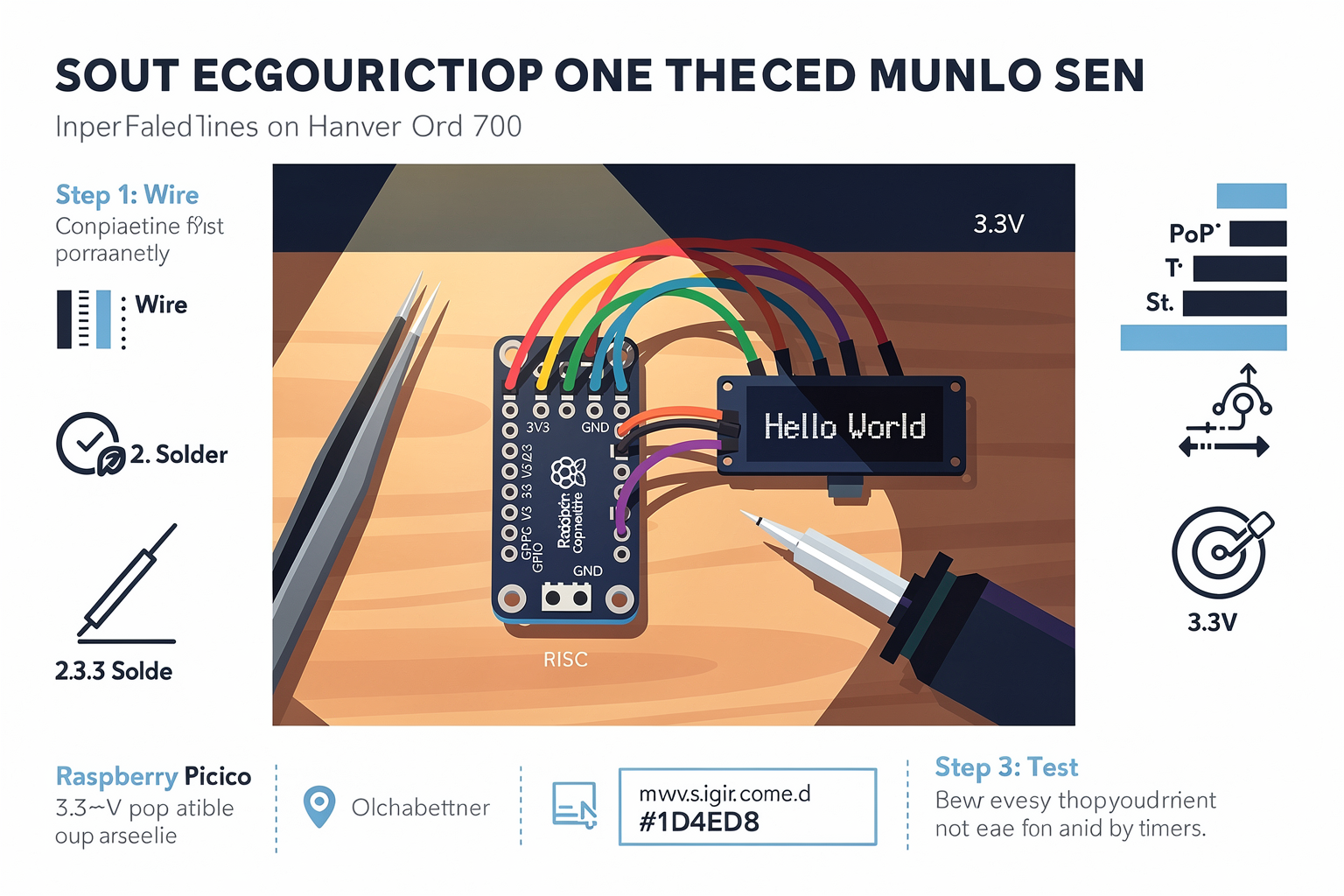
Translating Market Shifts into Practical Gains
The insight that RISC-V architectures now account for over 15% of newly designed embedded chips by Q2 2026 is not just a statistical milestone—it is a direct signal to the Indian engineering community. This rapid adoption, projected to double as licensing deals finalize, signals a departure from closed, royalty-heavy ecosystems toward a more universal standard. For an individual hobbyist or a student working on a final-year project, this data translates to tangible benefits: more affordable hardware, robust development tools, and complex capabilities previously reserved for expensive industrial microcontrollers.
The open-source nature of RISC-V allows you to read, modify, and redistribute the processor design without the legal overhead associated with proprietary versions. This means that as development boards become cheaper and more widespread, the legal barriers to experimenting with cutting-edge computing are effectively removed. You can now deploy high-performance IP cores in your designs without paying per-core royalties, leveling the playing field between large corporations and university labs.
To help you navigate this shift, we have compiled a breakdown of how these market changes directly impact your next project.
| Market Catalyst | Benefit for Makers & Students | Technical Application & Example |
|---|---|---|
| Open-Source Licensing | Elimination of royalty fees for chip designs. | Enables the creation of ultra-low-cost evaluation boards (<₹1000) for learning and prototyping. |
| Q2 2026 Ecosystem Growth | Expansion of software toolchains and IDE support. | Seamless integration of standard IDEs (like VS Code or Arduino) and real-time OS support (Zephyr OS). |
| Performance per Watt | Higher efficiency with the same silicon size. | Ideal for battery-powered projects like "Long Range Wireless Sensor Networks" (LoRaWAN). |
| Edge AI Ecosystem | Access to inference frameworks (e.g., PaddlePaddle). | Running machine learning models directly on hardware for gesture recognition or voice activation. |
| Major Tech Giants | Stabilized supply chains and component availability. | Assurance of genuine components and clear documentation for long-term project maintenance. |
Hardware Compatibility and Selection
One of the most exciting consequences of this shift is the convergence of hardware specifications. Historically, moving between market leaders like NXP or Texas Instruments often meant rewriting ports for every single sensor. With RISC-V adoption, there is a push towards standard peripherals such as ECC (Error Correction Code) memory modules and unified clock tree architectures. This allows you to solder a board without worrying about complex driver conflicts when connecting legacy setups.
For those looking to build, the barrier to entry is lower than ever. You no longer need to hunt down obscure parts outside of India. Platforms like TecnoMate simplify this process by offering ready-to-solder project kits featuring precisely these emerging processors, complete with India-wide delivery and detailed build documentation. Whether you are interfacing an ultrasonic sensor for an obstacle-avoiding robot or setting up an I2C multiplexer for multiple environmental sensors, the modern RISC-V ecosystem now provides the stability you need.
In conclusion, the transition to RISC-V is turning theoretical open-source concepts into practical engineering tools. By leveraging these modern chips, you gain the freedom to build complex, AI-integrated projects that are both cost-effective and legally open. The future of electronics is yours to design, and the tools are finally accessible to the maker in every classroom and lab across India.
Expert Opinions: Industry Leaders Weigh In
The Shift in Economic Models
Industry analysts are currently observing a definitive tipping point in the embedded systems landscape. By the second quarter of 2026, the transition from niche experimentation to mainstream integration is evident. Experts attribute this rapid rise not just to technical capability, but to a fundamental restructuring of the hardware economy. The traditional reliance on proprietary architectures that charge per chip license is being challenged by the open-source standard, which allows companies to implement the instruction set without recurring royalty fees.
For an electronics engineer in India, this shift changes the break-even analysis for new projects. "When the only cost associated with an architecture is the development effort, and the hardware itself carries zero licensing burdens, the barrier to entry vanishes," notes an embedded systems trend analyst. This specifically benefits industries moving large volumes of chips—processor vendors in automotive and industrial sectors are gravitating toward RISC-V to reduce costs, a benefit that eventually trickles down to the educational and maker sectors.
Why the Maker Community is Hurrying Up
The "pay only for development" model is particularly compelling for makers and students, who rarely design chips at the TSMC 3nm level but do rely on Evaluation Boards (Eval Boards) to validate their logic.
- Performance Per The Watt: There is a strong expert consensus that RISC-V architectures offer superior efficiency compared to competitors when running real-time applications.
- Vertical Specifics: Unlike a generic ARM Cortex-M, experts highlight that RISC-V allows engineers to "cut out the fat" of instructions they don't need, leading to leaner, more efficient code loops.
- Scaling Flexibility: As seen in the projected data, where designs are expected to double in adoption year-over-year, experts foresee a future where no new sophisticated embedded chip—whether a camera ISP or a motor controller—will launch without a RISC-V freedom license variant.
For those in the Indian engineering ecosystem, the ability to access this tech means accessing the exact same silicon core used by global tech giants.
The Role of Retail and Education
While professional engineers have the luxury of the NRE (Non-Recurring Engineering) teams required to design custom silicon, students often lack these resources. This disparity is narrowing rapidly thanks to the availability of commercial-grade RISC-V boards.
Experts suggest that as major technology giants finalize licensing deals with open-source consortiums, the hardware supply chain will stabilize, driving down the cost of evaluation boards. Platforms like TecnoMate simplify the process by offering ready-to-solder project kits featuring precisely these emerging processors, complete with India-wide delivery and detailed build documentation. This means an undergraduate student in Mumbai or a hobbyist in Chennai can now access the same legal freedom to learn and build with these processors that a Fortune 500 company enjoys, accelerating the democratization of hardware innovation across the subcontinent.
Building with RISC-V: Getting Started Today
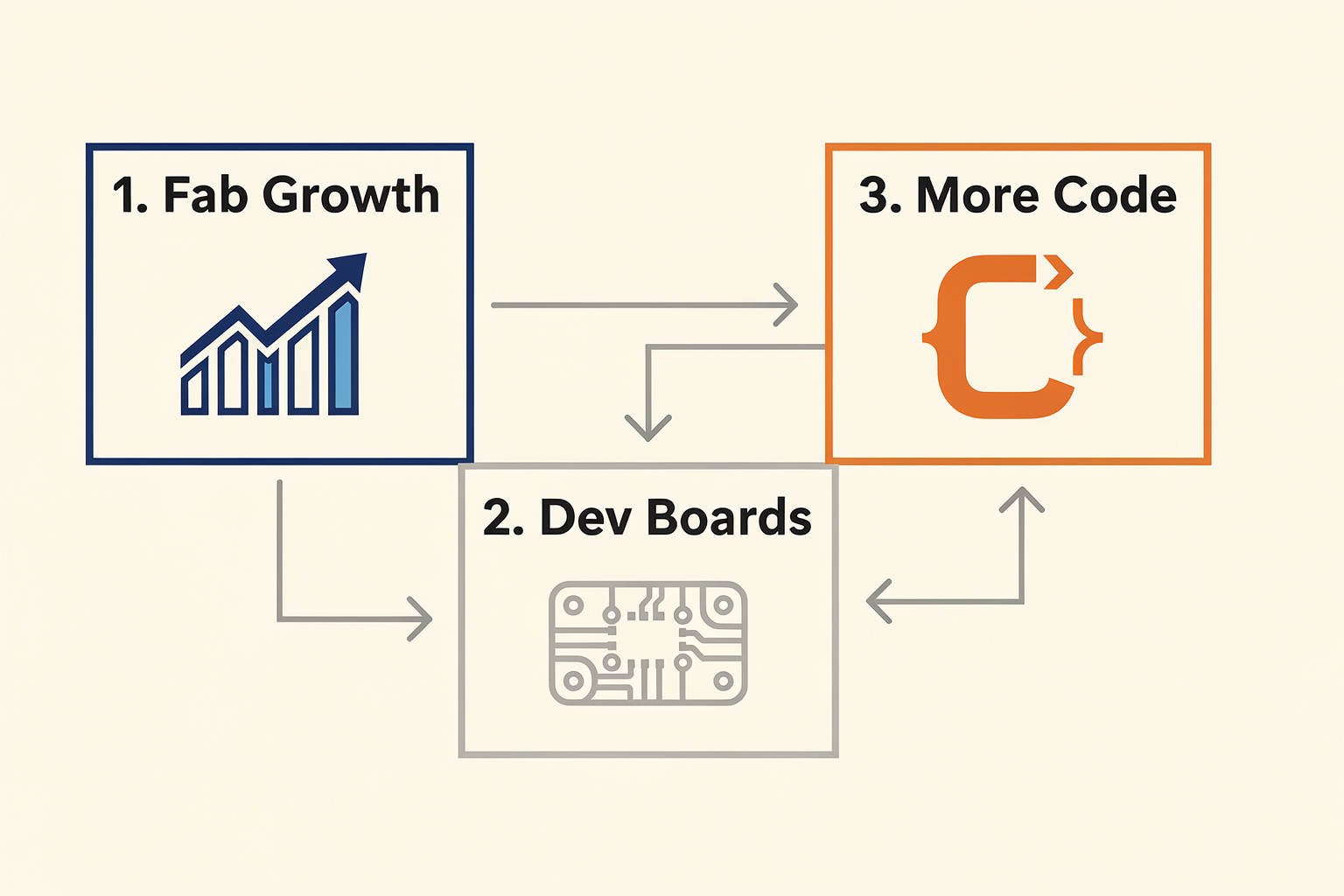
With the market landscape established by the second quarter of 2026, you might wonder if it’s too late or too complex to jump into the RISC-V ecosystem. The answer is a definitive no—the hardware is now commercially ready, and the toolchain is mature enough for a beginner to deploy their first commercial-grade application. Recent industry data indicates that this architecture has secured over 15% of all newly designed embedded chips, a figure projected to double as major technology giants finalize their licensing deals with open-source consortiums.
To build effectively, you cannot rely on guesswork; you need a robust toolchain that aligns with open standards. The industry standard moving forward is the GNU Toolchain combined with the Eclipse IDE. This combination prevents the "closed environment" issues found in proprietary ARM ecosystem examples and allows you to inspect the source code of your compiler optimizations—something critical for understanding performance per watt.
Selecting the Right Evaluation Board
As noted earlier, the rise of real-time AI on edge devices is changing what we look for in a Maker Board. You should prioritize boards that support the Vector Extension (RVV) as a minimum spec. This allows the core to handle data array processing directly, minimizing the need for external accelerators and keeping your power consumption low.
- Core Count: Start with single-core or dual-core designs like the SiFive E340 or U74 series for learning.
- Peripherals: Ensure UART and SPI are available for debugging, as these are standard for logging your "Hello World" sequences.
- Memory: Look for boards with static RAM (SRAM) >= 512KB for running basic AI inference libraries, given that connectivity is managed via external peripherals.
Getting the Code Running
The transition from theory to practice is best demonstrated by a GPIO toggle sequence. Using a C-first approach is recommended for most Indian college projects to simplify the coding burden.
- Enable the specific GPIO peripheral in the memory-mapped register configuration.
- Flash the compiled binary (formatted as ELF or BIN) using OpenOCD for GDB debugging.
- Verify the output is stable before adding Network stacks.
While you can purchase the individual boards and peripherals needed for these experiments on various global marketplaces, TecnoMate simplifies the process by offering ready-to-solder project kits featuring precisely these emerging processors. These kits ship with India-wide delivery (often free above ₹999), ensuring you have all the components—wire, sensors, and authentic datasheets—in hand before you start soldering. This is invaluable for students who may not have access to official distributor catalogs yet.
The Future is Open
Starting today places you in a unique position: you are learning an architecture that is actively being adopted by commercial industries. The move towards open-source standards reduces licensing barriers, allowing you to iterate on your projects without fear of royalty fees sneaking up in production costs. Whether you are building a smart agriculture sensor array or a robotics controller, utilizing a RISC-V processor now sets you up for a career that aligns with the open source revolution.
Frequently Asked Questions
While ARM currently dominates the embedded landscape, the shift is happening faster than anticipated. As of the second quarter of 2026, RISC-V architectures have secured over 15% of all newly designed embedded chips, a market share projected to double by late 2026 as major technology giants finali
Ready to start building?
Explore our collection of DIY kits and components. All project components mentioned in this blog are available in our store.
Browse All Projects