
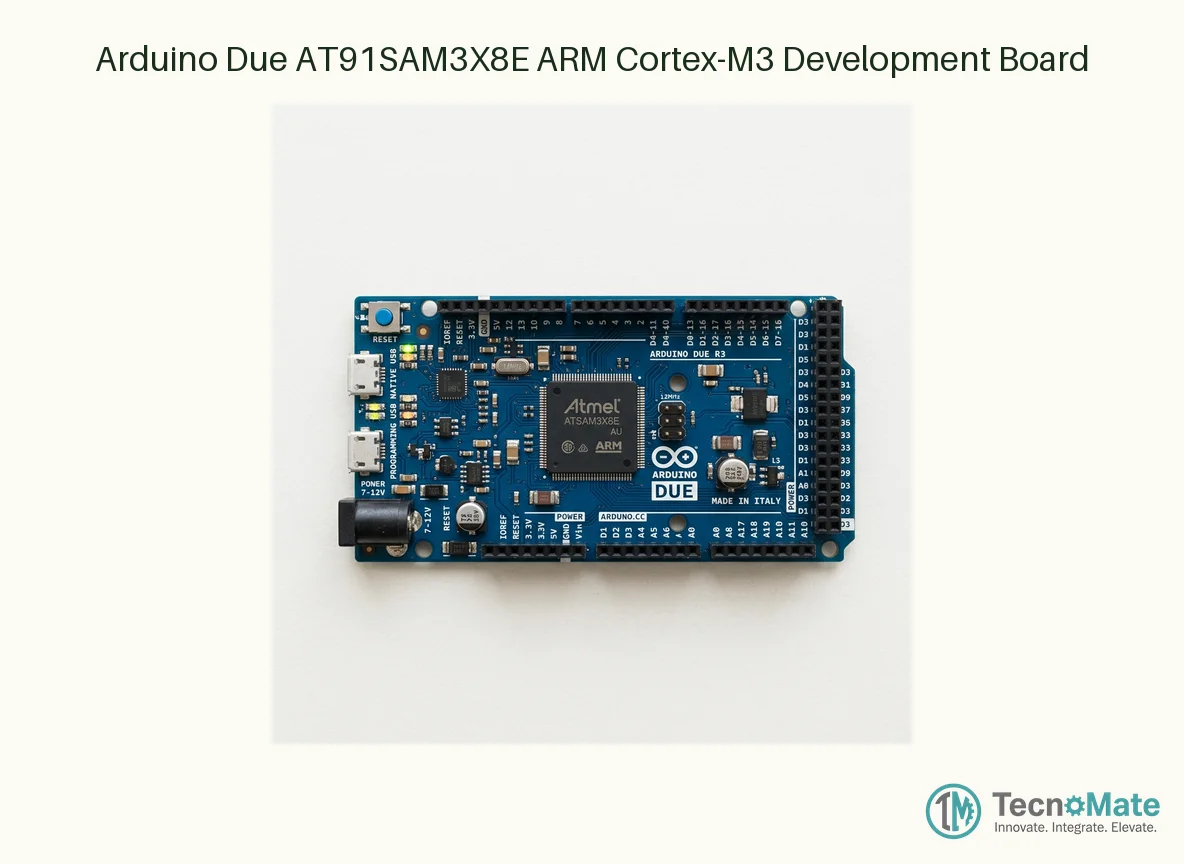
Arduino Due AT91SAM3X8E ARM Cortex-M3 Development Board
The Arduino Due is a high-performance 32-bit microcontroller development board based on the Atmel/Microchip AT91SAM3X8E ARM Cortex-M3 processor running at 84 MHz. It is designed for makers, engineering students, robotics builders and embedded developers who need more processing power, more I/O and richer peripherals than classic 8-bit Arduino boards. The Due offers 54 digital input/output pins, including 12 PWM outputs, 12 analog inputs, 4 hardware UART serial ports, 2 DAC analog output pins, 2 TWI/I2C interfaces, an SPI header, JTAG support and USB OTG capability through its native USB port. Unlike Arduino Uno and Mega boards that use 5V logic, the Arduino Due operates at 3.3V logic. This makes it ideal for modern sensors, wireless modules, displays and ARM-based embedded applications, but users must ensure that connected shields and modules are 3.3V compatible because the I/O pins are not intended for 5V signals. The board can be powered through USB or a recommended external input range of 7–12V, and it includes both a programming USB port and a native USB port for advanced USB device/host projects. For students and developers in India, the Arduino Due is a strong choice for real-time data acquisition, motor-control experiments, signal processing, robotics, USB interface projects and advanced Arduino IDE based prototyping. Its 512 KB flash memory, 96 KB SRAM and 84 MHz ARM core provide significantly more headroom for larger sketches, multiple serial devices and performance-heavy projects.
Inclusive of all taxes
- Secure payments via Razorpay
- 7-day returns on defective items
- GST invoice on every order
Free delivery on orders above ₹2,000
Delivers in 4-7 business days
Check delivery at your pincode
₹4000.00
Inclusive of all taxes
Category
Microcontroller & Dev Boards
Quality
100% Genuine
About Arduino Due AT91SAM3X8E ARM Cortex-M3 Development Board
Technical Specifications
| USB | Programming USB port and native USB OTG capable port |
|---|---|
| SRAM | 96 KB |
| Interfaces | SPI header, 2 x TWI/I2C, JTAG |
| Clock Speed | 84 MHz |
| PWM Outputs | 12 |
| Flash Memory | 512 KB |
| Analog Inputs | 12 |
| Approx. Weight | 36 g |
| Microcontroller | Atmel/Microchip AT91SAM3X8E ARM Cortex-M3 |
| Board Dimensions | 101.52 mm x 53.3 mm |
| Digital I/O Pins | 54 |
| Operating Voltage | 3.3V |
| Arduino IDE Support | Yes |
| Logic Level Warning | 3.3V I/O; not for direct 5V signals |
| Analog Outputs / DAC | 2 |
| Recommended Input Voltage | 7–12V |
| UART / Hardware Serial Ports | 4 |
Similar Components
View All →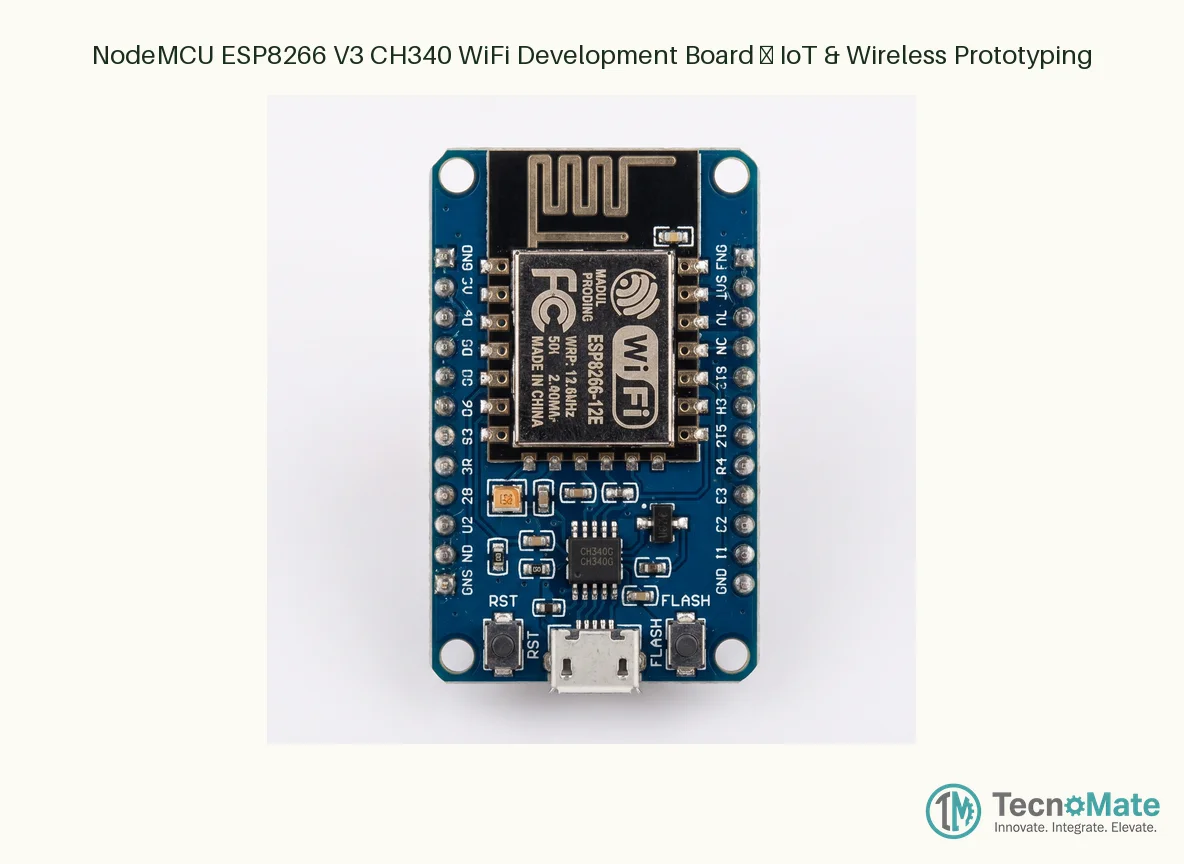
NodeMCU ESP8266 V3 CH340 WiFi Development Board – IoT & Wireless Prototyping
The NodeMCU ESP8266 V3 CH340 is one of India's most popular WiFi-enabled microcontroller development boards, trusted by engineering students, hobbyists, and IoT professionals alike. Built around the powerful Espressif ESP8266EX SoC featuring a 32-bit Tensilica L106 RISC processor, this compact board delivers reliable 802.11 b/g/n WiFi connectivity at an unbeatable price point. The onboard CH340G USB-to-serial converter ensures hassle-free programming — just plug it into your laptop's USB port, install the CH340 driver, and you're ready to code in the Arduino IDE or with Lua scripting. With 4 MB of flash memory, 64 KB of SRAM, 11 GPIO pins (including PWM, I2C, SPI, and 1-Wire support), and a single 10-bit ADC input, this board covers a vast range of IoT applications — from home automation and sensor monitoring to robotics and weather stations. The V3 design features an improved USB connector layout and larger breadboard-friendly footprint compared to earlier revisions. Whether you're building your first WiFi-controlled LED or deploying a full-scale smart agriculture system, the NodeMCU ESP8266 CH340 offers the perfect blend of performance, community support, and affordability that Indian makers love.
₹271.00
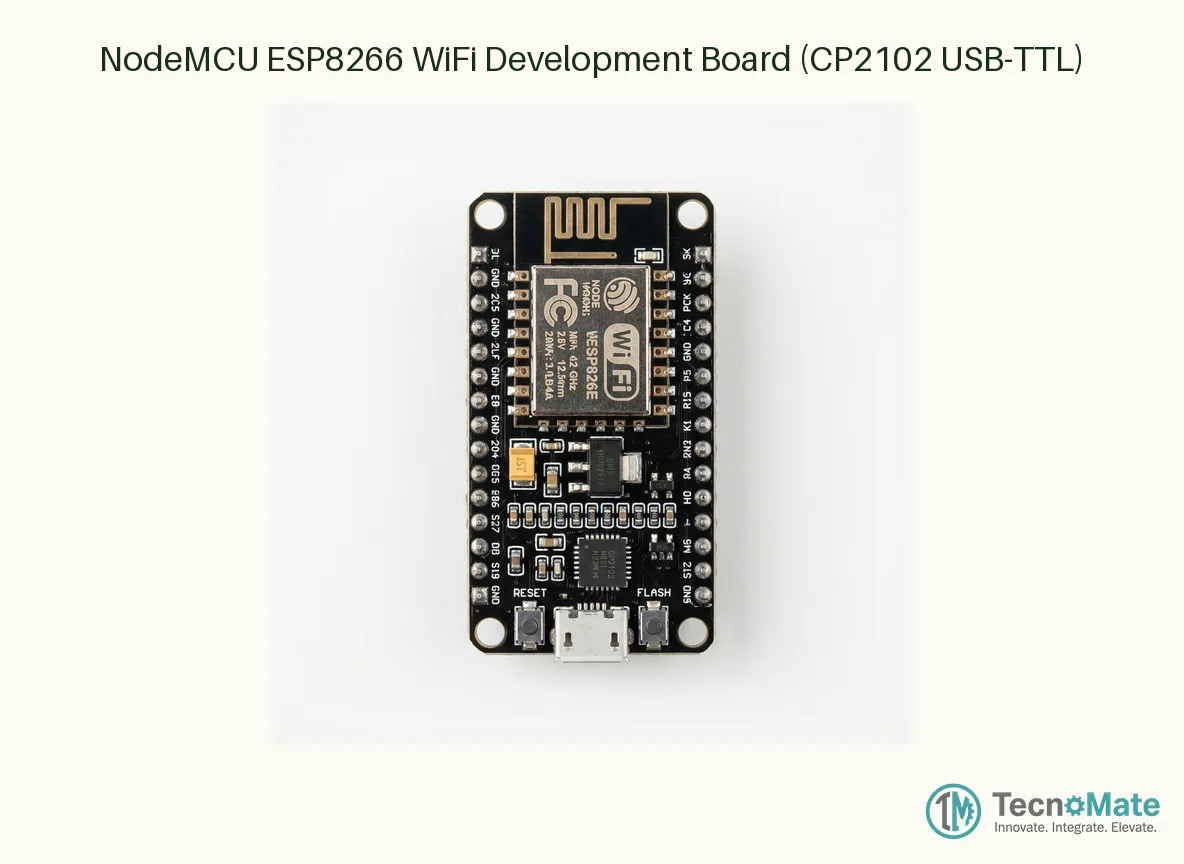
NodeMCU ESP8266 WiFi Development Board (CP2102 USB-TTL)
The NodeMCU ESP8266 (CP2102) is one of India's most popular and affordable WiFi-enabled microcontroller development boards, trusted by engineering students, IoT hobbyists, and prototyping professionals alike. Built around the ESP8266MOD (ESP-12E) module — a 32-bit Tensilica L106 RISC processor clocked at 80 MHz with 4 MB of flash memory — this board brings reliable 2.4 GHz WiFi connectivity (802.11 b/g/n) to your projects out of the box, no external shields required. What sets this particular variant apart is the onboard CP2102 USB-to-UART bridge chip from Silicon Labs. Compared to CH340-based NodeMCU boards that can require manual driver downloads and may face compatibility issues on newer operating systems, the CP2102 offers broader out-of-the-box driver support — especially on Windows 10/11 where drivers often install automatically via Windows Update, and on Linux where the cp210x kernel module is included by default. For most users this means less time troubleshooting and more time coding. The board features a Micro USB port for power and programming, an onboard 3.3V regulator that accepts 5V via USB or 7-9V DC via the Vin pin (prolonged use above 9V may cause regulator overheating — always check the regulator temperature during extended operation), a built-in PCB antenna, and a reset + flash button combination that makes firmware flashing a one-button affair. All GPIOs are broken out to 2.54 mm pitch headers, making it breadboard-friendly and easy to interface with sensors, relays, displays, and actuators. Whether you are building a home automation system, a weather station that pushes data to the cloud, a WiFi-controlled robot, or simply learning embedded IoT programming for your college minor/major project — this board is the ideal starting point. It is fully compatible with the Arduino IDE (via the ESP8266 Arduino Core), PlatformIO, MicroPython, Lua (NodeMCU firmware), and Espressif's RTOS SDK / Non-OS SDK, giving you the flexibility to work in the environment you prefer. At a price point of around ₹250, the NodeMCU ESP8266 CP2102 delivers exceptional value — an entire WiFi-enabled microcontroller platform for less than the cost of a Bluetooth module alone. It is the board that powers thousands of Indian engineering projects every semester, and it belongs on every maker's workbench.
₹283.00