
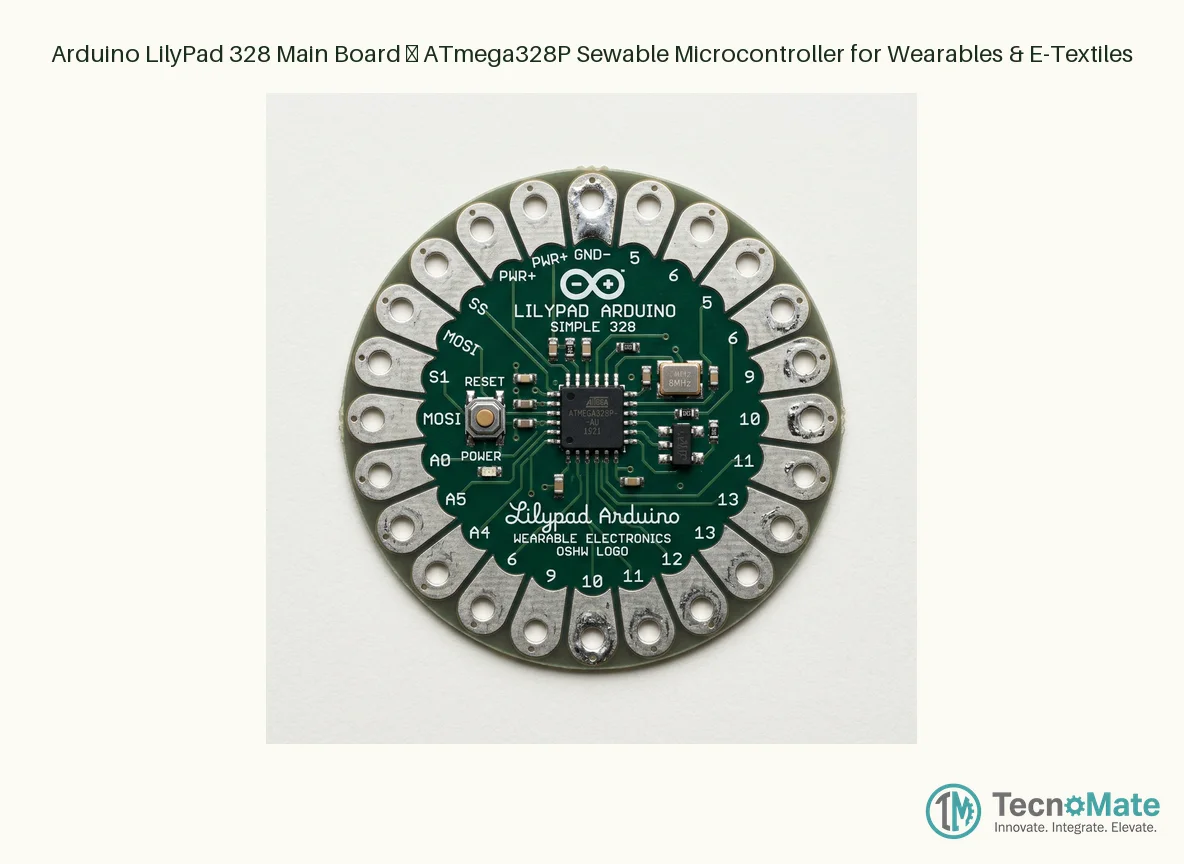
Arduino LilyPad 328 Main Board – ATmega328P Sewable Microcontroller for Wearables & E-Textiles
The Arduino LilyPad 328 Main Board is a uniquely designed, sewable microcontroller board built around the ATmega328P — the same powerful chip that drives the Arduino Uno. But unlike any other Arduino board, the LilyPad is crafted specifically for wearable electronics and e-textile projects. Its circular shape (50mm outer diameter), ultra-thin 0.8mm PCB, and large conductive petals with sewable holes allow you to stitch it directly onto fabric using conductive thread, eliminating the need for rigid wiring or soldering in many cases. The LilyPad Arduino 328 runs at 8 MHz with an operating voltage range of 2.7V to 5.5V, making it ideal for battery-powered wearable applications. It comes pre-loaded with the Arduino bootloader, so you can program it using the familiar Arduino IDE — just like any other Arduino board. It offers 14 digital I/O pins (6 with PWM), 6 analog input pins, 16 KB of flash memory, 1 KB SRAM, and 512 bytes of EEPROM. This board is the perfect brain for smart clothing, light-up costumes, interactive accessories, health-monitoring wearables, and sensor-integrated fabric projects. Whether you're a fashion-tech designer, a maker exploring e-textiles, a student building a wearable project, or a hobbyist experimenting with conductive thread circuits, the LilyPad Arduino 328 is your go-to platform. Its sewable design eliminates bulky connectors, letting you create comfortable, flexible, and truly wearable electronics. At TecnoMate, we stock the genuine LilyPad Arduino 328 Main Board — ideal for Indian makers, engineering students, and fashion-tech innovators looking to build custom wearable tech with reliable components at the best prices in India.
Inclusive of all taxes
- Secure payments via Razorpay
- 7-day returns on defective items
- GST invoice on every order
Free delivery on orders above ₹2,000
Delivers in 4-7 business days
Check delivery at your pincode
₹767.00
Inclusive of all taxes
Category
Arduino Boards & Compatibles
Quality
100% Genuine
About Arduino LilyPad 328 Main Board – ATmega328P Sewable Microcontroller for Wearables & E-Textiles
Similar Components
View All →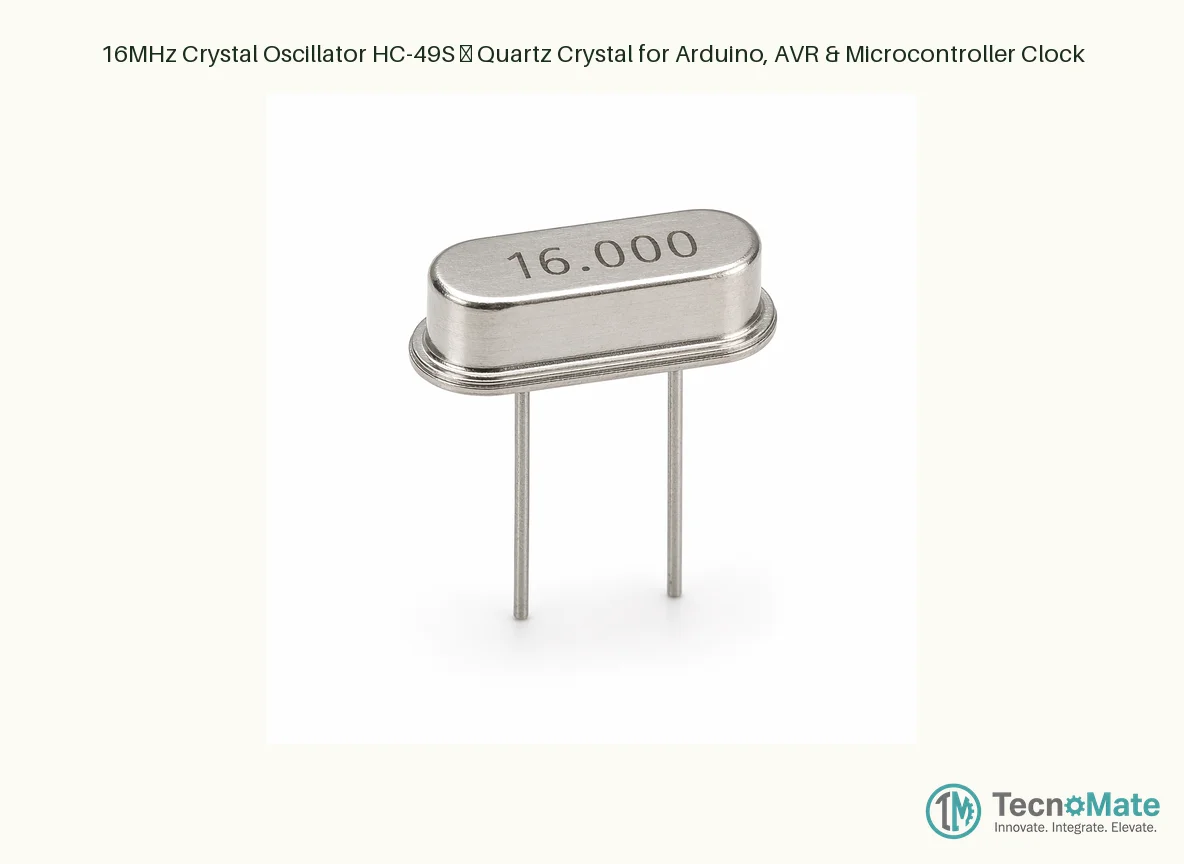
16MHz Crystal Oscillator HC-49S – Quartz Crystal for Arduino, AVR & Microcontroller Clock
The 16MHz Crystal Oscillator in the HC-49S package is a fundamental timing component for digital electronics and microcontroller circuits. This quartz crystal provides a precise 16.000 MHz clock signal that serves as the heartbeat for your microcontroller projects. It is the exact same frequency used by the Arduino Uno (ATmega328P), Arduino Nano, and countless AVR-based development boards, making it an essential spare or prototyping part for every electronics enthusiast, engineering student, and IoT hobbyist in India. The HC-49S is a low-profile, through-hole package that is easy to solder onto perfboards, stripboards, and custom PCBs. Unlike the taller HC-49/U variant, the HC-49S sits closer to the board, saving vertical space in compact enclosures. This crystal works with the internal Pierce oscillator circuit built into most microcontrollers — simply connect it across the XTAL1 and XTAL2 pins with two load capacitors (typically 22pF each) and your MCU will run at a rock-solid 16 MHz. Why keep a few of these in your component bin? Crystals can get damaged from physical shock, overheating during soldering, or electrostatic discharge. If your Arduino suddenly stops responding or behaves erratically, a dead crystal could be the culprit. Swapping in a fresh HC-49S 16MHz crystal is a quick, low-cost repair that can bring a dead board back to life. These crystals are also perfect for building standalone ATmega328P circuits on a breadboard — the classic "breadboard Arduino" project that every Indian engineering student tackles in their second or third year. Beyond Arduino, the 16MHz HC-49S is used in digital clocks, frequency counters, RF circuits, USB-to-serial converters, and any application that demands a stable, accurate timebase. TecnoMate sources these crystals from reliable manufacturers with tight frequency tolerance so your projects run reliably, semester after semester.
₹19.00
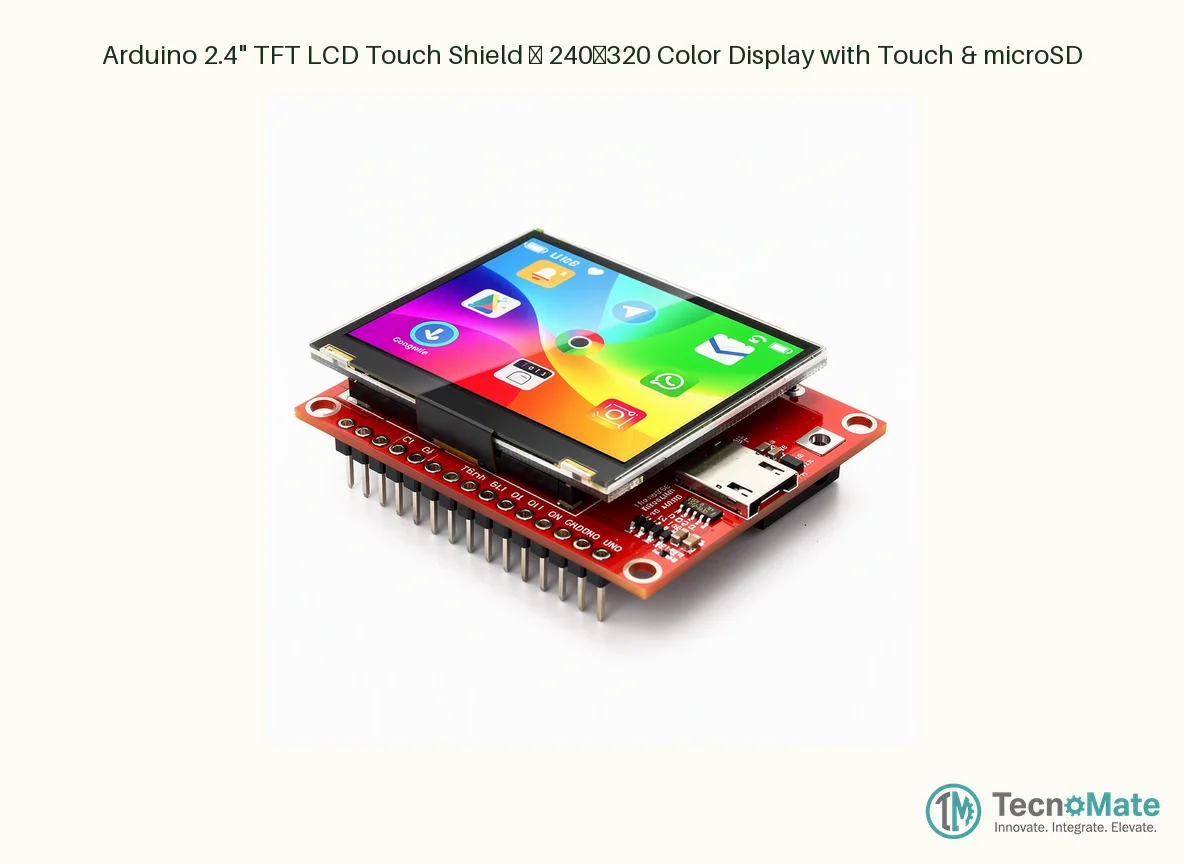
Arduino 2.4" TFT LCD Touch Shield – 240×320 Color Display with Touch & microSD
The Arduino 2.4" TFT LCD Touch Shield is a feature-packed display shield that snaps directly onto your Arduino Uno or Mega2560, instantly giving your project a vibrant, interactive graphical interface. With a 240×320 pixel resolution and 18-bit color depth capable of rendering over 262,000 distinct colors, this shield transforms any Arduino project with full-color menus, gauges, graphs, buttons, and touch-driven user interfaces. At its core, this shield uses a proven TFT driver IC — either the widely supported ILI9341 or the SPFD5408 controller (depending on the manufacturing batch) — both of which have mature, open-source libraries available in the Arduino IDE (Adafruit_ILI9341, Adafruit_GFX, MCUFRIEND_kbv, and UTFT). You can draw shapes, display bitmap images, render custom fonts, and plot sensor data with just a few lines of code. The resistive touch screen overlay detects finger or stylus input across the entire 2.4-inch active area, allowing you to build touch-controlled menus, on-screen keypads, home-automation dashboards, and interactive games. One of the shield's standout practical features is the onboard microSD card slot. This lets you store large image files, data logs, configuration files, or even full bitmap UI assets directly on a removable card — freeing up precious Arduino flash memory. The shield is powered directly from the Arduino's 5V rail and includes an onboard 3.3V LDO regulator (300mA) that supplies the TFT panel and SD card. Note that while the shield accepts 5V supply, the TFT logic operates at 3.3V — most shields include resistive voltage dividers or buffer ICs on the data lines for basic level adaptation, though it's wise to verify your specific variant's level-shifting implementation. Pin usage on a typical Uno-compatible shield: the 8-bit parallel data bus occupies D2 through D9, with control lines on A0 (RD), A1 (WR), A2 (RS), A3 (CS), and typically A4 (RST). The microSD card communicates via the hardware SPI bus on D11 (MOSI), D12 (MISO), D13 (SCK), with chip-select on D10. The resistive touch panel's analog readout uses a subset of the analog pins shared with the control bus. This pin mapping means D0 (RX) and D1 (TX) remain free for serial communication, and A5 (SCL) is usually free for I²C clock — making it possible to add certain external sensors alongside the shield with some planning. Whether you're building a weather station dashboard, a portable oscilloscope, a home automation control panel, an arcade game, or a data-logger with live graphs, this shield brings professional-grade visual output to your prototype without the cost and complexity of external monitors. It's one of the most popular Arduino display shields in the Indian maker community, widely used in engineering college projects, IoT prototypes, and STEM education kits.
₹496.00
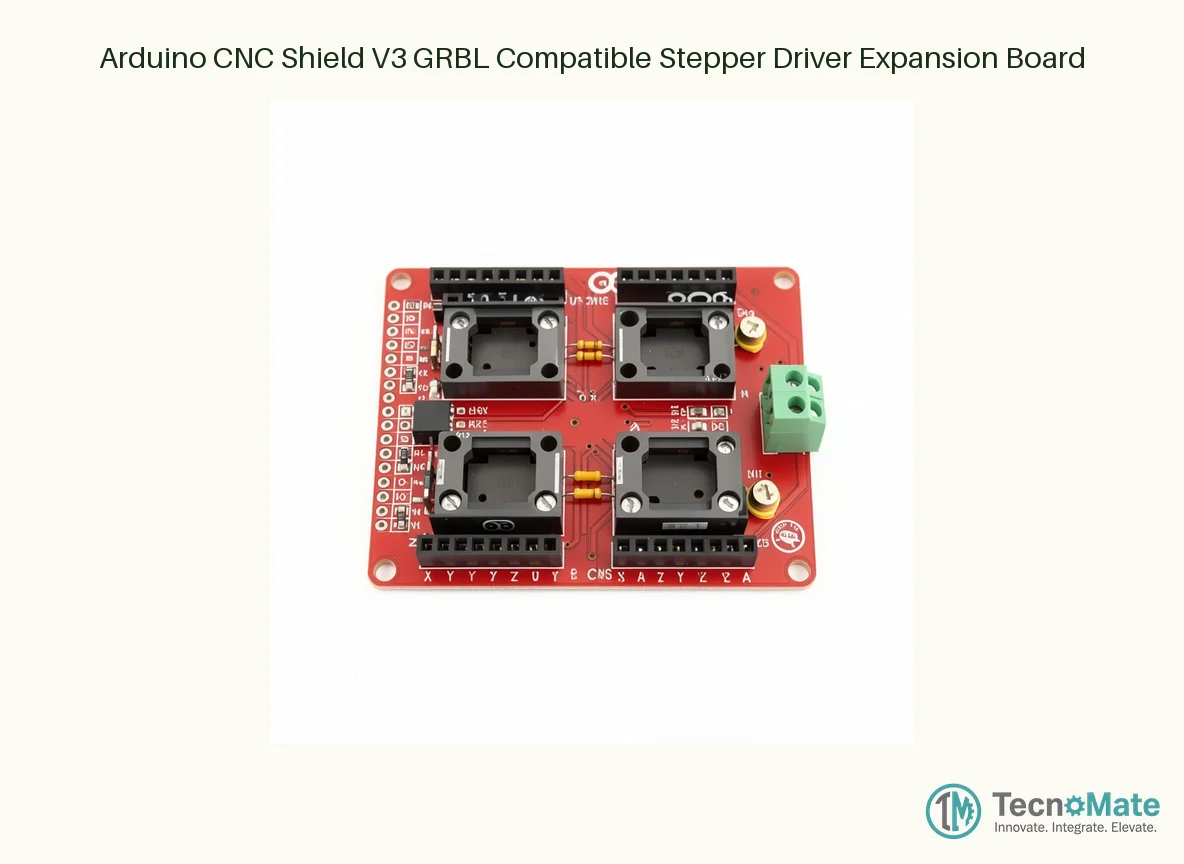
Arduino CNC Shield V3 GRBL Compatible Stepper Driver Expansion Board
The Arduino CNC Shield V3 GRBL Compatible Stepper Driver Expansion Board is a compact motion-control shield for makers, engineering students and DIY CNC builders who want to convert an Arduino UNO-based setup into a practical G-code controlled machine controller. Designed as an Arduino shield, it is commonly used for mini CNC routers, engraving machines, DIY laser cutters, 3D-printer style motion platforms and other projects that need coordinated stepper-motor control. The board accepts Pololu-style plug-in stepper driver modules such as A4988 and DRV8825, letting users choose the driver module based on their motor current requirement and cooling arrangement. When used with GRBL firmware, the CNC Shield V3 provides a low-cost route into CNC control without needing a parallel-port controller or expensive motion card. GRBL is widely used in hobby CNC because it accepts standards-compliant G-code, making it suitable for workflows involving common CAM and sender software. The shield layout provides convenient headers for stepper drivers and machine-control wiring, helping reduce jumper wiring errors in student projects and lab prototypes. It is also referenced in GRBL v0.9-compatible CNC shield guides and supports motion-control features such as PWM spindle control and soft-limit based workflows when configured correctly in firmware. This listing is for the CNC Shield V3 expansion board only. Arduino UNO, A4988/DRV8825 driver modules, stepper motors, power supply and wiring accessories should be selected separately according to your machine design.
₹201.00
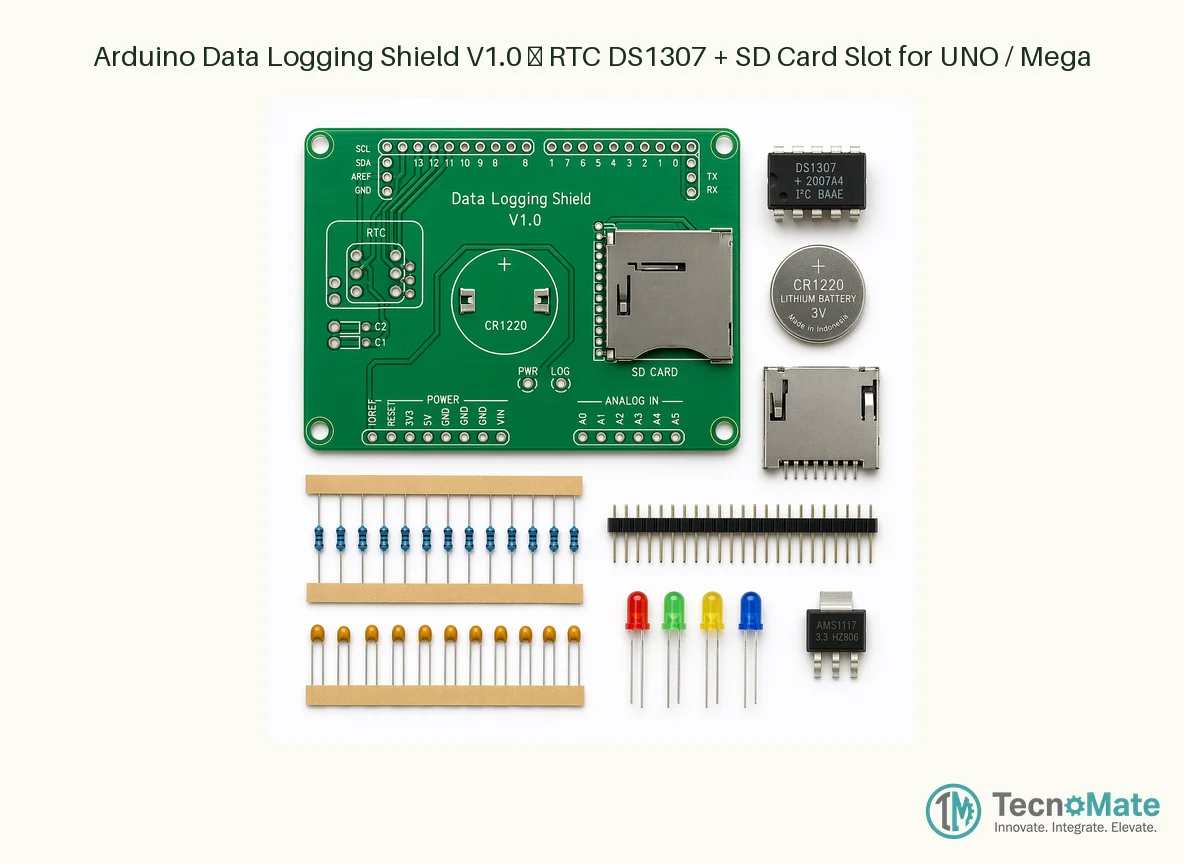
Arduino Data Logging Shield V1.0 – RTC DS1307 + SD Card Slot for UNO / Mega
The Arduino Data Logging Shield V1.0 is the ultimate add-on board for any Arduino enthusiast, student, or engineer looking to capture and store sensor data with precise timestamps. Designed to stack directly onto Arduino Uno, Leonardo, and similar R3-compatible boards, this shield combines a full-size SD card slot with a battery-backed Real-Time Clock (RTC DS1307) in a single compact module. With the built-in 3.3V level shifter circuitry, the shield safely interfaces with SD cards formatted in FAT16 or FAT32, ensuring reliable, high-speed read/write operations without damaging the card. The RTC keeps accurate date and time running even when the Arduino is unplugged — thanks to the CR1220 coin cell backup that lasts for years. This makes the shield ideal for environmental monitoring, weather stations, temperature/humidity logging, plant watering trackers, energy monitoring, and any project where you need to record data at regular intervals over long periods. This shield is supplied as a DIY kit with through-hole components that require basic soldering (typically under 1 hour). The kit includes the PCB, RTC DS1307 IC in DIP package, full-size SD card slot, CR1220 battery, header pins, resistors, capacitors, LEDs, and voltage regulator — everything you need to build a fully functional data logger. Compatible libraries and example sketches (RTClib, SD library) are available from the Arduino community, making it easy to get your first data log up and running within minutes. For Mega 2560 users, the shield can be used with proper SPI pin mapping — note that the standard V1.0 shield routes SPI on digital pins 11–13; on a Mega you may need to connect the ICSP header or use jumper wires for full compatibility. Whether you are building a solar-powered remote weather station, logging soil moisture for smart agriculture, or recording temperature fluctuations in an incubator, the Arduino Data Logging Shield V1.0 gives you reliable, timestamped data storage at an affordable price. Available now at TecnoMate — the smart choice for Indian makers and STEM students.
₹348.00
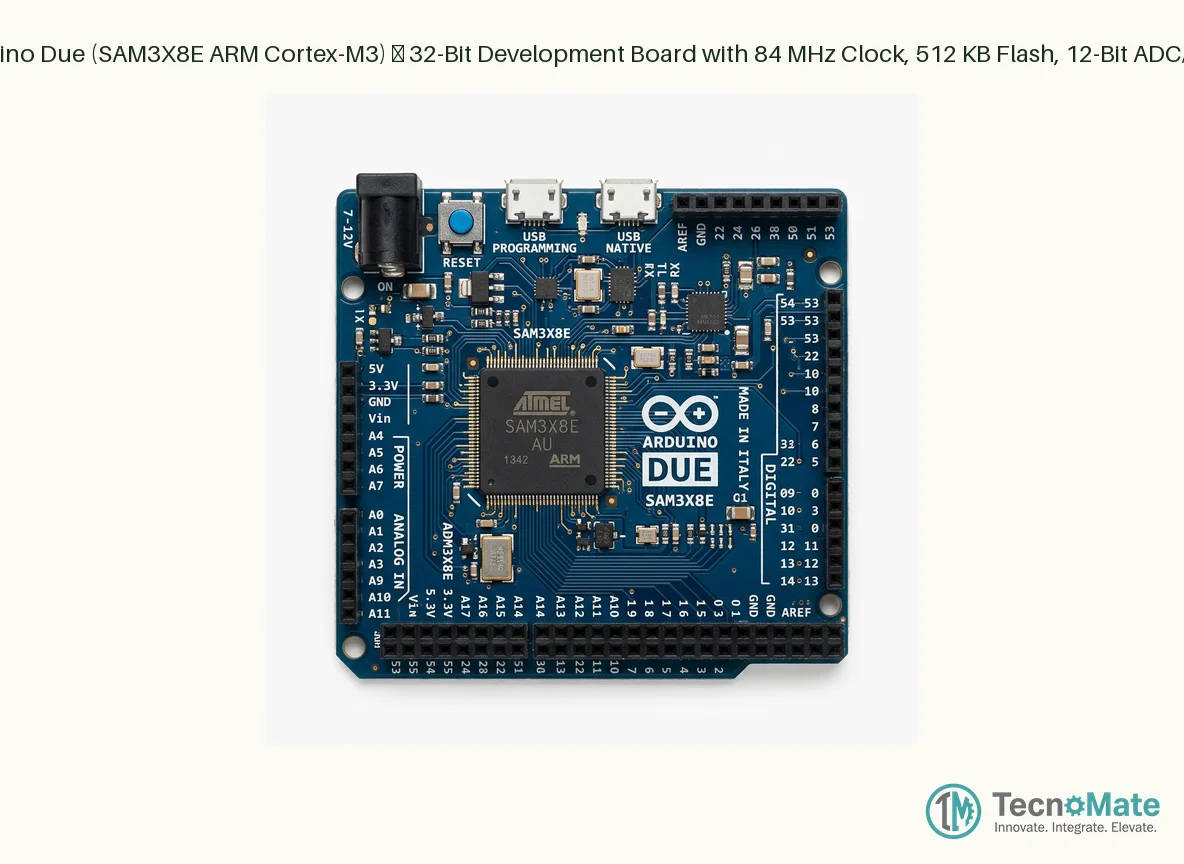
Arduino Due (SAM3X8E ARM Cortex-M3) – 32-Bit Development Board with 84 MHz Clock, 512 KB Flash, 12-Bit ADC/DAC
The Arduino Due is a landmark development board — the very first Arduino built around a 32-bit ARM core. At its heart beats the Atmel SAM3X8E ARM Cortex-M3 processor, clocked at a blistering 84 MHz, delivering processing power that leaves 8-bit AVR boards far behind. This is the board you reach for when your project demands real computational muscle: digital signal processing, real-time control loops, audio synthesis, or high-speed data acquisition. With 54 digital I/O pins (12 of which support PWM), 12 analog inputs featuring 12-bit ADC resolution, and — uniquely among classic Arduino boards — 2 true analog outputs via 12-bit DACs, the Due opens doors to applications that are simply impractical on an Uno or Mega. The 512 KB of onboard Flash memory gives you room for large, complex sketches, while 96 KB of SRAM handles hefty runtime data. Four hardware UARTs, two I2C (TWI) buses, a dedicated SPI header, and a CAN bus controller make interfacing with sensors, actuators, and industrial equipment straightforward. ⚠️ Important: The Due operates entirely at 3.3V logic. Its I/O pins are NOT 5V tolerant — connecting 5V signals directly will permanently damage the board. Level shifters are essential when interfacing with 5V sensors or modules. The board can be powered via USB or the barrel jack (7-12V recommended), includes both a programming USB port and a native USB OTG port for hosting USB devices, and even breaks out a JTAG header for advanced debugging. Whether you're an engineering student building a capstone project, a hobbyist pushing beyond the limits of 8-bit microcontrollers, or a professional prototyping an ARM-based embedded system, the Arduino Due delivers genuine 32-bit capability with the approachable Arduino ecosystem you already know. This is the Arduino Due A000062 — the official board manufactured by Arduino with gold-plated pads, reliable voltage regulation, and full compatibility with the Arduino IDE and library ecosystem.
₹4720.00
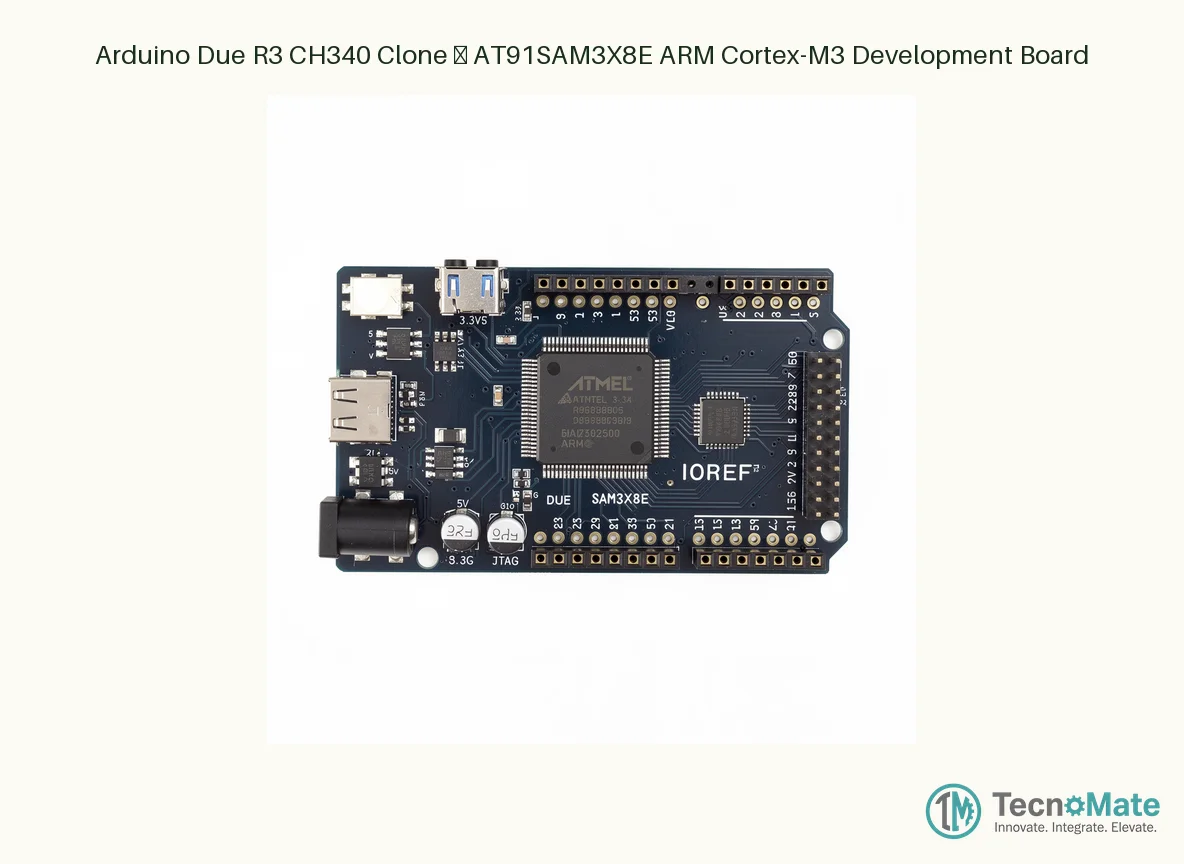
Arduino Due R3 CH340 Clone – AT91SAM3X8E ARM Cortex-M3 Development Board
The Arduino Due R3 CH340 Clone is a high-performance 32-bit ARM-powered development board built around the Atmel AT91SAM3X8E microcontroller — the same powerful chip that drives the original Arduino Due. This clone variant swaps the ATmega16U2 USB-to-Serial bridge for the widely adopted CH340G chip, delivering near-identical functionality at a significantly lower price point. Running at 84 MHz with 512 KB of flash memory and 96 KB of SRAM, this board is purpose-built for projects that demand serious computational horsepower: real-time DSP, motor control, 3D printer controllers, CNC machines, IoT gateways, and advanced robotics. With 54 digital I/O pins (12 of which support hardware PWM), 12 analog inputs, 4 independent hardware UARTs, two 12-bit DAC outputs, a Micro-USB port for programming via the CH340G, and a separate Native USB OTG port, the board offers connectivity and control versatility far beyond 8-bit Arduino platforms. The board operates at 3.3V logic levels — a critical consideration when interfacing with sensors and peripherals — and accepts 7–12V DC input via the barrel jack or VIN pin. The CH340G USB-to-Serial bridge handles programming and serial communication over the Micro-USB port; installing the CH340 driver is a one-time setup that works reliably on Windows (10/11), macOS, and modern Linux distributions. This clone board is fully compatible with the Arduino IDE and the broader Arduino ecosystem. You get the full 32-bit ARM experience — more memory, richer libraries, and the ability to run FreeRTOS or bare-metal ARM code — at a fraction of the cost of the original. Whether you are an engineering student building a final-year capstone project, a hobbyist exploring high-speed data acquisition, or a professional prototyping an embedded product, this board delivers outstanding performance per rupee.
₹2230.00
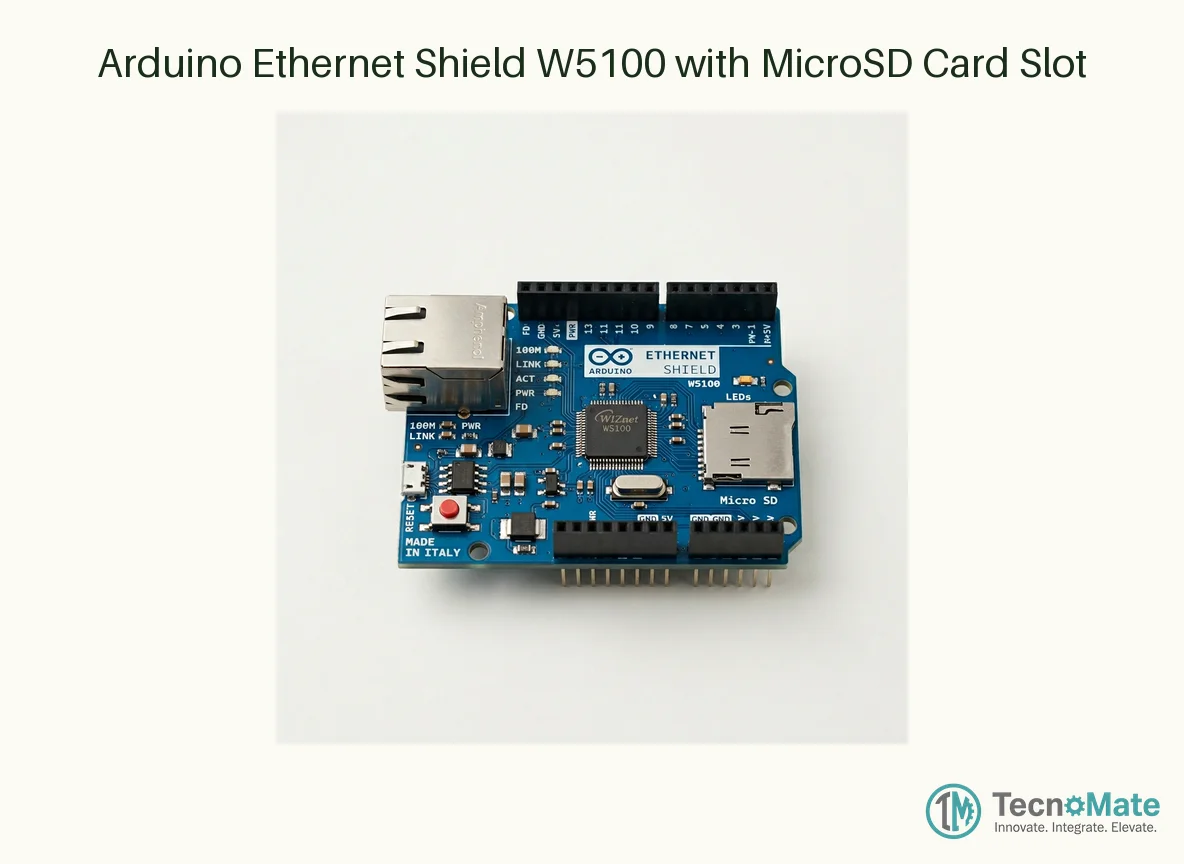
Arduino Ethernet Shield W5100 with MicroSD Card Slot
The Arduino Ethernet Shield W5100 is a plug-and-play network expansion shield that allows compatible Arduino boards to connect to a wired Ethernet LAN or internet connection using a standard RJ45 cable. Based on the WIZnet W5100 Ethernet controller, this shield provides a hardware TCP/IP stack and supports common network protocols such as TCP and UDP, making it a practical choice for Arduino web servers, IoT monitoring nodes, data loggers, automation panels and remote control projects. It is designed for popular 5V Arduino-compatible boards including Arduino UNO and Mega 2560 style boards, and communicates with the microcontroller through the SPI interface. This W5100 Ethernet Shield typically includes an onboard RJ45 Ethernet socket with link/activity indication, reset button, stackable Arduino headers, and a MicroSD card slot for local file storage or web-page hosting. The W5100 chip supports up to four simultaneous socket connections, which is useful for compact embedded networking projects. The MicroSD slot can be used with FAT16/FAT32 formatted cards, enabling sensor data logging, configuration storage or serving static files in web-server applications. Powered from the Arduino board at 5V, it is easy to install: stack it on the Arduino, connect a network cable, load an Ethernet library sketch, and begin communicating over a wired network. Ideal for engineering students, hobbyists and DIY electronics makers in India, this shield is a reliable way to add stable Ethernet connectivity where Wi‑Fi is not preferred.
₹555.00
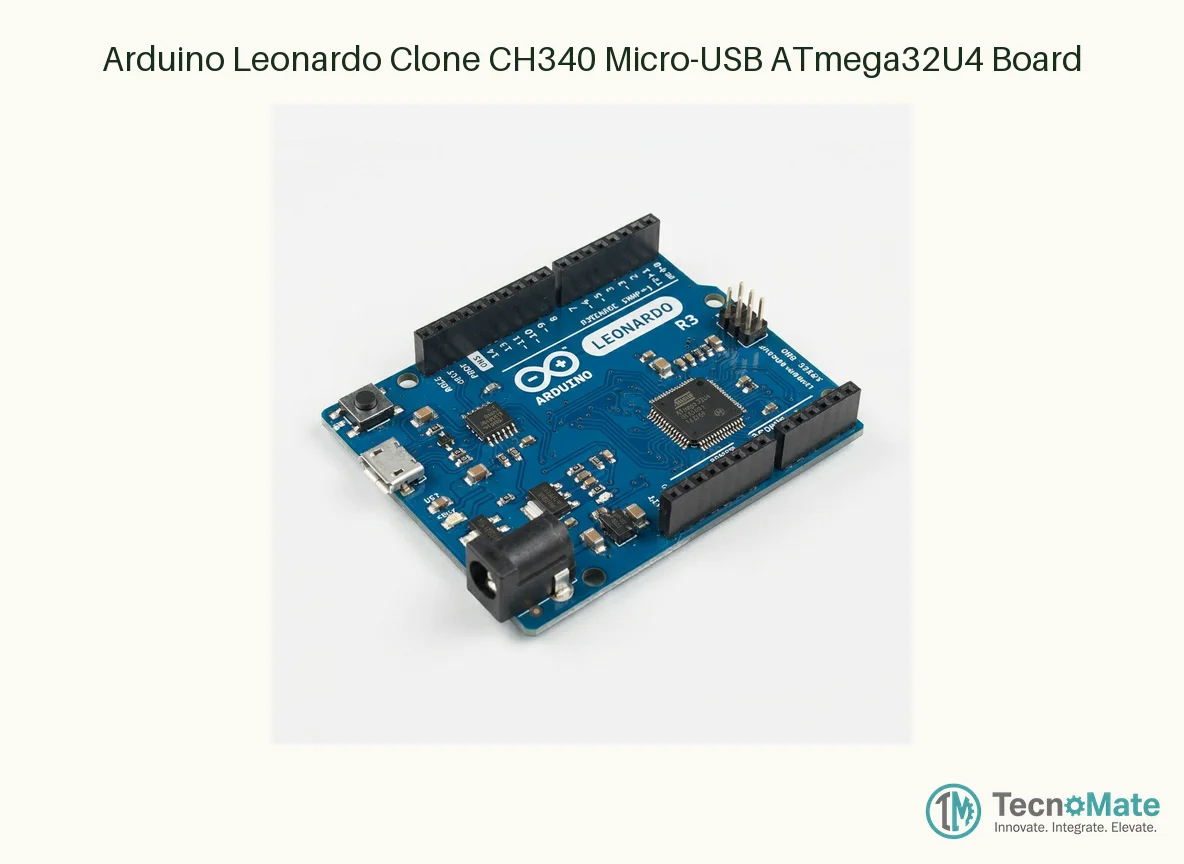
Arduino Leonardo Clone CH340 Micro-USB ATmega32U4 Board
The Arduino Leonardo Clone CH340 Micro-USB is a low-cost Leonardo R3 compatible development board for Indian engineering students, robotics hobbyists, makers, and DIY electronics learners. It is based on the ATmega32U4 microcontroller used by the Leonardo family and is designed to work with the Arduino IDE Leonardo board profile. The board is commonly sold in India as a micro-USB Leonardo-compatible clone, with CH340 driver support mentioned on some clone listings; because clone USB implementations can vary by batch, users building strict USB-HID projects should verify the exact USB path of the supplied board before final deployment. For general Arduino learning and prototyping, this board offers strong value. It provides 20 digital input/output pins, 7 PWM outputs, and 12 analog input channels, making it useful for sensor-heavy projects, robotics controllers, data acquisition interfaces, relay/LED control, and embedded mini-projects. The ATmega32U4 platform operates at 5V logic with a 16 MHz clock and provides 32 KB flash memory, 2.5 KB SRAM, and 1 KB EEPROM. It can be programmed from a PC using a micro-USB cable and powered through USB during development, or from an external supply in the typical Leonardo input range. This board is ideal when you need an affordable Arduino Leonardo compatible ATmega32U4 board in India for classroom labs, prototype builds, and project kits. For keyboard/mouse-style USB HID projects, choose this board after confirming the batch supports standard Leonardo native USB behavior, as CH340-labelled clone boards may differ from official Leonardo hardware.
₹684.00