
Sensors > Light Sensors
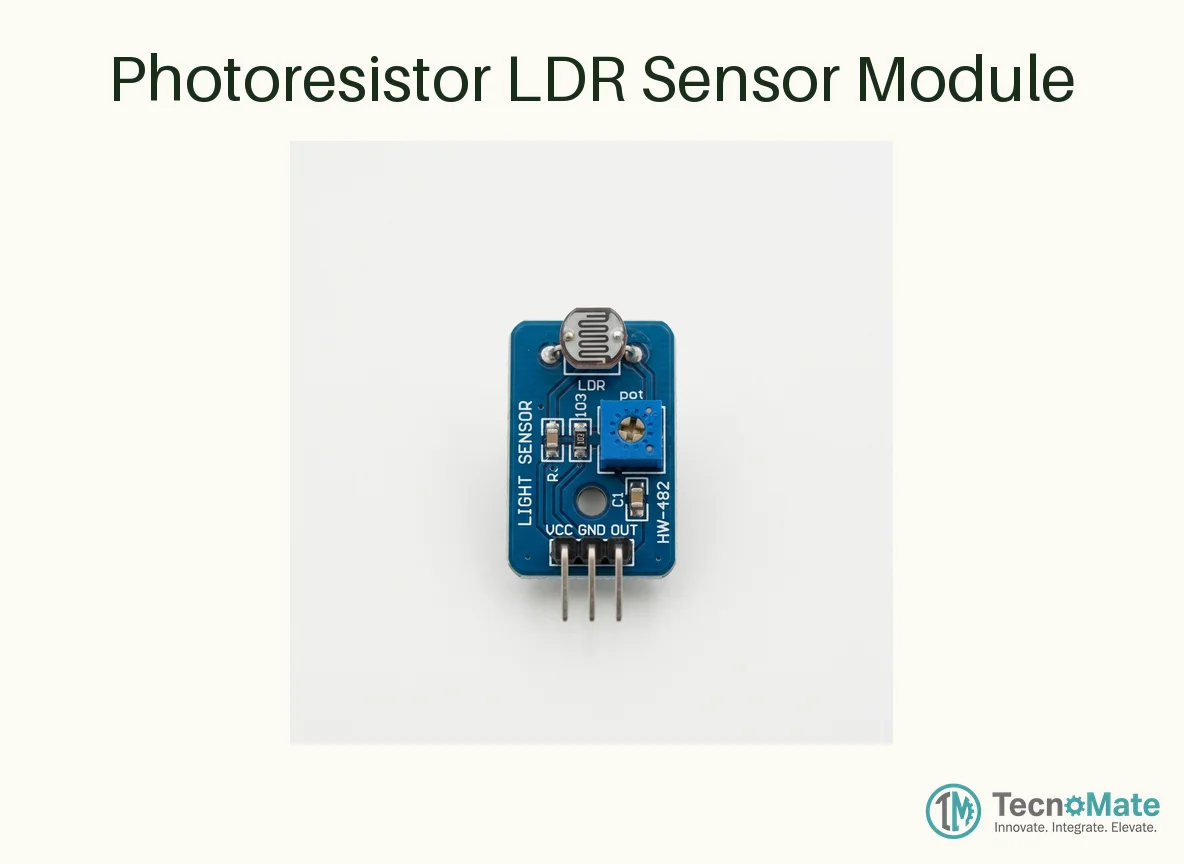
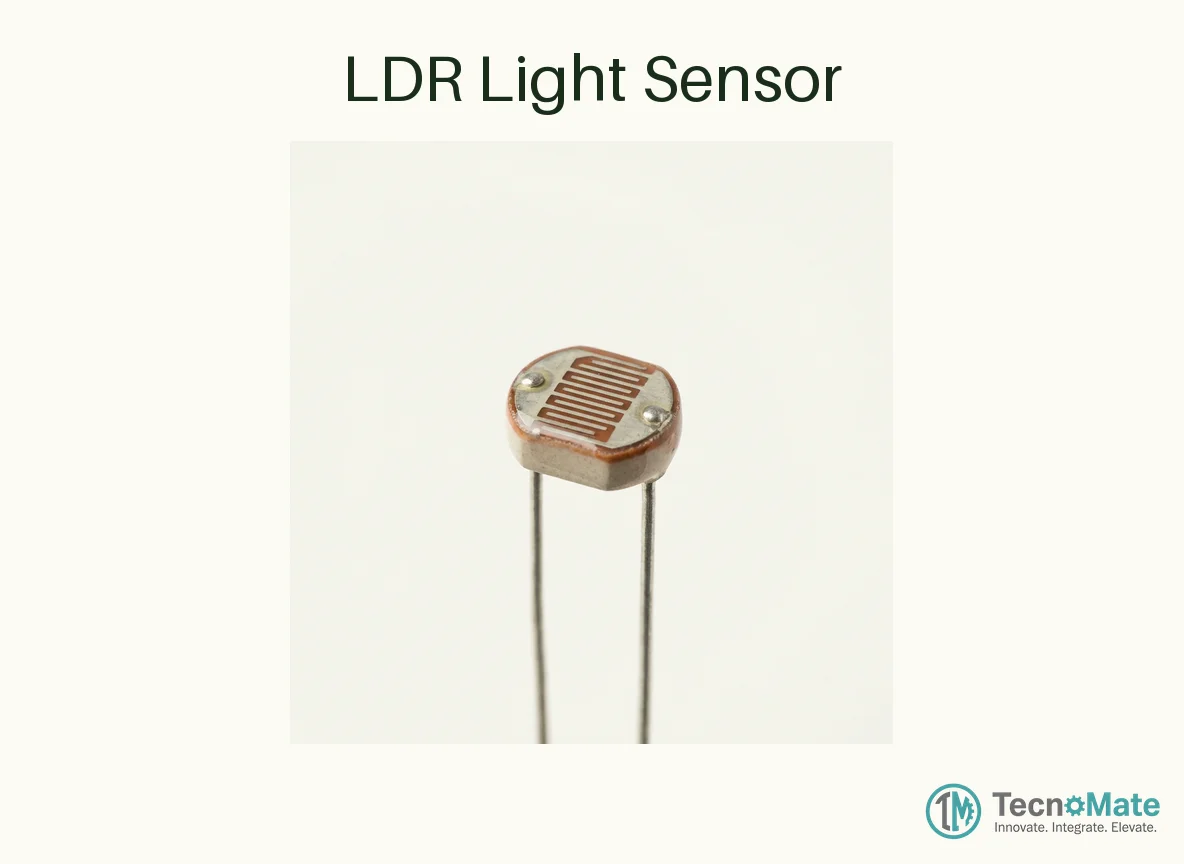
LDR Light Sensor
The LDR Light Sensor is a compact 5mm photoresistor used to detect ambient light intensity in Arduino, Raspberry Pi, ESP32, robotics and basic electronics projects. Its resistance changes automatically with light level, making it ideal for day/night sensing, automatic lamps, brightness control and alarm circuits. This low-cost, 2-pin CdS light dependent resistor is perfect for students, hobbyists, repair technicians and makers building light-activated switching or monitoring circuits.
₹9.00
Inclusive of all taxes
- Secure payments via Razorpay
- 7-day returns on defective items
- GST invoice on every order
In stock
Free delivery on orders above ₹2,000
Delivers in 4-7 business days
Check delivery at your pincode
Quantity:
1
₹9.00
Inclusive of all taxes
Category
Sensors > Light Sensors
Quality
100% Genuine
About LDR Light Sensor
This LDR Light Sensor, also called a Light Dependent Resistor or photoresistor, is a simple and reliable component for measuring ambient light in electronic circuits. The sensor is typically built using cadmium sulphide material, whose resistance decreases when light falls on its surface and increases in darkness. Because it behaves like a variable resistor, it can be used directly in voltage-divider circuits with microcontrollers such as Arduino Uno, Nano, ESP8266, ESP32, Raspberry Pi Pico and many other development boards.
In practical projects, the LDR is commonly connected with a fixed resistor to generate an analog voltage that represents the surrounding brightness. This voltage can be read by an ADC pin or compared with a threshold using a transistor, op-amp or comparator circuit. In bright light the LDR resistance becomes low; in low light or darkness it rises significantly, allowing simple automatic ON/OFF control for lamps, garden lights, street-light models, display dimming and light-triggered alarms.
The 5mm round package is easy to mount on breadboards, PCBs and through-hole prototype boards. It has two non-polar leads, so it can be connected in either direction, making it beginner-friendly for school labs and DIY electronics kits. The sensor offers a visible-light response suitable for general ambient light detection rather than precision lux measurement. Actual resistance values may vary by batch and lighting conditions, which is normal for CdS photoresistors.
What you get is one 2-pin LDR light sensor/photoresistor. For microcontroller use, pair it with a resistor such as 10kΩ to form a voltage divider. For relay or high-power load switching, use a suitable driver transistor, comparator module or microcontroller interface circuit.
Technical Specifications
| polarity | Non-polar |
|---|---|
| sensor_type | CdS Light Dependent Resistor / Photoresistor |
| package_size | 5mm round through-hole |
| mounting_type | Through-hole / breadboard compatible |
| response_time | Rise approx. 20ms, decay approx. 30ms typical |
| number_of_pins | 2 |
| maximum_voltage | 150V DC typical for 5mm GL5528-type LDR |
| operating_temperature | -30°C to +70°C typical |
| recommended_interface | Use in voltage divider with ADC, comparator, transistor or microcontroller input |
| peak_spectral_response | Approx. 540nm |
| typical_dark_resistance | ≥1MΩ |
| typical_light_resistance | 10kΩ to 20kΩ at 10 lux (GL5528-type typical value) |
| maximum_power_dissipation | 100mW typical |
Alternative Components
GL5528 5mm LDR
GL5537 Photoresistor
GL5516 Photoresistor
BH1750 Digital Light Sensor Module
TEMT6000 Ambient Light Sensor Module
TSL2561 Luminosity Sensor Module