Microcontroller & Dev Boards
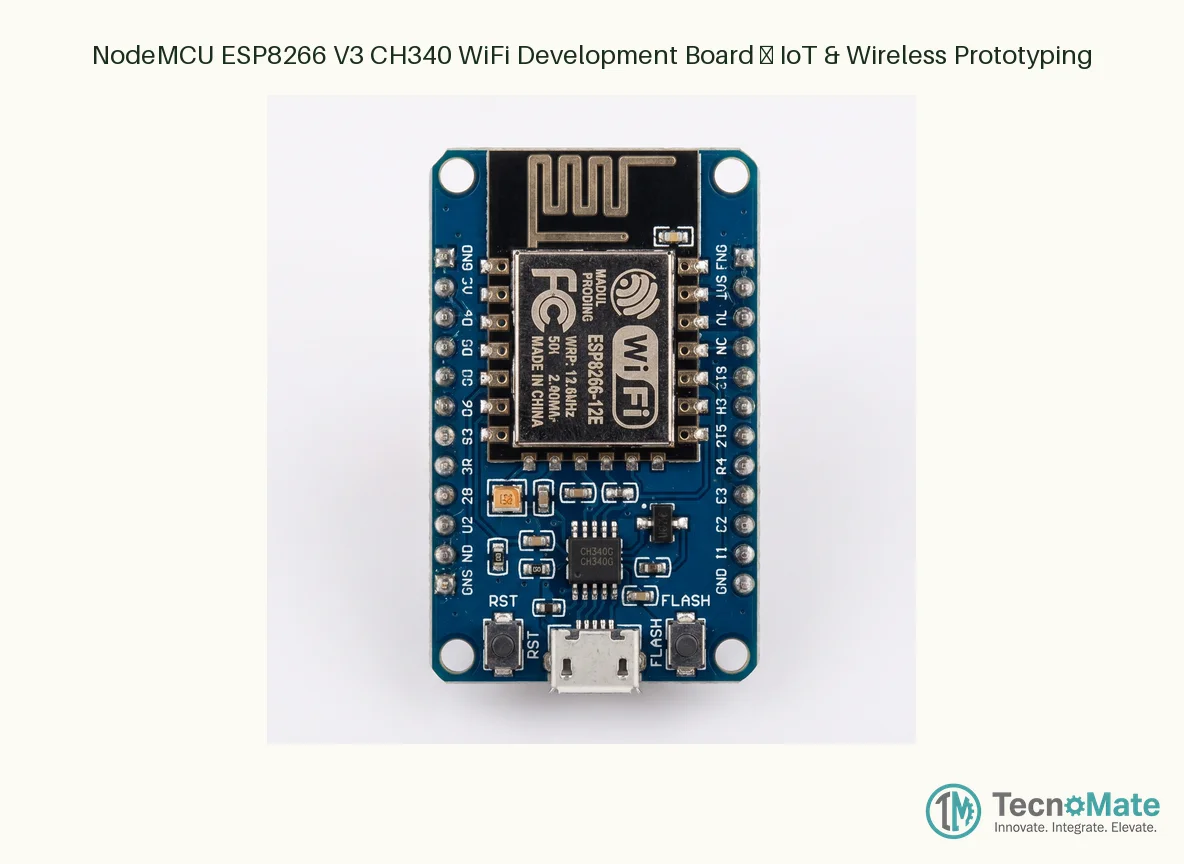
NodeMCU ESP8266 V3 CH340 WiFi Development Board – IoT & Wireless Prototyping
The NodeMCU ESP8266 V3 CH340 is one of India's most popular WiFi-enabled microcontroller development boards, trusted by engineering students, hobbyists, and IoT professionals alike. Built around the powerful Espressif ESP8266EX SoC featuring a 32-bit Tensilica L106 RISC processor, this compact board delivers reliable 802.11 b/g/n WiFi connectivity at an unbeatable price point. The onboard CH340G USB-to-serial converter ensures hassle-free programming — just plug it into your laptop's USB port, install the CH340 driver, and you're ready to code in the Arduino IDE or with Lua scripting. With 4 MB of flash memory, 64 KB of SRAM, 11 GPIO pins (including PWM, I2C, SPI, and 1-Wire support), and a single 10-bit ADC input, this board covers a vast range of IoT applications — from home automation and sensor monitoring to robotics and weather stations. The V3 design features an improved USB connector layout and larger breadboard-friendly footprint compared to earlier revisions. Whether you're building your first WiFi-controlled LED or deploying a full-scale smart agriculture system, the NodeMCU ESP8266 CH340 offers the perfect blend of performance, community support, and affordability that Indian makers love.
Specifications
SRAM: 64 KB
Weight: ~10 g
Clock Speed: 80 MHz (up to 160 MHz overclock)
Analog Input: 1 × 10-bit ADC (0–3.3V)
Flash Memory: 4 MB
Input Voltage: 4.5V – 9V (10V max) via VIN; 5V via USB
Transfer Rate: 110 – 460800 bps
USB Connector: Micro USB
USB-to-Serial: CH340G
WiFi Standard: 802.11 b/g/n (2.4 GHz)
PCB Dimensions: 49 mm × 26 mm × 13 mm (approx.)
Microcontroller: Espressif ESP8266EX (Tensilica L106 32-bit RISC)
Digital I/O Pins: 11 (all PWM-capable)
Operating Voltage: 3.3V
Operating Temperature: -40°C to +125°C
Communication Protocols: UART, I2C, SPI, 1-Wire
Details
Looking for an affordable, reliable WiFi development board in India? The NodeMCU ESP8266 V3 with CH340 USB driver is the go-to choice for students and makers. At its heart lies the Espressif ESP8266EX chip — a full-featured WiFi SoC with a 32-bit Tensilica L106 processor clocked at 80 MHz (overclockable to 160 MHz). Designed for the Internet of Things era, this board packs everything you need: built-in PCB antenna, 4 MB flash memory for your sketches and OTA updates, and a micro USB port that handles both power and programming through the CH340G chip. Unlike older CP2102 variants, the CH340 version is widely available in India and drivers are easily found for Windows, macOS, and Linux.
Why do Indian engineering students prefer this board? First, it's incredibly affordable — typically priced between ₹180 and ₹300 in the Indian market, making it accessible for bulk college project purchases. Second, the Arduino IDE support means you can leverage thousands of existing libraries and tutorials. Third, the massive online community ensures you'll never be stuck — from Stack Overflow to Indian tech forums, help is always available.
Specifications at a glance: 4.5V–9V input (USB or external VIN pin), 3.3V operating logic, 11 digital I/O pins (all PWM-capable), 1 analog input (10-bit ADC, 0–3.3V), UART, I2C, SPI, and 1-Wire protocol support. The board measures approximately 49mm × 26mm, fitting standard breadboards with one row of pins accessible on each side. Flash memory is ample at 4 MB, with roughly 3 MB available for user sketches after the bootloader and system firmware. SRAM is 64 KB, which is sufficient for most IoT applications but demands efficient coding for complex projects.
Common student applications include WiFi-controlled home automation using Blynk or Arduino IoT Cloud, sensor data logging to cloud platforms like ThingSpeak, wireless robot control over a smartphone, smart irrigation systems, and real-time weather monitoring stations. The board can also serve as a WiFi gateway translating serial data from other microcontrollers like Arduino Uno to the internet.
Important note for first-time users: the CH340G requires a driver installation before the board is recognized by your PC. The driver is free and easily downloadable. Once installed, the board appears as a COM port, and you can select "NodeMCU 1.0 (ESP-12E Module)" from the Arduino IDE boards manager after adding the ESP8266 board URL. The onboard LED on GPIO2 (active-low) and the reset/flash buttons make development quick and frustration-free.
At TecnoMate, we stock only authentic, tested NodeMCU ESP8266 V3 CH340 boards sourced from reliable Indian distributors. Each board is individually QC-checked before dispatch. Whether you're a first-year engineering student, a seasoned maker, or a startup prototyping an IoT product, this is the WiFi board that delivers maximum value for your rupee.