The Coral USB Accelerator is a compact external AI co-processor built around Google’s Edge TPU, designed to add high-speed on-device machine learning inference to Raspberry Pi, Linux single board computers and compatible desktop systems. It connects over USB and is commonly used by makers, robotics teams, engineering students and embedded-AI developers who want to run TensorFlow Lite models locally without relying on cloud processing. This makes it ideal for privacy-focused computer vision, real-time object detection, smart camera, industrial inspection and edge-AI prototype projects. The Edge TPU is optimized for quantized TensorFlow Lite models and delivers fast, low-power inference for supported neural-network workloads. For Raspberry Pi users, the USB Accelerator is a practical way to upgrade AI performance while keeping the main CPU free for camera handling, networking, motor control or application logic. It is also useful on Linux laptops and mini PCs for testing Coral-compatible models before moving to production hardware. This component is best suited for users who already understand basic Raspberry Pi/Linux setup, Python environments and TensorFlow Lite/Coral runtime installation. In the Indian maker market, the Coral USB Accelerator is a premium but very capable module for edge AI experiments, final-year engineering projects, robotics vision, smart surveillance demos and offline AI applications where quick inference and low latency matter.
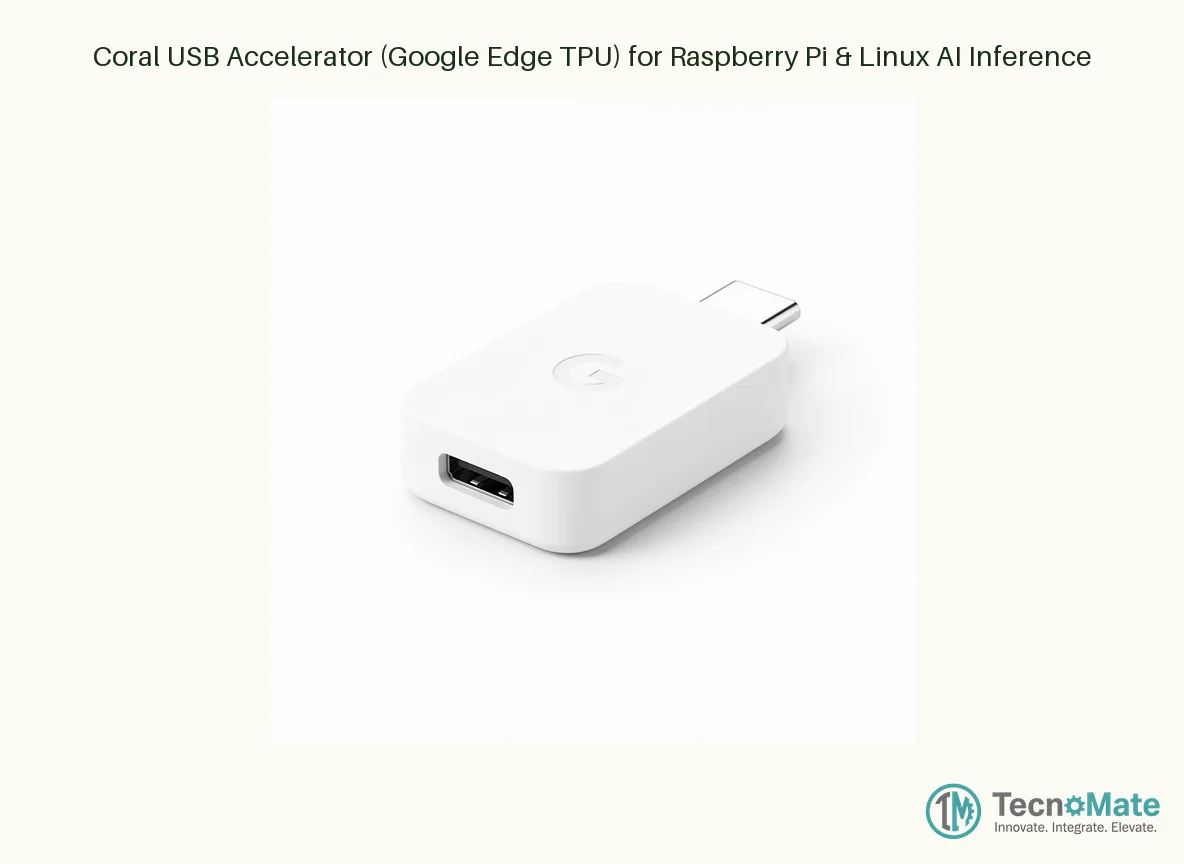
Power: USB powered from host system AI processor: Google Edge TPU coprocessor Product type: USB AI / machine-learning inference accelerator Host interface: USB, commonly used with USB 3.0 ports Efficiency class: Up to 2 TOPS per watt for supported Edge TPU inference workloads Performance class: Up to 4 TOPS Edge TPU inference performance for supported workloads Software requirement: Coral runtime and compatible TensorFlow Lite / Edge TPU model workflow Supported ML framework: TensorFlow Lite models compiled for Edge TPU Typical host platforms: Raspberry Pi, Linux SBCs, Linux desktops/mini PCs with supported runtime Recommended skill level: Intermediate Linux, Python and Raspberry Pi experience


 Raspberry Pi & Single Board Computers