
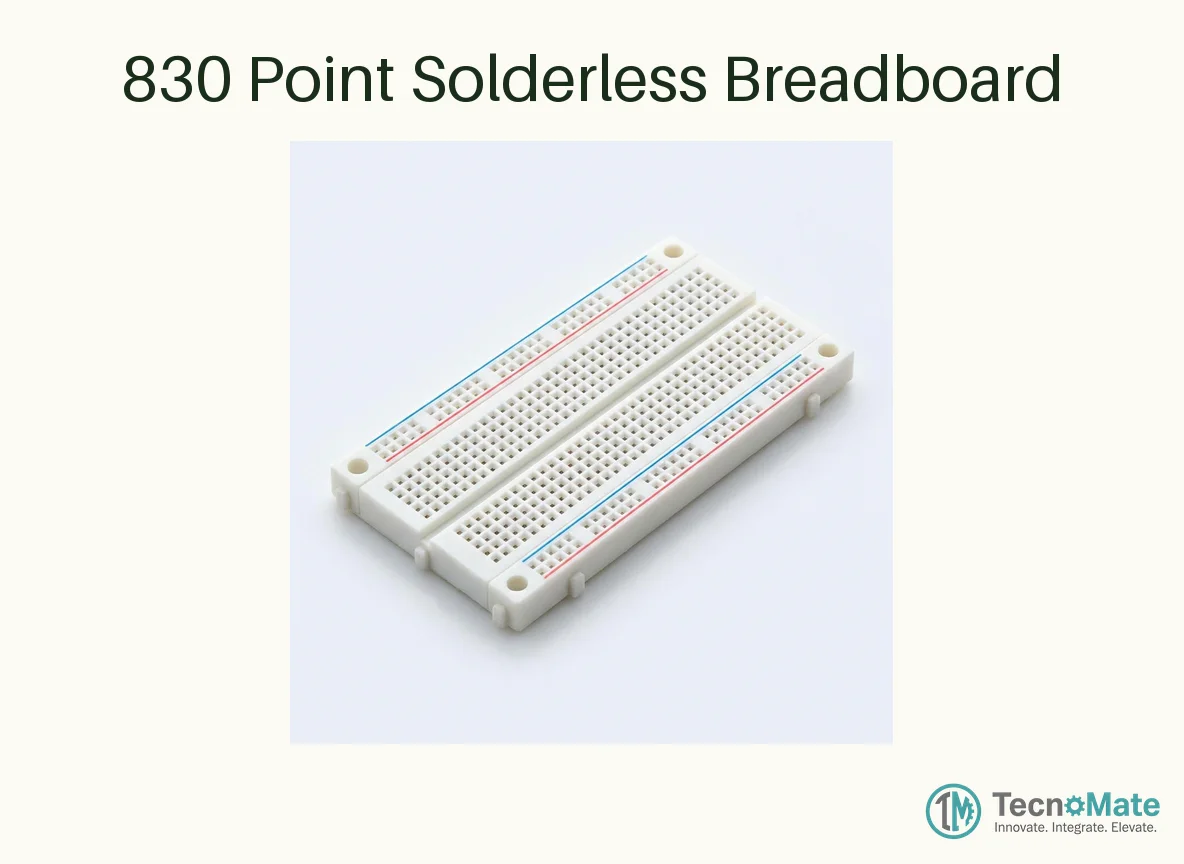
830 Point Solderless Breadboard
The 830 Point Solderless Breadboard is a full-size reusable prototyping board for building and testing electronic circuits without soldering. With 830 tie-points, dual power rails and standard 2.54 mm spacing, it is ideal for Arduino, Raspberry Pi Pico, ESP32, sensor modules, IC experiments and classroom labs. Makers, students, hobbyists and engineers can quickly plug in jumper wires, DIP ICs, resistors, LEDs and modules to validate circuit ideas before making a PCB.
Inclusive of all taxes
- Secure payments via Razorpay
- 7-day returns on defective items
- GST invoice on every order
Free delivery on orders above ₹2,000
Delivers in 4-7 business days
Check delivery at your pincode
₹124.00
Inclusive of all taxes
Category
Prototyping & Breadboards
Quality
100% Genuine
About 830 Point Solderless Breadboard
Technical Specifications
| Layout | Central IC channel with side power distribution rails |
|---|---|
| Material | Insulated plastic body with metal spring contacts |
| Mounting | Adhesive backing and side interlocking tabs on common 830-point style boards |
| Reusable | Yes, solderless plug-in design |
| Hole pitch | 2.54 mm / 0.1 inch |
| Product type | Solderless prototyping breadboard |
| Total tie points | 830 |
| Recommended current | Low-current signal and prototype use; keep high-current paths off the breadboard, typically ≤1A per contact/rail |
| Compatible wire size | Typically 20-29 AWG solid jumper wire or male header pins |
| Power rail tie points | 200 |
| Approximate dimensions | 165 mm x 55 mm x 8-10 mm |
| Suitable component pitch | Standard 0.1 inch through-hole parts and DIP ICs |
| Terminal strip tie points | 630 |
| Recommended operating voltage | Low-voltage DC prototyping such as 3.3V, 5V and 12V; not for mains AC |
Alternative Components
Similar Components
View All →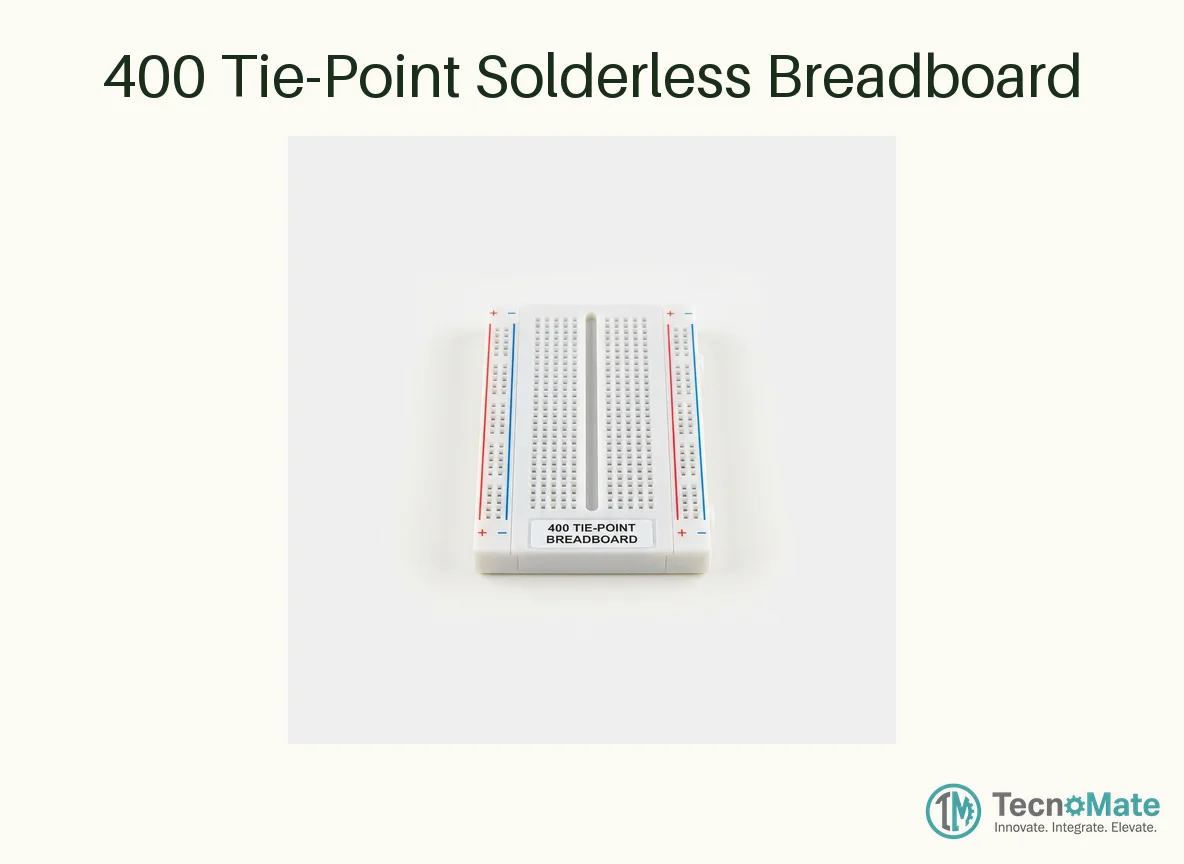
400 Tie-Point Solderless Breadboard
The 400 Tie-Point Solderless Breadboard is a compact half-size plug-in breadboard for fast electronics prototyping without soldering. With 400 contact holes, 0.1 inch standard spacing, a central IC channel, and dual power buses, it is ideal for Arduino, Raspberry Pi, sensor, IC, and basic circuit experiments. Designed for students, makers, repair technicians, and electronics hobbyists, this reusable breadboard makes circuit building, testing, and modification quick, clean, and beginner-friendly.
₹44.00
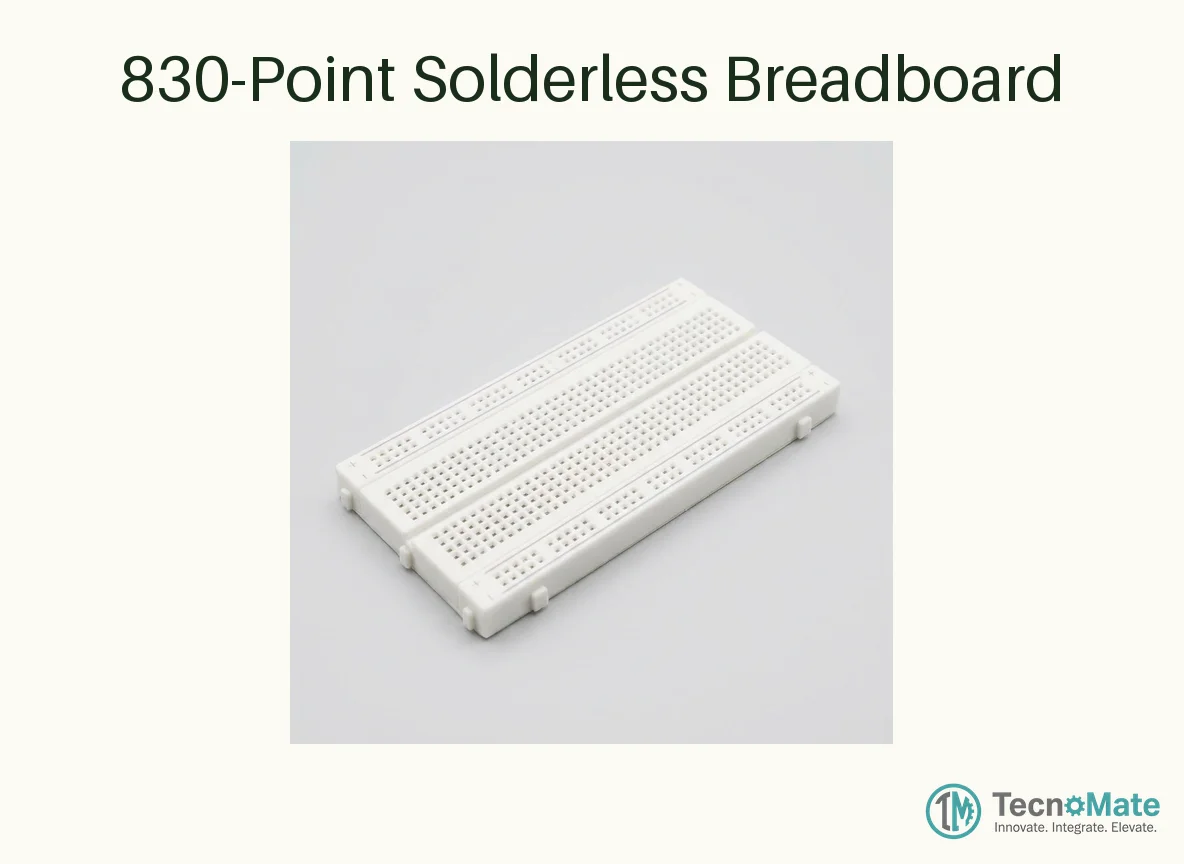
830-Point Solderless Breadboard
The 830-Point Solderless Breadboard is a reusable prototyping board for building and testing electronic circuits without soldering. Also commonly known as an MB102-style breadboard, it provides 630 terminal tie-points plus 200 power-rail tie-points for ICs, sensors, LEDs, resistors, capacitors and jumper wires. Ideal for students, electronics labs, Arduino/Raspberry Pi learners, repair benches and makers who need fast, neat and reliable circuit experimentation.
₹124.00
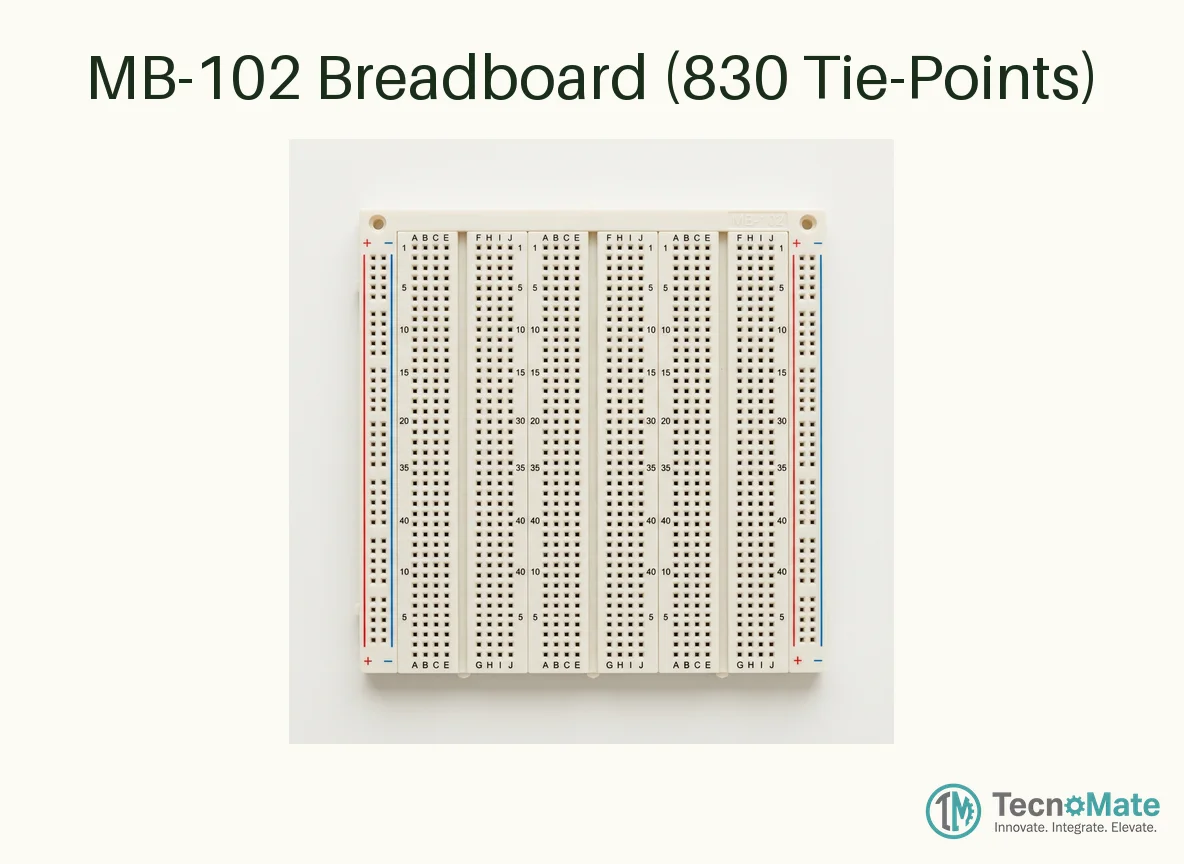
MB-102 Breadboard (830 Tie-Points)
The MB-102 Breadboard is a full-size 830 tie-point solderless prototyping board for quickly building and testing electronic circuits without PCB fabrication or soldering. With a 630-point terminal area, 200-point power distribution rails, and support for 20–29 AWG jumper wires, it is ideal for Arduino, ESP32, Raspberry Pi electronics, sensor modules, LED circuits, IC experiments, and classroom labs. A reusable must-have breadboard for students, makers, engineers, and repair benches.
₹124.00
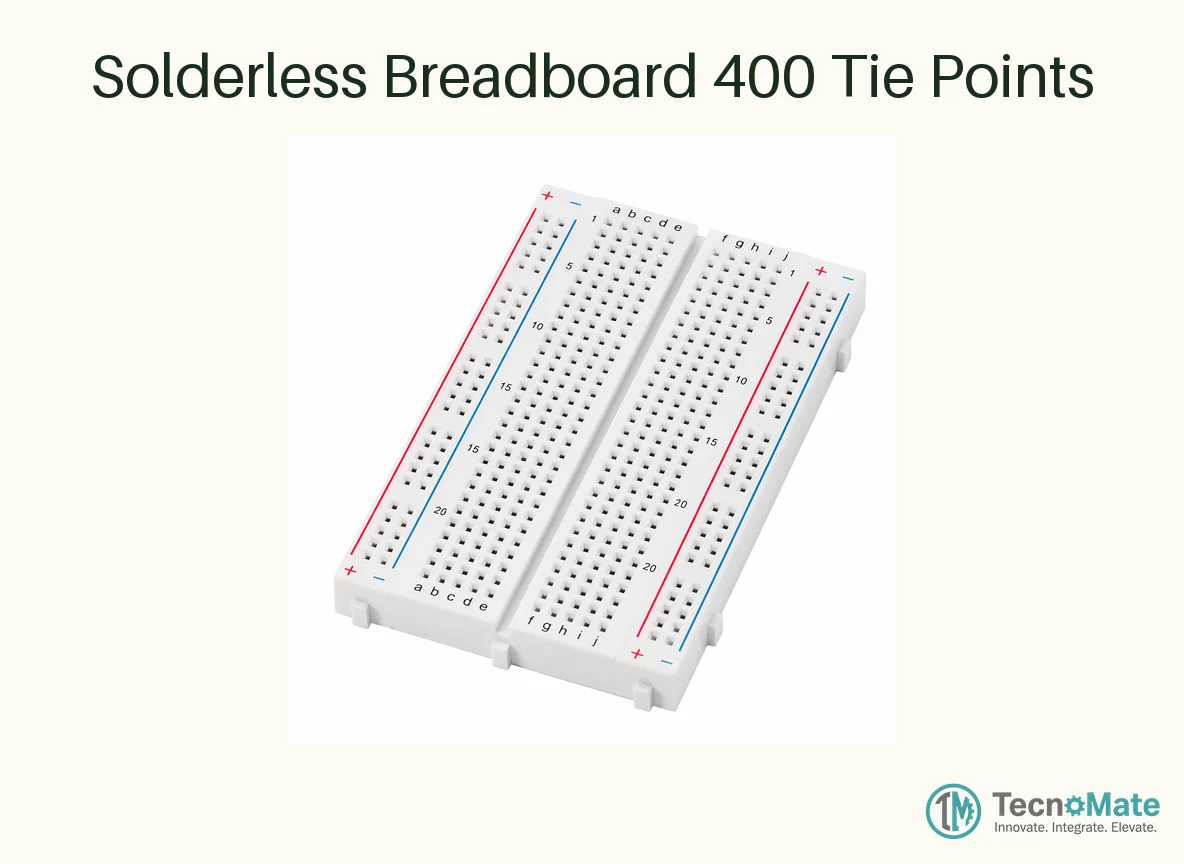
Solderless Breadboard 400 Tie Points
The Solderless Breadboard 400 Tie Points is a compact half-size prototyping board for quickly building and testing electronic circuits without soldering. Ideal for Arduino, Raspberry Pi, ESP32, sensor modules, IC experiments and classroom labs, it offers 300 terminal points plus 100 power-rail points for neat wiring. Reusable spring contacts accept standard jumper wires and DIP ICs, making it a practical choice for students, makers, repair technicians and electronics developers.
₹93.00